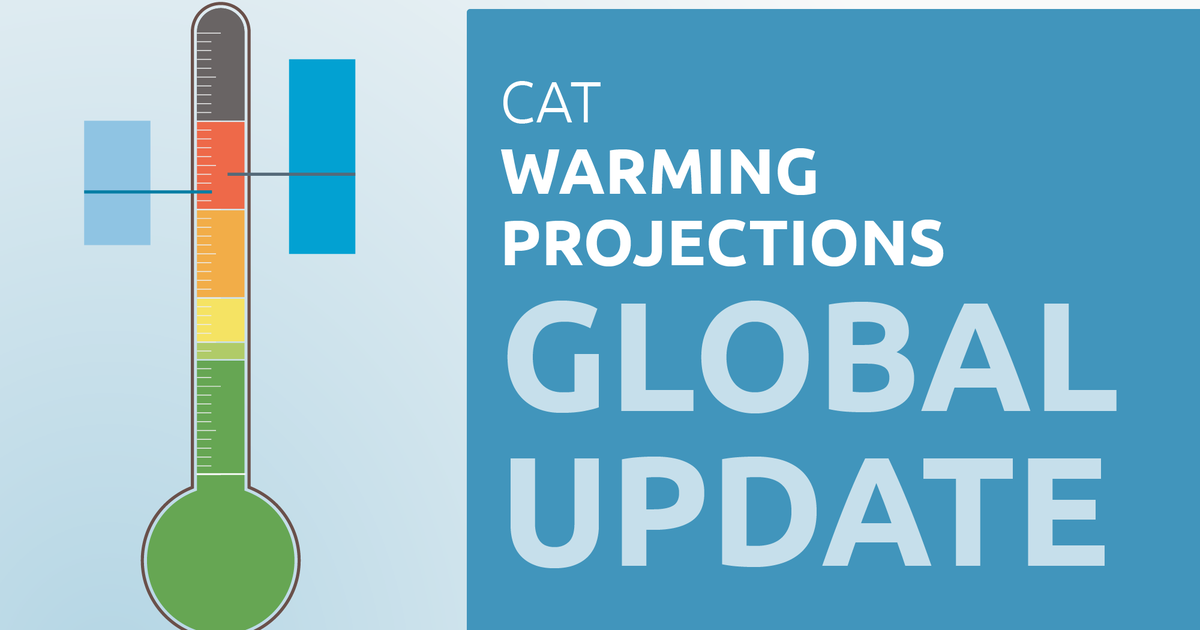
Global warming projections have shown no measurable improvement for four consecutive years, with new 2035 climate targets failing to significantly alter the trajectory, according to Climate Action Tracker. While the Paris Agreement initially reduced warming forecasts from 3.6°C to 2.6°C, this progress has stalled since 2020. Current national targets project emissions of 53-57 GtCO2e by 2030, substantially exceeding the 27 GtCO2e required for a 1.5°C pathway, indicating a widening "target gap" and underscoring the urgent need for stronger government commitments and policies despite record clean energy investments.
Global climate action has stalled, with warming projections showing no measurable improvement for the fourth consecutive year, as reported by Climate Action Tracker at COP30. While the Paris Agreement initially reduced the 2100 warming forecast from 3.6°C to 2.6°C, this progress has flattened since 2020, indicating a significant deceleration in climate ambition. Most governments have failed to update critical 2030 targets or set sufficiently ambitious 2035 targets.
Current National Determined Contributions (NDCs) project global emissions of 53-57 GtCO2e by 2030, significantly exceeding the 27 GtCO2e required for a 1.5°C pathway. This creates a widening "target gap" of 26-29 GtCO2e by 2030, which is projected to increase to 26-31 GtCO2e by 2035. Even with full implementation of current NDCs, 2035 emissions would be 125%-150% above the 1.5°C compatible level.
Despite this policy inertia, the private sector is showing progress, with renewable energy and electric vehicle deployment breaking records and investment in clean manufacturing capacity growing rapidly. This technological momentum highlights a disconnect between market-driven innovation and governmental policy commitments. The overall sentiment regarding the current trajectory is strongly negative and pessimistic.
The persistent failure of governments to strengthen climate commitments, despite clear scientific warnings and technological advancements, underscores a critical policy gap. This situation implies continued environmental risks and potential for abrupt policy shifts if the urgency for stronger 2030 targets and robust implementation materializes.
AI-powered research, real-time alerts, and portfolio analytics for institutional investors.
Request DemoOverall Sentiment
strongly negative
Sentiment Score
-0.75
