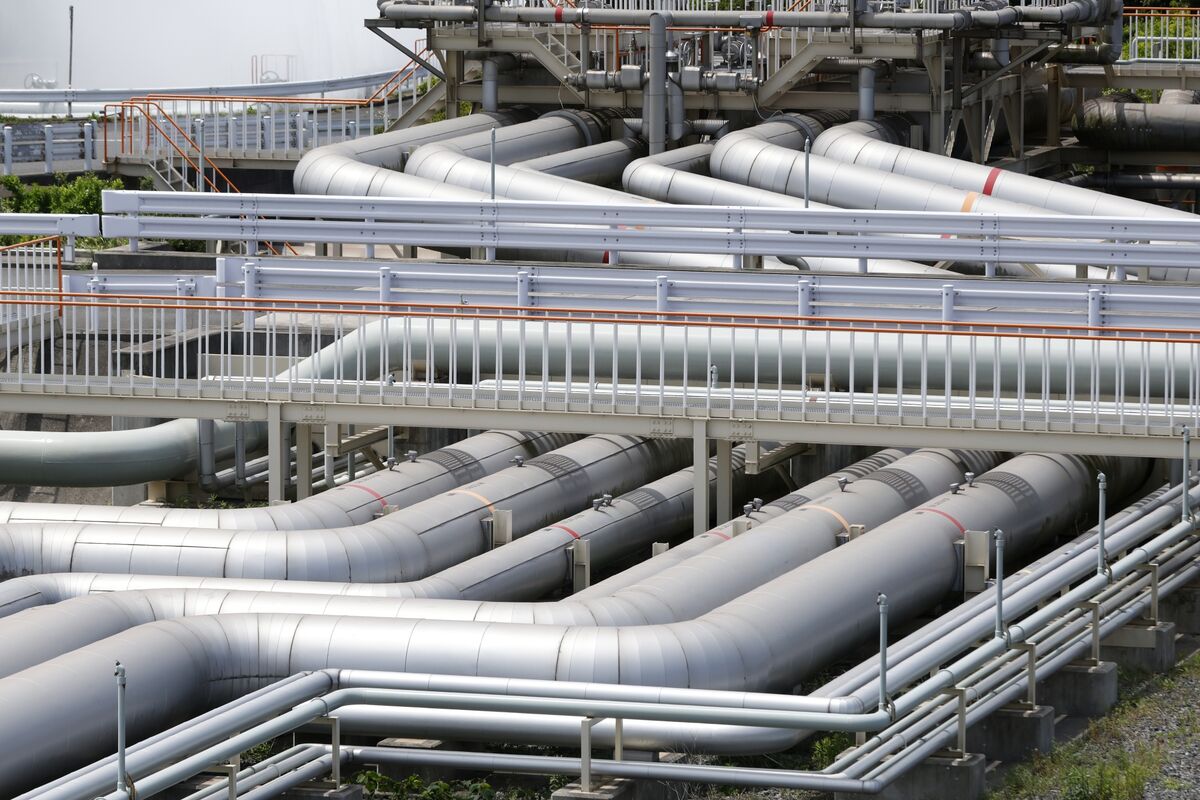
Venture Global Inc. has signed a 20-year LNG supply agreement with Tokyo Gas to deliver 1.0 million tonnes per year starting in 2030, representing its fourth long-term contract with a Japanese buyer. The deal is part of a recent wave of contracts that total 7.75 Mtpa signed over the past six months with buyers from Japan to Spain, strengthening Venture Global's contracted demand profile and enhancing revenue visibility and financing prospects for its export projects.
Market structure: Venture Global (VG) locking a 20-year, 1 mtpa deal with Tokyo Gas materially de-risks project cashflows for its 2030 start-up, improving VG’s ability to finance remaining capex and accelerating EBITDA visibility by ~5–10% of expected nameplate capacity per contracted mtpa. Winners are VG equity/hybrid debt holders, LNG carriers and EPC suppliers; losers are short-term spot sellers and marginal LNG-export projects that lack long-term offtake. Cross-asset: expect downward pressure on Asian spot JKM and seasonal spikes in TTF/Henry Hub volatility into 2030 as US supply growth becomes more contracted, which can flatten forward curves and tighten bond spreads for project-backed debt.
Risk assessment: Key tail risks include US permitting delays, LNG carrier bottlenecks, and Japan policy shifts toward faster electrification/green hydrogen that could cut demand >10% by 2035; an adverse ruling or capex overrun >20% would materially dilute equity. Immediate (days) market impact small; short-term (weeks–months) improved credit access and potential rating upgrades are plausible; long-term (years) demand and price trajectory hinge on Asia decarbonization and global gas glut. Hidden dependency: shipping charters and regas capacity timing — mismatches can create basis risk even with contracted cargoes.
Trade implications: Primary actionable is tactical long VG equity (conviction on financing lift) sized 2–3% of long portfolio with 12–24 month horizon, target +40% upside, stop -20%. Hedged option play: buy 18-month VG call spread (e.g., buy 25% OTM, sell 60% OTM) to limit premium with asymmetric upside. Relative value: pair long VG vs short short-dated JKM/TTF futures (notional ~50–70% of equity size) to capture spread compression if contracted US LNG displaces spot volumes.
Contrarian angle: Market underestimates execution and regulatory slippage risk — many contracts are priced on FID assumptions; if capex escalates or Japan accelerates renewables, VG could face margin compression and weaker-than-expected equity returns. Historical parallel: early Cheniere contracts supported financing but project delays and shipping cost spikes capped equity multiples; similar dynamics could cap VG's run. Unintended consequence: faster build-out of contracted US supply could paradoxically depress short-term spot prices, hurting merchant exporters and turning purportedly bullish supply deals into sector-wide margin compression.
AI-powered research, real-time alerts, and portfolio analytics for institutional investors.
Request DemoOverall Sentiment
mildly positive
Sentiment Score
0.30
Ticker Sentiment
