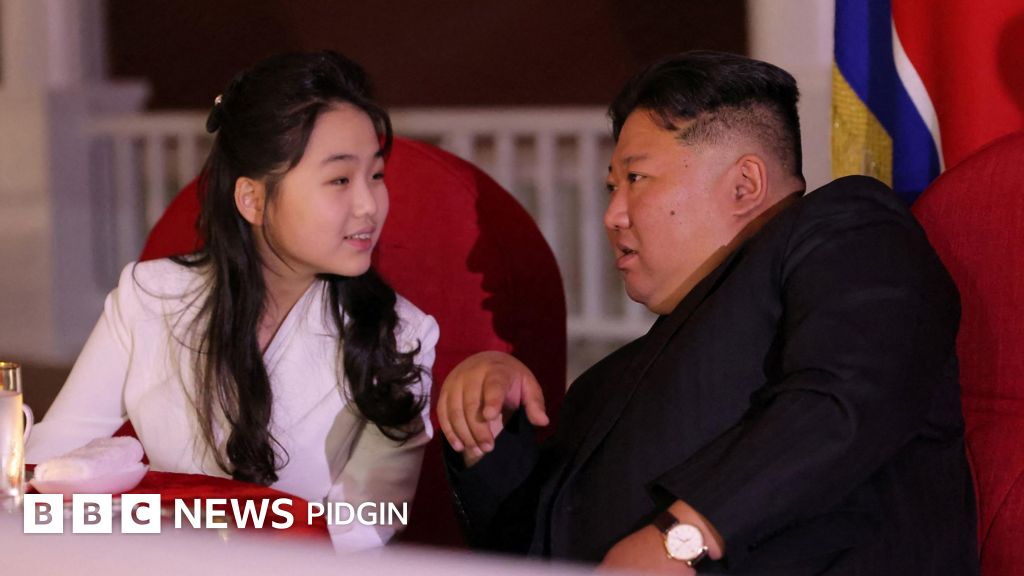
South Korea's National Intelligence Service told lawmakers it now assesses Kim Jong Un's teenage daughter, Kim Ju Ae (believed to be ~13), has been designated as his successor after a string of high‑profile public appearances including a Beijing visit and roles at state events; she reportedly holds a senior party position and appears to be taking on policy influence. For investors, the announcement underscores regime continuity and sustained uncertainty around North Korea's foreign policy, military planning and nuclear posture; the development raises regional geopolitical risk but is unlikely to produce a large immediate market move absent follow‑on policy changes or escalation.
Market structure: The designation of Kim Ju Ae as heir increases the baseline geopolitical risk premium in Northeast Asia with immediate winners being defense contractors (US: RTX, NOC, LMT; ETF: ITA), safe-haven assets (USD, JPY, gold) and cybersecurity names; losers are direct South Korea country exposure (EWY) and regional tourism/hospitality. Expect a 1–3% near-term re-pricing in KR-risk sensitive assets and a 5–15% relative re-rating tail over 6–24 months for regional defense budgets if Seoul/Tokyo accelerate spending.
Risk assessment: Tail risks include a low-probability kinetic escalation (5–10%/12 months) that would spike crude +8–15% and VIX >50%, and a China-facing diplomatic pivot that could mute Western sanctions. Time horizons separate into immediate volatility (days), policy-driven capex increases (3–12 months) and structural defense sector revenue uplift (3–5 years); hidden dependencies include China’s posture and opaque internal succession politics that can flip market direction quickly.
Trade implications: Tactical plays favor buying defense exposure via ETFs/defined‑risk option spreads, long GLD as a hedge, and short EWY/KRW for immediate pain in Korean assets. Use 1–3 month option structures for volatility spikes (buy call spreads on NOC/RTX) and 3–12 month equity/ETF positions for secular spending; stagger entry over 1–10 trading days and set tight stop-losses (7–10%).
Contrarian angles: Consensus understates multi-year uplift to regional defense procurement — a sustained 10–20% revenue tail for prime contractors over 3–5 years is plausible, so underweighting defense is likely an error. Conversely, short-term panic selling of Korean assets is often overdone (historical NK shocks normalize in <30 days), so prefer hedged directional trades (put spreads rather than naked shorts) to capture asymmetry.
AI-powered research, real-time alerts, and portfolio analytics for institutional investors.
Request DemoOverall Sentiment
moderately negative
Sentiment Score
-0.30
