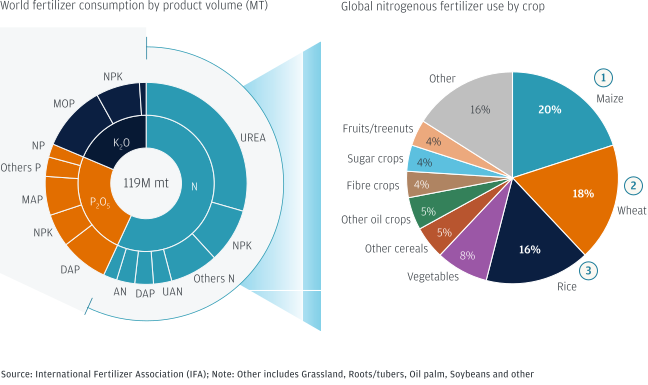
The article warns that the Iran conflict, disrupted Persian Gulf fertilizer supply, and a potentially strong El Niño could combine to reduce crop output and lift soft-commodity prices. More than 36% of global urea is imported from the Persian Gulf, and fertilizer recovery could take 1-4 years, or 3-5 years for some natural gas facilities, creating a prolonged supply risk. India and Brazil are highlighted as especially exposed, with possible spillovers into corn, wheat, rice, and cocoa inflation.
This is a multi-quarter inflation impulse masquerading as a headline geopolitics story. The key second-order effect is not just higher gas prices, but a timing mismatch: fertilizer availability is constrained by both feedstock and planting windows, so even a fast normalization in energy does not immediately restore crop supply. That creates a much cleaner bullish setup for upstream fertilizer, storage, and freight than for broad commodity baskets, because the market will likely underprice the lag until the next planting cycle.
The biggest asymmetric loser is the import-dependent tropical ag complex: Brazil, India, and parts of Southeast Asia face a double hit from higher input costs and weaker yields if weather trends confirm a stronger El Niño into winter. That supports relative outperformance for North American and European growers with better gas access, but only if they can source nitrogen early; otherwise they become margin losers too. The more interesting winner is not LNG itself, but any business with captive gas, low-cost ammonia capacity, or distribution infrastructure that can arbitrage dislocated regional supply.
Consensus is likely too focused on immediate energy dislocation and too complacent about soft-commodity pass-through. The real risk is that fertilizer tightness amplifies a weather shock, turning a manageable crop shortfall into an export restriction cycle, which historically matters more for prices than the initial yield loss. If El Niño forecasts strengthen into June, markets should re-rate the probability of policy intervention, rationing, and input hoarding well before the winter peak.
The contrarian view is that this is partly a late-cycle story already crowded into ag and energy inflation hedges. If the conflict de-escalates quickly and June El Niño probabilities drift lower, the trade can unwind faster than fundamentals suggest because the market is long “bad weather” but short on certainty. That makes timing critical: the cleanest entry is into seasonal forecast revisions, not after crop damage is visible.
AI-powered research, real-time alerts, and portfolio analytics for institutional investors.
Request DemoOverall Sentiment
strongly negative
Sentiment Score
-0.65
Ticker Sentiment
