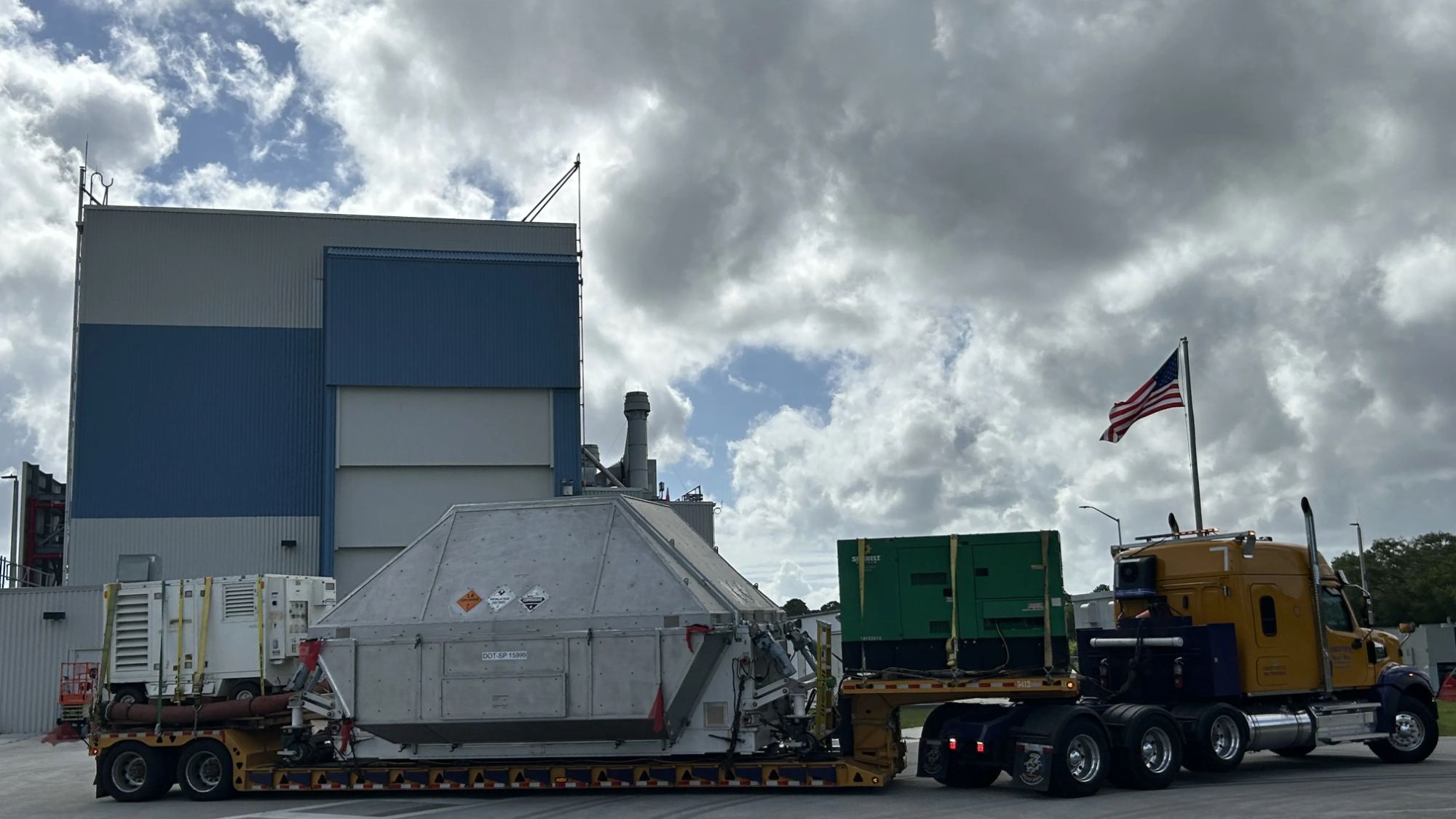
NASA’s Artemis 2 Orion capsule has returned to Kennedy Space Center for de-servicing and post-mission analysis after completing a four-astronaut lunar flyby and splashdown. The agency is using the returned spacecraft data to inform future Artemis missions, while Artemis 3 hardware is already advancing toward a targeted late-2027 launch. This is a routine but important program update with limited near-term market impact.
This is a validation and manufacturing-throughput story more than a headline event. The near-term cash flows accrue to the aerospace industrial base through rework, refurbishment, inspection, and qualification cycles, while the strategic value is in de-risking the cadence of the next vehicle rather than the one that just flew. The market should care less about the flight itself and more about whether post-flight teardown shortens the feedback loop enough to compress future integration timelines.
The second-order implication is that NASA is effectively signaling a higher tolerance for reuse, which should favor suppliers with recurring content in thermal protection, avionics, separation systems, and ground processing rather than pure launch exposure. That creates a subtle winners/losers split: program-dependent names with high fixed-cost absorption benefit if cadence improves, but any slip in post-flight anomaly resolution would push spend into non-recurring engineering and delay procurement pull-through by 1-2 quarters. The biggest operational risk is not technical failure in isolation, but schedule slippage cascading across the vehicle stack and ground infrastructure, which can flatten supplier utilization.
The contrarian angle is that this is not a clean bullish catalyst for launch-adjacent equities; the value is already in the backlog narrative. If Artemis cadence remains political rather than commercial, the market will likely continue to assign a discount to headline milestones because they do not translate into predictable volume. The better trade is to own the companies that monetize inspection, materials, and mission assurance, while fading names that require a meaningful increase in flight frequency to justify multiple expansion.
Time horizon matters: over the next 30-90 days, the trade is about data readouts and hardware integration progress; over 12-24 months, it is about whether Artemis transitions from one-off achievements to a repeatable production system. Any evidence of accelerated turnaround on recovered hardware or reduced rework intensity would be a modest positive for the supply chain, but a delay in resolving heat-shield or service-module issues would likely push the next procurement decision out and pressure sentiment across the entire space prime ecosystem.
AI-powered research, real-time alerts, and portfolio analytics for institutional investors.
Request DemoOverall Sentiment
neutral
Sentiment Score
0.10
Ticker Sentiment
