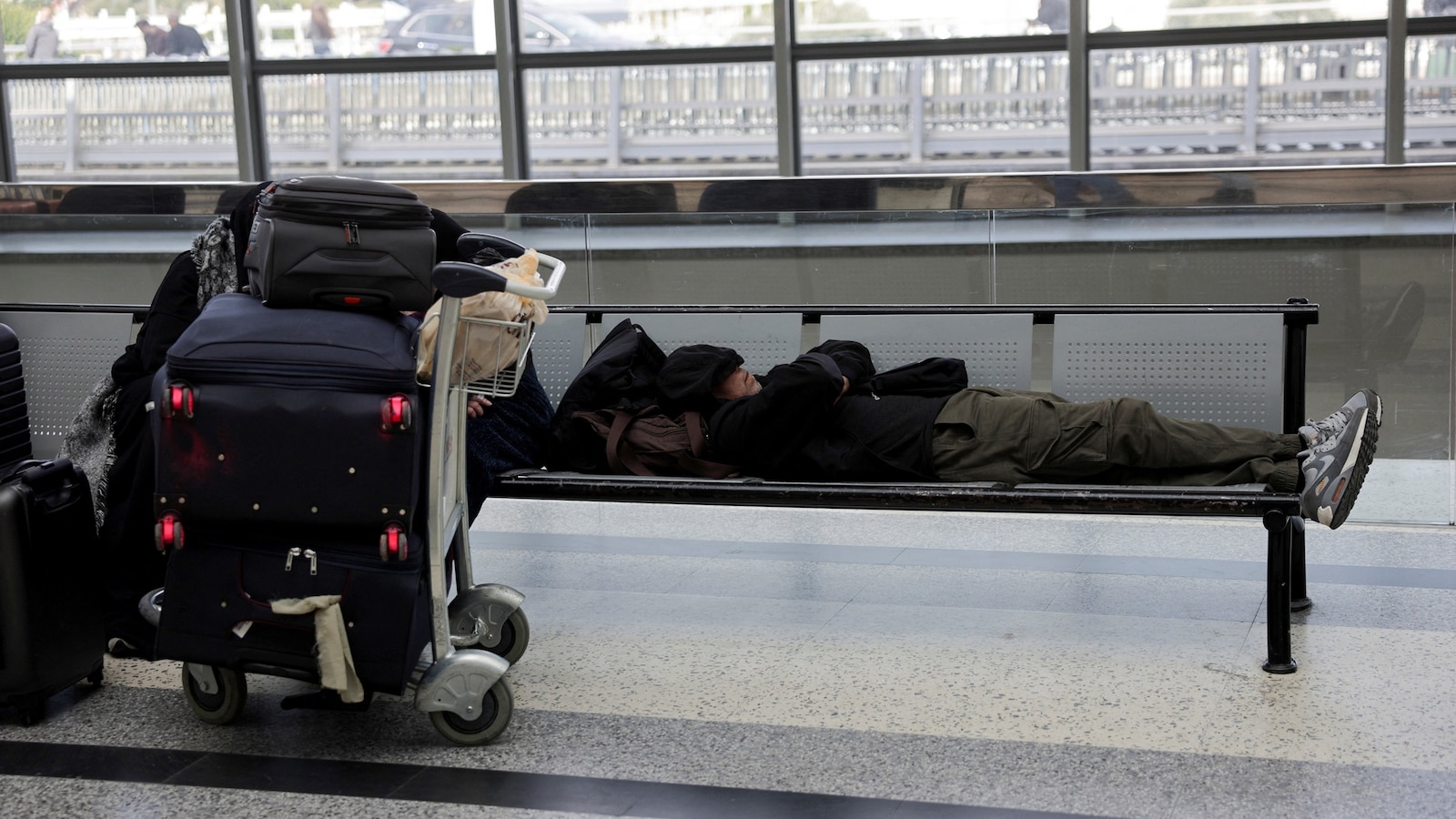
The State Department has organized charter flights to repatriate U.S. citizens stranded across the Middle East after the U.S.-Israel military operation against Iran and resulting airspace closures disrupted commercial travel; the White House says over 17,500 Americans have returned, including 8,500 in one day. Continued airport and airspace closures, attacks on diplomatic facilities, and criticism of the administration's preparedness are driving emergency evacuations from hubs including the UAE, Qatar, Saudi Arabia and Israel, creating acute transportation and logistical disruptions that could heighten regional geopolitical risk and prompt a near-term risk-off reaction in sensitive markets.
Market structure: Near-term winners are defense primes (LMT, NOC, RTX, GD) and energy producers/services (XOM, CVX, SLB) due to higher defense procurement probability and oil risk premia; losers are passenger airlines/cruise/hospitality (UAL, DAL, AAL, RCL, MAR, HLT) from cancelled itineraries, reroute costs and higher jet-fuel. Competitive dynamics favor vertically integrated energy and large defense contractors who have backlog and pricing power; regional carriers and travel intermediaries face margin compression. Cross-asset: expect classic risk-off flows — gold (GLD) up, USD stronger, safe-haven Treasuries bid in first 48–72 hours; if oil stays >$85–90 for >7 trading days, inflation expectations could push yields higher and widen IG spreads.
Risk assessment: Tail risks include escalation disrupting Strait of Hormuz (5–10% of seaborne oil) causing oil +$15–$30/bbl and commodity-driven stagflation, widescale cyberattacks on logistics, or retaliatory sanctions that freeze assets; probability low but impact material. Time horizons: immediate (days) = travel disruption, IV spikes in travel/defense tickers; short-term (weeks/months) = reroute costs / jet-fuel hits earnings; long-term (quarters+) = booking curve shifts and potential re-rating of travel sector. Hidden deps: airlines’ unhedged fuel positions, insurer war-exclusion clauses, and charter demand that temporarily benefits private aviation firms. Catalysts: further strikes, airspace reopenings, diplomatic ceasefire announcements.
Trade implications: Tactical: increase exposure to defense and selective energy for 3–12 months, hedge with GLD and curve-protected energy call spreads; opportunistically short or buy puts on exposed leisure/travel names for 1–8 week horizons. Relative trades: long LMT/NOC vs short UAL/DAL captures secular defense vs cyclical travel divergence. Options: use 1–3 month put spreads on airlines to limit cost and 3-month call spreads on XOM/CVX to capture oil spikes while capping premium. Entry: act within 1 week on conviction; trim or reverse if Brent < $75 for 5 consecutive sessions or a public de-escalation within 4 weeks.
Contrarian angles: Consensus may overpay defense exposure — primes already rally; downside is if conflict is contained quickly (2–6 weeks) travel demand will rebound and beaten-down leisure names could outperform. Historical parallels (limited regional strikes 2019–2022) show oil spikes often mean-revert 10–30% within 4–8 weeks; prefer capped upside (call spreads) over naked longs. Unintended consequences include fiscal/monetary reactions raising real yields and compressing defense multiples; buy travel optionality (long-dated calls) cheap after initial sell-off to capture rapid recovery if de-escalation occurs.
AI-powered research, real-time alerts, and portfolio analytics for institutional investors.
Request TrialOverall Sentiment
moderately negative
Sentiment Score
-0.50
