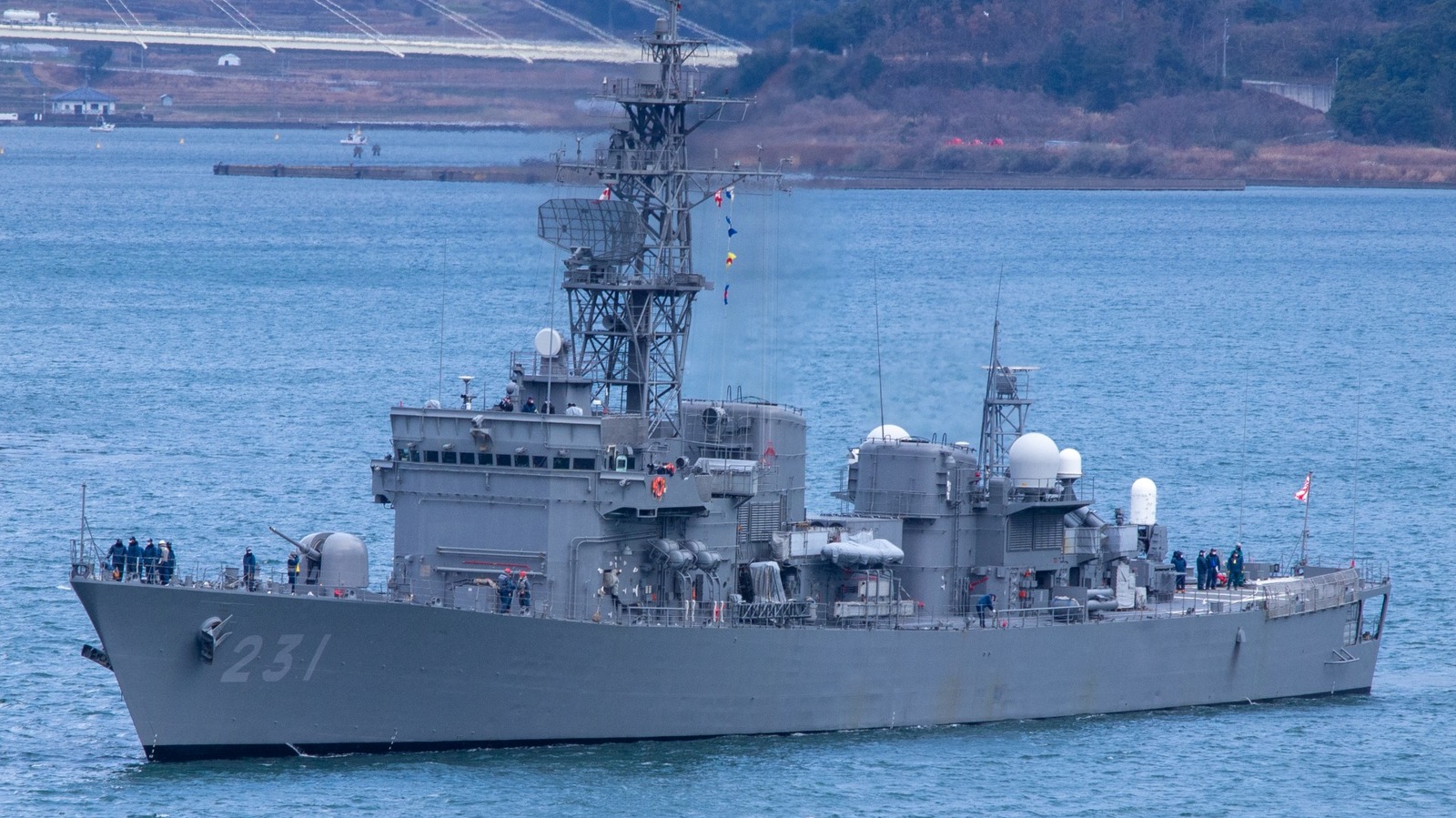
Japan relaxed its 80-plus-year arms export restrictions on April 21, 2026, allowing lethal weapons sales to 17 defense partner nations and opening the door for exports of decommissioned Navy destroyers. The Philippines has already signed an agreement in July 2025 for six used Abukuma-class escort destroyers, which it plans to use to bolster coastal defense against China in the South China Sea. The policy shift broadens Japan’s defense export market, though sales remain constrained for countries involved in active conflicts.
Japan’s policy shift is less about near-term volume and more about unlocking a slow-moving export franchise in a category where second-hand inventory can be strategically useful. The first-order winners are Japanese defense OEMs and shipyard ecosystems that support refits, life-extension work, sensors, combat systems, and training packages; those services typically carry better margin than the hull transfer itself and create multi-year follow-on revenue. Second-order beneficiaries are allied navies under budget pressure, especially in the Indo-Pacific, where used Japanese platforms can close capability gaps 3-5 years faster than newbuild procurement.
The more interesting implication is competitive displacement. If Japan becomes a trusted source of decommissioned major assets, it can siphon demand from European surplus suppliers and reduce the bargaining power of U.S. platform makers in lower-end regional defense tenders. That said, there is a bottleneck: any buyer still needs maintenance, ammunition, spares, and domestic integration capacity, so the real trade is not “ships” but the local industrial base that can absorb them. Expect offset opportunities for marine electronics, ship repair, and logistics contractors in the Philippines and other recipient states.
The main risk is policy friction, not demand. A stricter interpretation of end-user restrictions or export approvals could delay deals by quarters, and any escalation involving China would paradoxically increase demand while raising diplomatic pressure on Japan to slow exports. The market is likely underestimating the signaling value: once one or two transfers close successfully, the category becomes a template, and the next 12-24 months could see a broader funnel of decommissioned Japanese equipment moving into friendly states.
Contrarian view: this is not an immediate revenue step-change for Japan Inc., because the addressable pool is still narrow and procurement cycles are long. The underappreciated upside is reputational—Japan is positioning itself as a high-trust defense supplier, which can compound into larger platforms later. The overdone risk is expecting a sudden export boom; the more realistic outcome is a gradual re-rating of selected defense and industrial names tied to sustainment rather than headline weapons sales.
AI-powered research, real-time alerts, and portfolio analytics for institutional investors.
Request DemoOverall Sentiment
mildly positive
Sentiment Score
0.15
