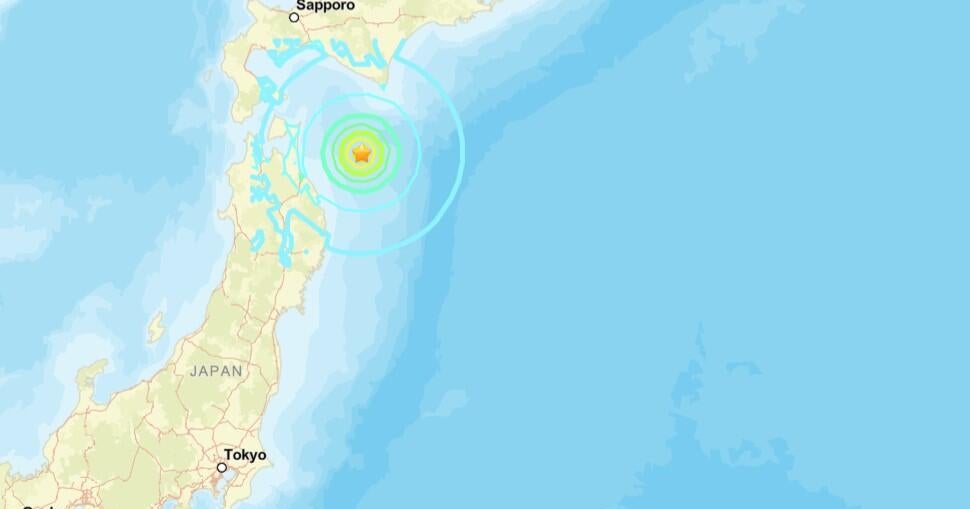
A 6.7 magnitude earthquake struck Friday off northern Japan about 70 miles northeast of Hachinohe at a shallow depth of roughly 6.65 miles, prompting a Japan Meteorological Agency tsunami advisory for parts of the Pacific coast (no tsunami alerts for the U.S. or Hawaii); it follows a 7.5 quake earlier in the week that caused at least 34 injuries, damaged roads and buildings and produced localized tsunamis. Japan’s government has issued a broader megaquake advisory—while officials put the probability of an M8+ event at only about 1%, they warned a worst‑case tsunami could reach as much as 98 feet and cause nearly 200,000 deaths—keeping seismic risk elevated for Hokkaido and the Sanriku coast and posing potential near‑term threats to coastal infrastructure, logistics and energy assets.
A 6.7 magnitude earthquake struck Friday off northern Japan about 70 miles northeast of Hachinohe in Aomori prefecture at a shallow depth of roughly 6.65 miles, prompting the Japan Meteorological Agency to issue a tsunami advisory for portions of the Pacific coast while no tsunami alerts were issued for the U.S. West Coast or Hawaii. This event follows a 7.5 magnitude quake earlier in the week that caused at least 34 injuries, damaged roads and buildings, and produced localized tsunamis up to 28 inches.
Japan’s government has issued a broader megaquake advisory that cites a worst-case offshore tsunami of up to 98 feet and nearly 200,000 potential fatalities, even as officials assign only about a 1% probability to an M8+ event; the agency later clarified the recent notice was an advisory, not a warning. The earthquakes highlight elevated seismic risk in regions adjacent to the Japan Trench and Chishima Trench, specifically Hokkaido and the Sanriku coast, where Monday’s tremor temporarily increased short-term risk.
Market signals register moderately negative sentiment with a modest market-impact score (sentiment -0.5, impact 0.35), implying potential near-term pressure on coastal-dependent sectors; immediate practical risks include damage to ports, coastal infrastructure, logistics corridors and energy assets that could disrupt supply chains and spur insurance claims. Investors should prioritize verified operational and damage reports and monitor any change in government advisories that would materially increase localized losses or sector volatility.
AI-powered research, real-time alerts, and portfolio analytics for institutional investors.
Request DemoOverall Sentiment
moderately negative
Sentiment Score
-0.50
