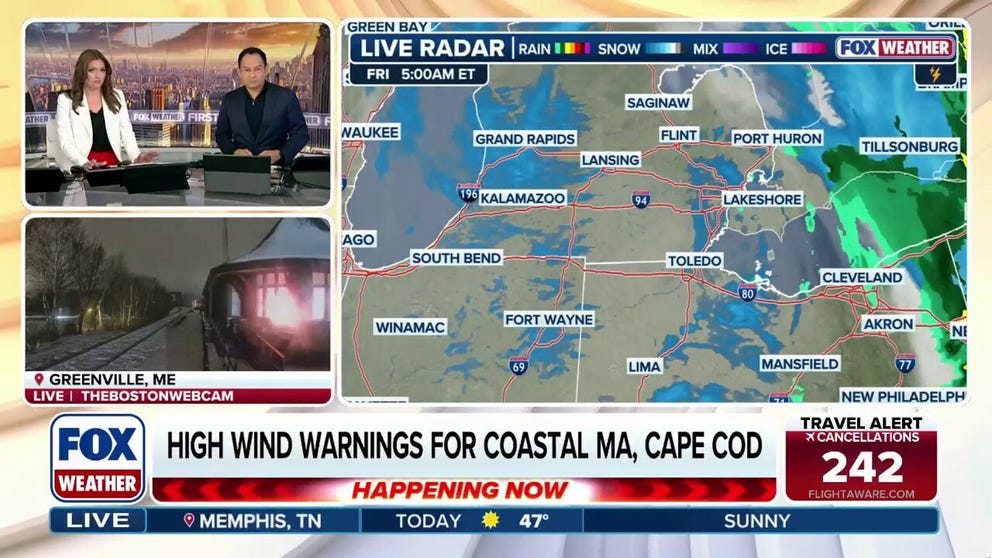
A powerful coast-to-coast storm hit the Eastern Seaboard, prompting High Wind Alerts for millions and producing wind gusts up to 60 mph in the New York metro while causing more than 3,400 flight delays and over 400 cancellations by midday Friday. NOAA issued a Level 1 flash flood risk for northern New England and a rapid cold front pushed temperatures into the teens and 20s, raising risks of black ice and localized logistics and travel disruption during a peak holiday period.
Market structure: Immediate winners are short-term ground-transportation (UBER, LYFT) and heating-energy suppliers (Henry Hub/UNG) as travelers rebook and heating demand spikes; clear losers are Northeast-exposed carriers (JBLU, AAL, UAL) and airport service providers due to cancellations and crew ripple effects. Pricing power shifts transiently to car-hire and rideshare platforms (expect 5–20% day-over-day surge in demand on peak disruption days) and to spot natural gas and local power markets with potential 10–30% intraday moves in tight systems.
Risk assessment: Tail risks include prolonged multi-day airport closures over peak travel windows (low-probability <5% but >$100m hit to a major carrier over several days) and elevated insurance claims if wind damage widens; regulatory scrutiny of airline disruption management is a 3–6 month tail risk. Short-term (days–weeks) operational knock-ons (crew rest rules, re-accommodation costs) drive cash burn; medium-term (quarters) customer churn and reputational damage can depress yields.
Trade implications: Tactical trades: buy short-dated natural gas exposure (10–30 day horizon) and buy rideshare stock/call exposure for 3–10 day demand spikes; establish selective short exposure to NYC/Northeast-concentrated carriers (JBLU) via 30–60 day put spreads. Use pair trades to go long Delta (DAL) vs short JetBlue (JBLU) to exploit operational resilience differences; hedge with trade-size caps of 1–3% portfolio each.
Contrarian angles: Consensus underprices knock-on supply-chain effects—de-icing and crew shortages create multi-day revenue leakage for airlines, so implied vols on airline options are likely undercut; conversely market overreacts to single-day delays so quality network carriers (DAL) may be oversold. Historical parallels (major holiday storms 2010–2018) show 7–21 day mean reversion in bookings; trade windows should be front-loaded and capped.
AI-powered research, real-time alerts, and portfolio analytics for institutional investors.
Request DemoOverall Sentiment
moderately negative
Sentiment Score
-0.30
