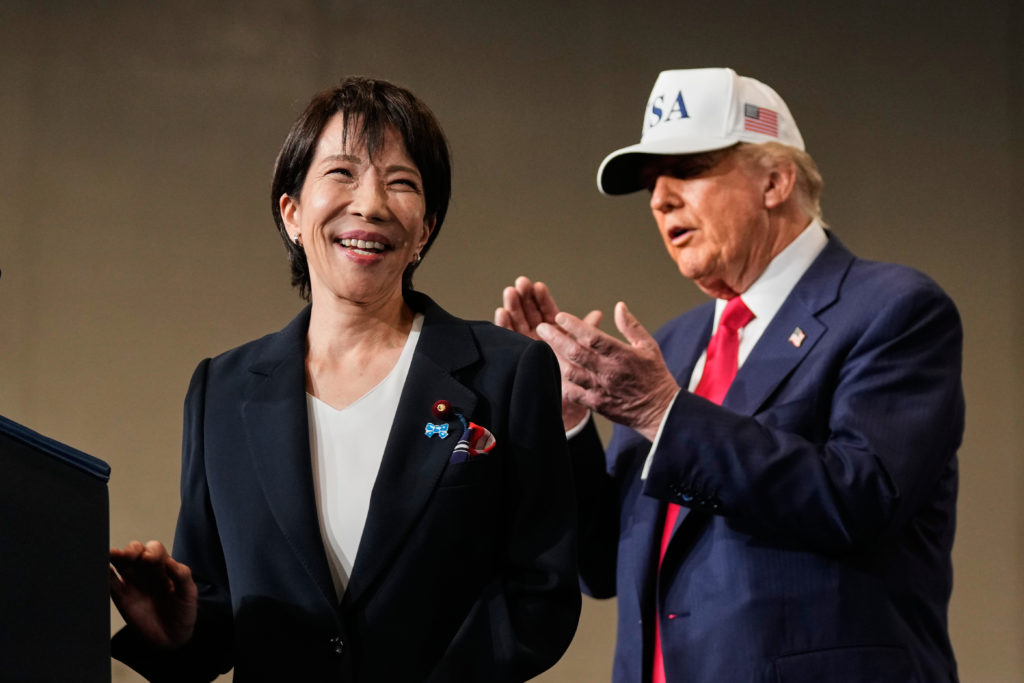
Japanese PM Sanae Takaichi is visiting Washington amid the U.S.-Israel war with Iran (fighting began Feb. 28), complicating talks and U.S. appeals for allied warships; Japan says it has 'no plans to send warships' and would limit activity to survey/intelligence missions only after a ceasefire. Tokyo seeks progress on a $550 billion investment package pledged in October (with a $36 billion first batch already announced) including Alaska oil, U.S. natural gas and small modular reactor projects, and proposes joint rare-earth development at Minamitorishima, while pushing for deeper security cooperation (interest in the U.S. 'Golden Dome' missile-defense system, accelerated long-range missiles) and planning to lift a lethal arms export ban.
Japan’s shifting posture — legal tweaks to allow lethal exports, faster missile procurement and interest in US layered missile defense — creates a multiyear procurement wave that is underpriced by markets focused on near-term geopolitics. Expect multi-billion-dollar bilateral programs and offsets to drive outsized revenue growth for missile/airframe integrators and subsystem suppliers over a 12–36 month window, with the majority of cashflows front-loaded into engineering and supply‑chain retooling.
Energy re‑sourcing away from the Middle East is a structural story, not just a tactical response to price moves: Japanese capital directed into Alaskan oil, US LNG and SMRs will shore up North American upstream and nuclear supply chains and lift demand for heavy equipment, fabrication and long‑lead components over 2–5 years. Concurrently, any credible push to commercialize domestic or near‑sea rare earth deposits shifts pricing power away from Chinese processors on a delayed 3–7 year cadence and creates a niche market for deep‑water mining contractors and subsea services.
Short‑term market sensitivity remains high: a significant escalation in the Middle East would spike oil and defense bid activity within days-to-weeks, while a negotiated ceasefire would cool urgency and re-price energy/defense exposures over months. Key reversals include (a) Japanese political pushback slowing defense reforms, and (b) Chinese economic countermeasures that could blunt supply‑chain diversification — both are realistic multi‑quarter catalysts that could materially alter the risk/reward calculus.
AI-powered research, real-time alerts, and portfolio analytics for institutional investors.
Request DemoOverall Sentiment
mildly negative
Sentiment Score
-0.15
