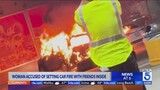
A massive fire broke out at Lineage’s 490,000-square-foot cold storage warehouse in Boyle Heights, triggering a shelter-in-place order and a hazardous materials response after an ammonia leak and solar panels ignited. No injuries were reported, and crews had the blaze knocked down by 6 p.m., but the facility remained inaccessible and smoke advisories stayed in effect. The incident is negative for Lineage’s operations and highlights supply-chain and industrial safety risks, though the immediate market impact should be limited.
This is less a one-off fire headline than a stress test for a high-utilization, low-redundancy node in the cold-chain network. The immediate economic hit is likely modest versus the visual severity, but the second-order risk is inventory displacement: frozen-food customers will prioritize continuity over price, forcing emergency rerouting to nearby third-party cold storage and temporarily tightening regional capacity. That can create a short-lived pricing tailwind for competing warehouse operators while pressuring service levels and margins at LINE if remediation or re-tenanting drags.
The larger issue is not just asset damage but latent liability. A facility-level event that combines electrical, roof-mounted solar, and hazardous-materials complications raises the probability of insurance scrutiny, deductible creep, and higher risk premia on renewal across the industrial cold-storage cohort. For a business model that depends on uptime and customer trust, even a contained incident can lift churn risk if shippers begin to question redundancy and disaster recovery protocols.
In the near term, the market is likely to focus on optics rather than cash flow, so the stock reaction may overshoot any direct economic loss. Over 1-3 months, the key catalyst is disclosure: extent of physical damage, inventory loss, insurance coverage, and whether any customer contracts were interrupted. If downtime proves limited, this becomes a fadeable event; if the site is offline for weeks, the earnings hit is still probably manageable, but the multiple compression from operational credibility damage could be larger than the P&L impact.
The contrarian angle is that this may actually accelerate demand for fragmented cold-storage capacity and automation-backed facilities with better fire suppression and redundancy. Operators with modernized assets, diversified geography, and stronger insurance terms could see incremental pricing power as customers re-underwrite their supply-chain resilience needs. The market may be underestimating how quickly a single incident can reprices the value of 'boring' industrial resilience.
AI-powered research, real-time alerts, and portfolio analytics for institutional investors.
Request DemoOverall Sentiment
moderately negative
Sentiment Score
-0.45
Ticker Sentiment
