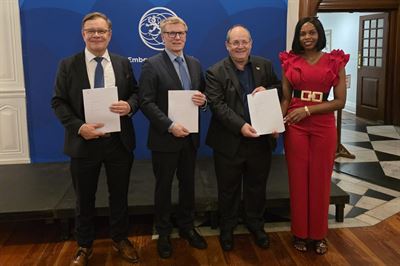
Betolar (ticker: BETOLAR / OTC: BTLRF) signed a Memorandum of Understanding on Feb 10, 2026 with EcoGraf and the Geological Survey of Finland (GTK) to evaluate processing ~0.9 million tonnes/year of tailings from the Epanko Graphite Project (Tanzania) using Betolar’s metal extraction technology. Pilot work cites up to 99% recovery for critical metals and a co-product low‑carbon circular cement that could replace conventional cement, potentially creating dual revenue streams and lowering environmental liabilities; the parties will jointly pursue funding for technical, commercial and environmental studies to commercialize the concept.
Market-structure: The deal concentrates upside on Betolar (Nasdaq First North: BETOLAR / OTCQX:BTLRF) and vertically integrated graphite players (e.g., EcoGraf ASX:EGR) by turning ~0.9Mtpa tailings into two revenue streams (metals + low‑carbon binder). If pilot scale replicates the cited ~99% recoveries, incumbents in cement (CRH, HeidelbergCement) face margin pressure in regions where tailings-based binders reach >5–10% market share over 3–5 years. Graphite miners could see feedstock-cost risk as tailings become an incremental low‑cost source, pressuring prices for large flake concentrate.
Risk assessment: Key tail risks are technical scale‑up failure (<50% recovery), Tanzanian permitting delays >12 months, and capex overruns; any of these would wipe out near-term equity value for Betolar and EcoGraf. Near‑term (0–6 months) material moves hinge on grant/funding announcements and pilot results; medium (6–24 months) depends on certification to construction standards; long (2–5 years) on commercial plant deployment and offtake. Hidden dependencies include energy/water intensity and local regulatory acceptance of binders (EN/ASTM certification) — failure here is a binary de‑rating.
Trade implications: Tactical trades favour small, defined‑risk longs in tech‑providers and vertically integrated anode players: buy selective exposure to BETOLAR/BTLRF and EGR while hedging graphite price. Use options to cap downside (buy call spreads or long-dated calls) and use bear‑put spreads on large cement names as insurance if pilots show fast success. Rebalance if pilot funding/certification occurs within 3–6 months or if Tanzanian approvals slip beyond 12 months.
Contrarian angles: The market underestimates time and regulatory friction — commercialization is 24–48 months, not immediate; therefore early-stage equity reratings are likely overdone absent pilot certification. Conversely, if Betolar proves modular low‑capex plants with <5‑year payback, expect rapid consolidation and a 2–4x re‑rating in small cap suppliers; that asymmetry supports limited, high‑conviction bets with tight risk controls.
AI-powered research, real-time alerts, and portfolio analytics for institutional investors.
Request DemoOverall Sentiment
moderately positive
Sentiment Score
0.35
