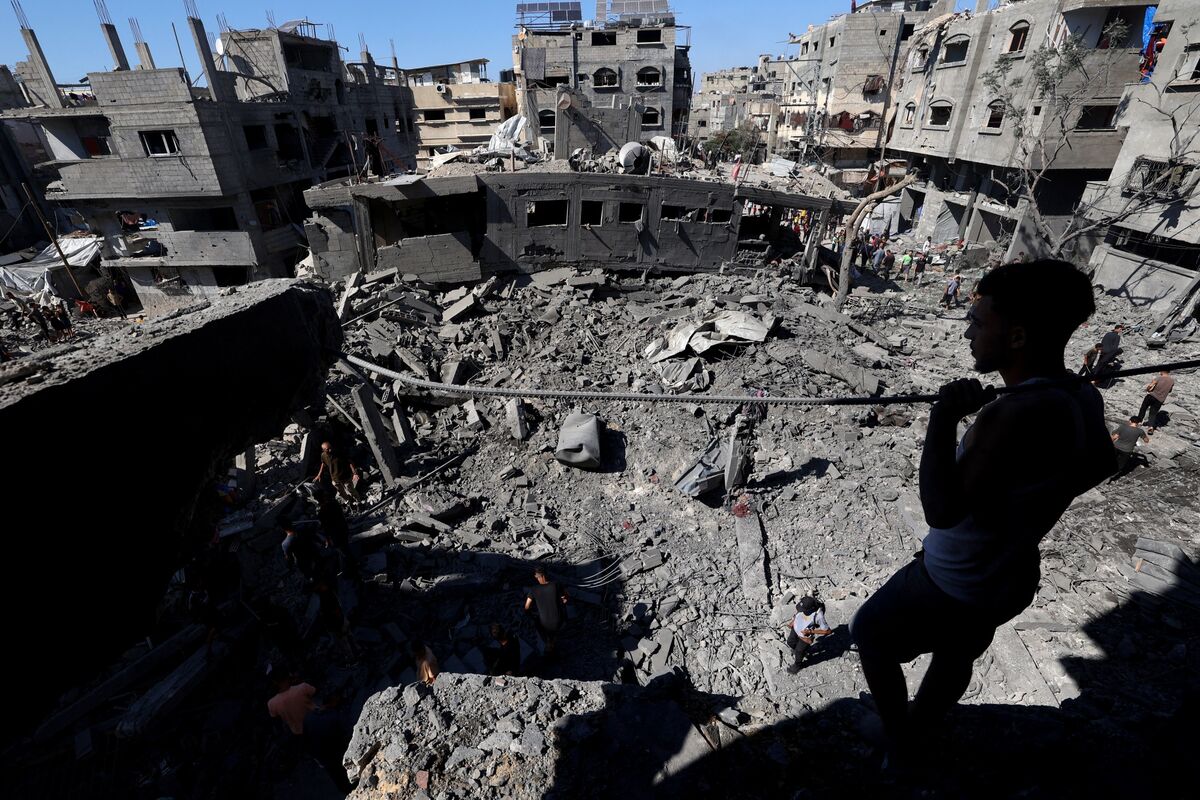
Israeli airstrikes killed 15 Palestinians in Gaza, with an additional 20 deaths reported from shootings among those awaiting aid, contributing to a total of 613 aid-related fatalities in the past month. This severe humanitarian situation underscores persistent regional instability, even as Hamas has given a 'positive' response to the latest ceasefire proposal, contingent on implementation negotiations. These ongoing developments are critical for assessing geopolitical risk and investor sentiment in the broader Middle East.
The report highlights a significant escalation in the humanitarian crisis within Gaza, with the death of 35 Palestinians in a single 24-hour period from both Israeli airstrikes and shootings at aid distribution points. The U.N.'s documentation of 613 such aid-related deaths in a month quantifies the severe and persistent instability on the ground. This ongoing violence provides a stark backdrop to diplomatic efforts, where Hamas has offered a 'positive' but conditional response to a ceasefire proposal, indicating that critical implementation details remain a major hurdle. The combination of intense, localized conflict and tentative diplomatic progress creates a state of high uncertainty. While the direct market impact is assessed as low, the events underscore the deep-seated geopolitical risk in the Middle East, where any failure in negotiations or further escalation of the humanitarian crisis could rapidly alter regional stability.
AI-powered research, real-time alerts, and portfolio analytics for institutional investors.
Request DemoOverall Sentiment
mildly negative
Sentiment Score
-0.15
