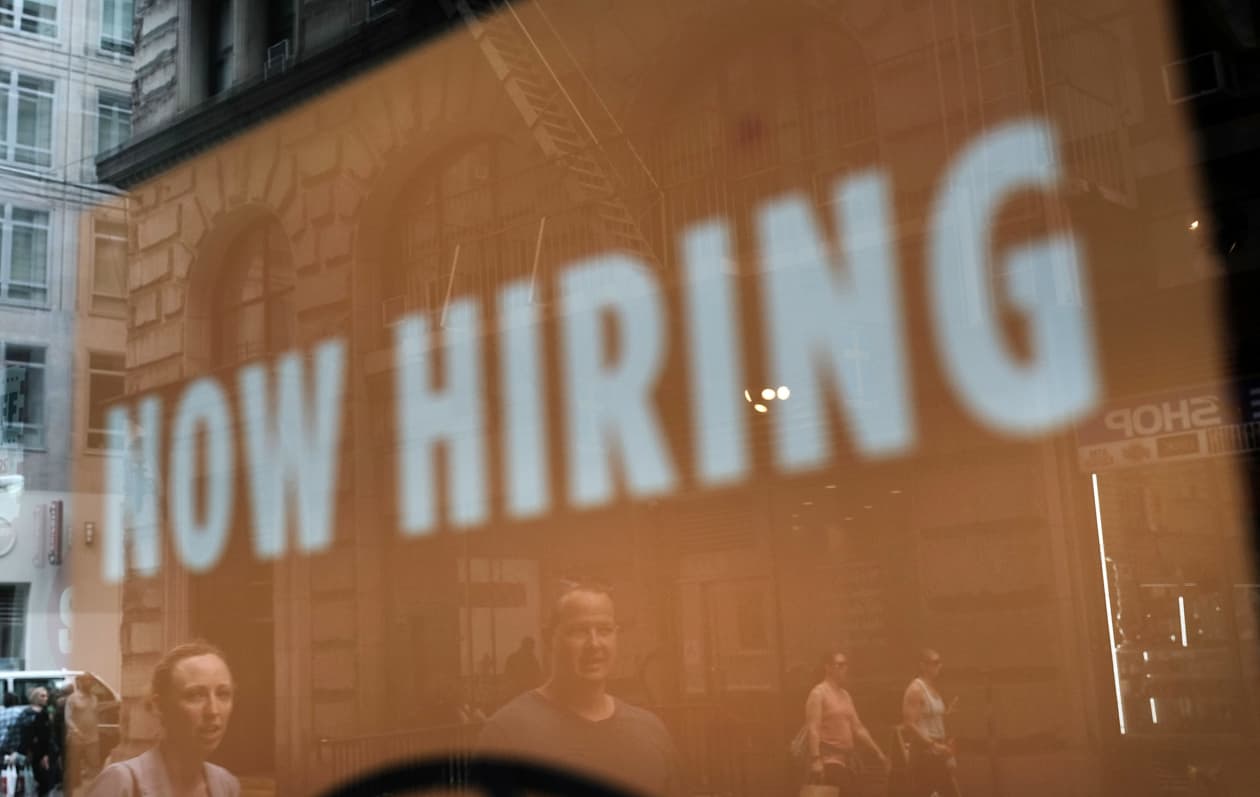
U.S. job openings edged up to 7.6 million in May, holding at a two-year high, signaling an end to the prior decline. However, Americans reporting jobs are “hard to get” rose to the highest since 2021, implying hiring remains difficult even if vacancies stabilize—likely keeping pressure on expectations for faster labor market improvement.
This is not a clean growth-up signal; it reads more like labor-market friction than a new hiring impulse. Vacancy data can stay elevated even as actual matching worsens, and that combination usually matters more for wage pressure than for broad employment strength. For markets, the key is that the Fed will likely look through a single openings print unless it is confirmed by payrolls, claims, and wage data.
Near term, the cleaner expression is lower front-end yields if the next 1-2 labor prints soften, which would support duration and rate-sensitive equities. The losers are labor-intensive margin pools that need hiring to scale—staffing, retail, restaurants, transportation—because they can still face elevated wage costs without volume growth. Staffing proxies such as RHI, KFY, and MAN are especially vulnerable if openings are high but placements and temp demand do not improve over the next quarter.
The contrarian risk is that the market overreads the headline and misses the deterioration in worker confidence embedded in the "hard to get" measure. That usually shows up later in weaker spending, slower quits, and eventually softer earnings revisions for cyclical consumer names. Falsifier: if the next two payroll prints reaccelerate above roughly 175k and average hourly earnings stays hot above 0.4% m/m, this becomes noise rather than a disinflation signal.
AI-powered research, real-time alerts, and portfolio analytics for institutional investors.
Request DemoOverall Sentiment
mildly negative
Sentiment Score
-0.15
