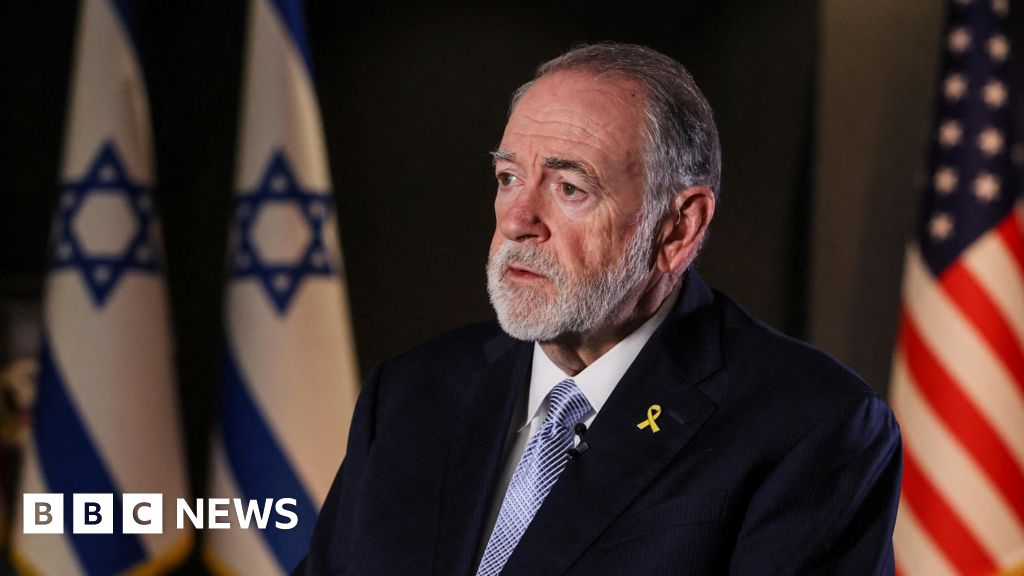
US Ambassador to Israel Mike Huckabee told Tucker Carlson that “it would be fine if [Israel] took it all,” a remark he later called hyperbolic, prompting a joint condemnation from more than a dozen Arab and Muslim governments — including the UAE, Egypt and Jordan — which said the comments violated international law and undermined efforts to end the Gaza war. The statement, also signed by the Arab League, OIC and GCC, reaffirmed rejection of annexation and settlement expansion; the article notes Israel has built about 160 settlements housing ~700,000 settlers in the occupied West Bank/East Jerusalem alongside ~3.3 million Palestinians, cites a 2024 ICJ advisory opinion that the settlements are illegal, and reports Gaza health authorities saying over 72,000 Palestinians have been killed since the 7 October 2023 Hamas attack and Israel's subsequent offensive.
Market structure: Geopolitical flare-ups from high-profile US comments raise near-term risk premia for energy and defense. Expect beneficiaries: large-cap defense primes (LMT, RTX, NOC) and integrated oil majors (XOM, CVX) as risk premia lift; losers include regional travel/airlines (UAL, AAL), tourism, and EM sovereign debt in Levant/Gulf. Price mechanism: a 5–15% risk-premium on Brent is plausible if security incidents occur, shifting short-term supply/demand balance and widening risk spreads.
Risk assessment: Tail scenarios (5–15% probability next 3 months) include widening ground conflict, targeted attacks on shipping or oil infrastructure, or diplomatic rupture with Gulf states — each could spike Brent >$100/barrel and widen CDS for regional sovereigns by 200–400bps. Immediate (days) = volatility spike in FX/commods; short (weeks–months) = oil and defense outperformance; long (quarters–years) = persistent political realignment and investment diversion from regional capex.
Trade implications: Tactical plays should target oil call spreads (3-month) and selective defense longs while hedging via USD and long-duration Treasuries on flight-to-quality. Use pair trades to separate secular winners (defense) from cyclical losers (airlines, tourism operators) and size positions modestly (1–3% each) with explicit stop-loss/triggers tied to Brent and 10y yield moves.
Contrarian angles: Consensus fear trades may be overbaked — past regional shocks (2019 tanker strikes) saw 20–30% oil spikes and reversion within 6–12 weeks. If Brent fails to sustain a >10% rise in 30 days, scale back oil exposure and rotate into gold miners (GDX) and quality cyclicals. Hidden risk: US domestic political shifts or an explicit White House rebuke could remove escalation premium quickly, creating mean-reversion opportunities.
AI-powered research, real-time alerts, and portfolio analytics for institutional investors.
Request DemoOverall Sentiment
moderately negative
Sentiment Score
-0.50
