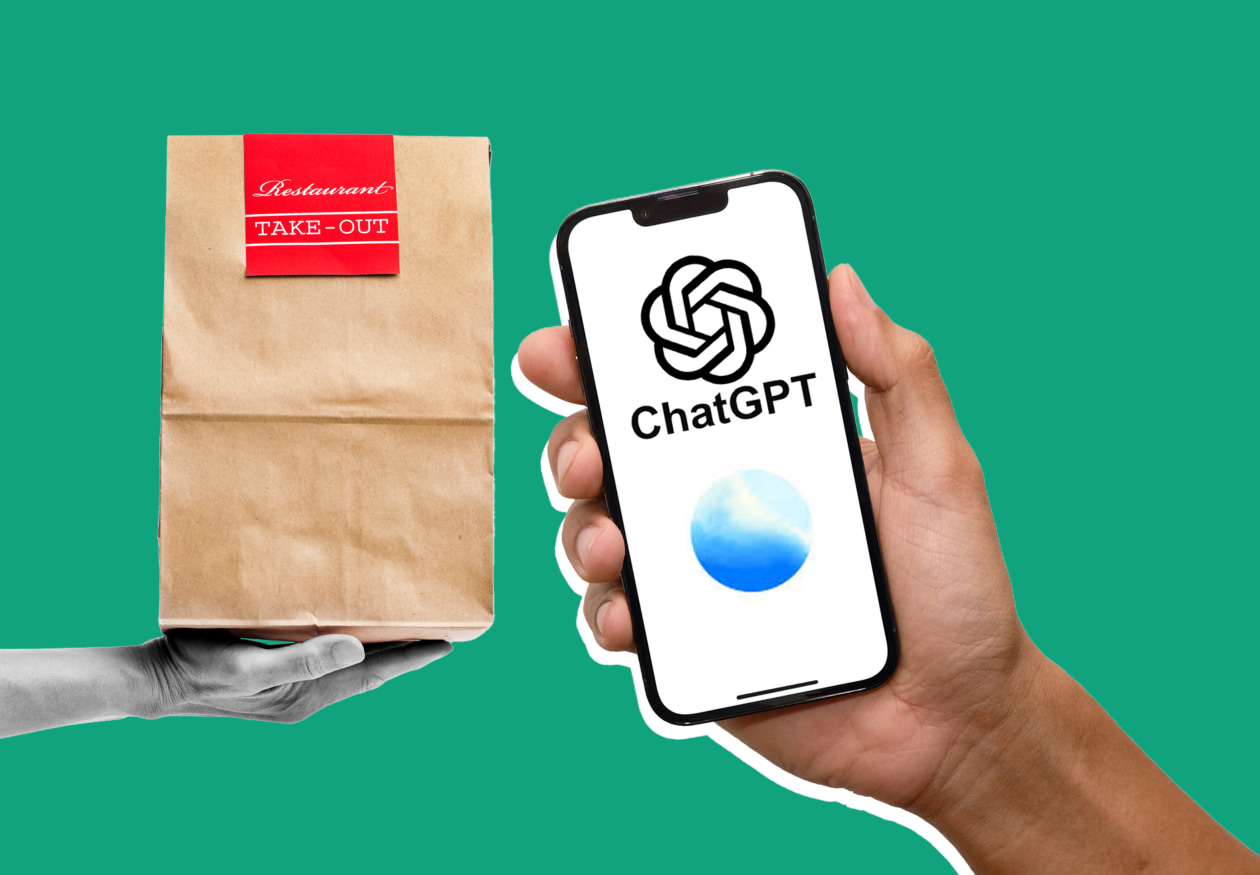
Starbucks and Little Caesars have launched apps on OpenAI’s ChatGPT platform to help customers place orders, signaling a new AI-enabled ordering channel for restaurants. The development highlights growing adoption of artificial intelligence in consumer retail and food service. The article is mostly conceptual and likely modestly positive for related names, with limited immediate market impact.
This is less about near-term revenue uplift than about reducing friction in the highest-value part of the consumer funnel: intent-to-order. If AI chat becomes a default entry point, brands with strong habitual demand and broad menu standardization should see incremental conversion, while smaller chains and regional players face a discoverability tax because they lack the same distribution inside the assistant layer. The real winner may be the platform layer itself, which can monetize both traffic and transaction data long before restaurant operators can prove a meaningful P&L lift.
For SBUX, the first-order upside is modest, but the second-order effect is better frequency from low-intent customers who otherwise abandon the purchase path. That matters because the economics of mobile order/paid app engagement are driven by repeat behavior, not one-off order size; even a low-single-digit lift in weekly active purchasers can compound into a meaningful comp-store tailwind over several quarters. The risk is that AI ordering simply shifts channel mix away from owned digital surfaces, diluting first-party data control and potentially raising effective customer-acquisition costs if the platform becomes the gatekeeper.
The market is likely underestimating implementation risk. A broken order, menu hallucination, or latency issue would quickly cap adoption and push this into a branding exercise rather than a revenue contributor, so the timeline is months to years, not days. The contrarian view is that this is a distribution feature, not a moat: if every chain can plug into the same interface, the advantage accrues to whoever owns the best loyalty economics, not whoever announces first.
AI-powered research, real-time alerts, and portfolio analytics for institutional investors.
Overall Sentiment
mildly positive
Sentiment Score
0.20
Ticker Sentiment
