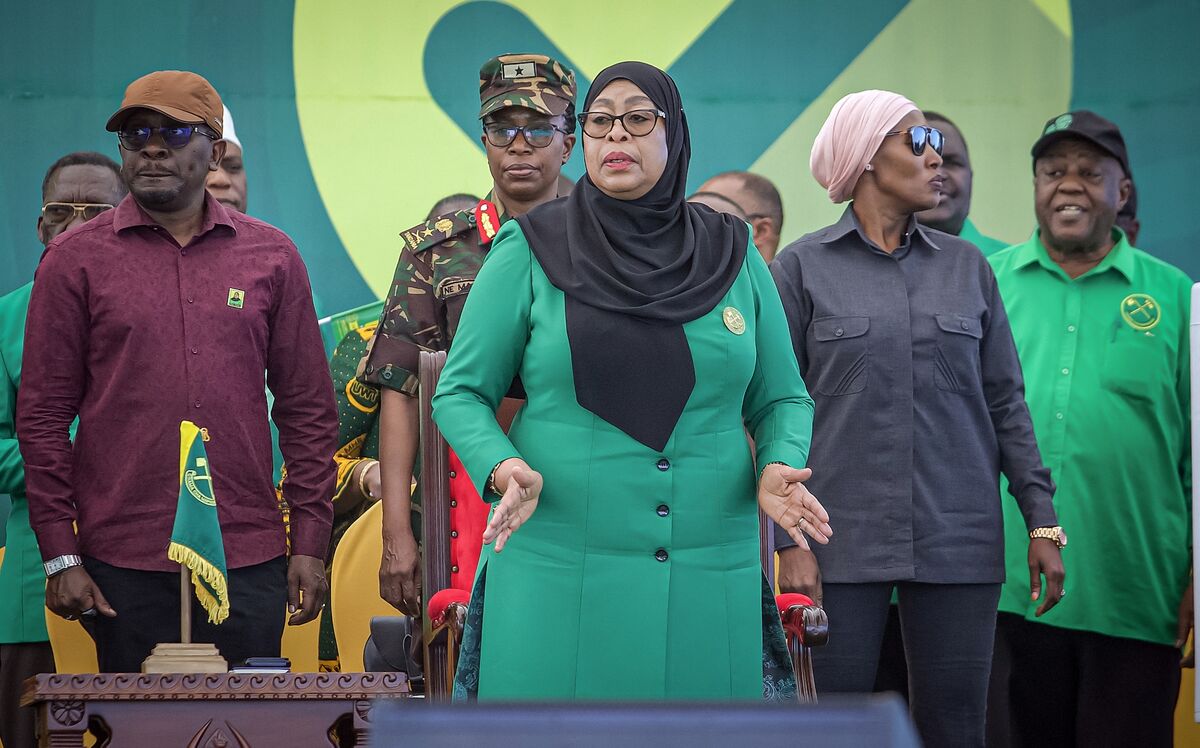
Tanzania's incumbent President Samia Suluhu Hassan is set for an overwhelming re-election victory, as her primary rivals were excluded from the ongoing poll, effectively creating a one-horse race. This outcome, driven by her dominant Chama cha Mapinduzi party, signals significant political continuity and reduced immediate electoral uncertainty in the East African nation, which could be a key factor for investors monitoring regional stability.
Tanzania's upcoming presidential election is poised to deliver an overwhelming victory for incumbent President Samia Suluhu Hassan, with her ruling Chama cha Mapinduzi party facing minimal opposition. This outcome is largely due to the exclusion of her main rivals from the poll, effectively creating a one-horse race against 16 minor parties.
This electoral scenario signals significant political continuity and reduced immediate electoral uncertainty within the East African nation. While continuity can be a positive for market stability, the overall sentiment remains neutral, suggesting investors are acknowledging the predictability without necessarily interpreting it as a strong bullish signal.
The dominance of the Chama cha Mapinduzi, described as a 'political behemoth with a deep war chest,' ensures a stable political landscape in the short term. However, the method of achieving this stability, through the barring of key opposition, introduces a nuanced perspective for investors evaluating long-term governance and institutional strength in emerging markets.
AI-powered research, real-time alerts, and portfolio analytics for institutional investors.
Request DemoOverall Sentiment
neutral
Sentiment Score
0.00
