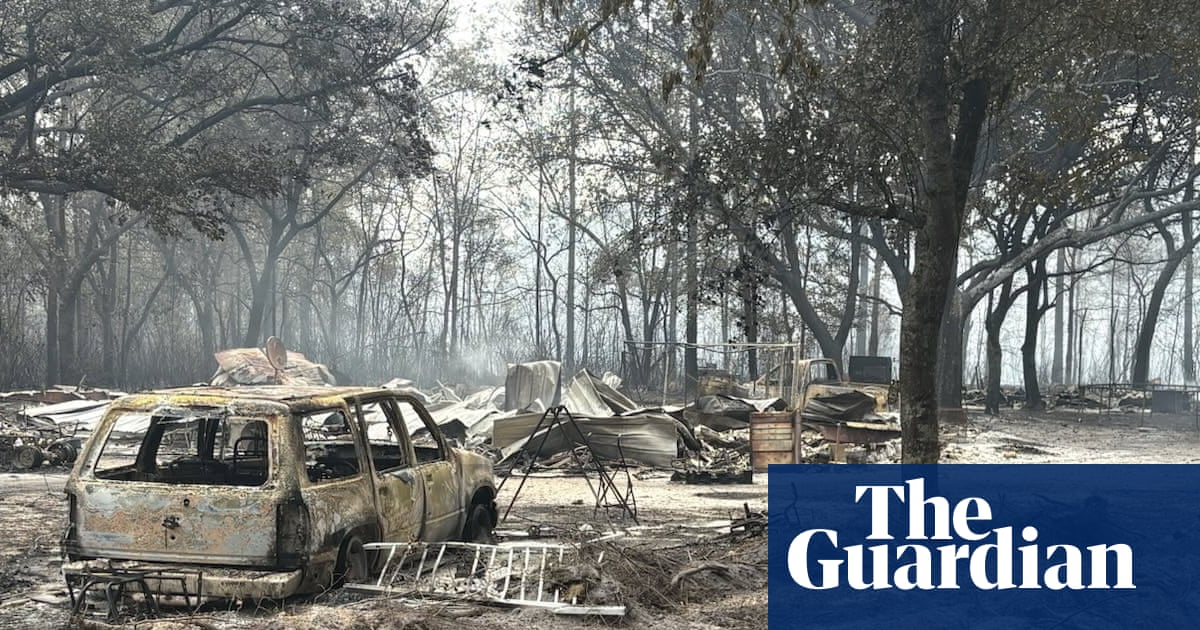
Two wildfires in southeastern Georgia have destroyed more than 120 homes, including at least 87 from the Highway 82 fire and 35 from a second blaze in Clinch and Echols counties. Both fires were only about 10% contained as of Saturday, with strong winds expected to spread flames further and officials urging evacuations. The broader outbreak includes more than 150 other wildfires across Georgia and Florida, with smoke triggering air quality warnings and one firefighter death reported in northern Florida.
The first-order market read is not the fires themselves but the persistence signal: this is turning into a multi-week regional climate shock, not a one-off headline event. That matters for insurance, reinsurance, utilities, and any asset base exposed to the Southeast, because repeated incidents can drive both near-term loss accruals and longer-duration repricing of catastrophe assumptions. The more important second-order effect is the backstop problem: even without direct Georgia exposure, carriers with broad Southern books can see tightening terms, higher deductibles, and slower policy issuance well before realized losses show up in earnings.
For utilities and infrastructure, the key issue is not just damaged lines or poles; it is operational fragility under wind-driven fire conditions. Stronger winds can force preemptive shutoffs, which creates a revenue hit and raises political/regulatory scrutiny around grid hardening, vegetation management, and wildfire mitigation spend. That favors firms selling inspection, repair, vegetation, and grid-resilience services, while compressing sentiment on vertically integrated utilities with weaker balance-sheet flexibility and more exposed service territories.
On the macro side, the smoke and air-quality warnings are a small but real drag on regional activity: outdoor labor, construction, logistics, and local retail get hit first, with disruption lasting days to weeks if the smoke plume persists. The labor-loss angle is underappreciated because emergency response and reconstruction can coexist with slower consumer spending, so GDP effects are not purely additive. A longer tail risk is that insurers and municipal lenders begin demanding higher premiums for projects in fire-prone Southern corridors, especially where drought and post-hurricane debris remain recurring factors.
Consensus is likely underestimating how quickly catastrophe models can reset after a season like this. If additional ignitions occur over the next 1-3 months, the market may stop treating Southeast wildfire losses as idiosyncratic and start pricing them as a structural risk bucket alongside hail and hurricane exposure. That would be supportive for mitigation and resilience names, while being a headwind for insurers with limited pricing power or weak reinsurance protection into next renewal season.
AI-powered research, real-time alerts, and portfolio analytics for institutional investors.
Request DemoOverall Sentiment
strongly negative
Sentiment Score
-0.65
