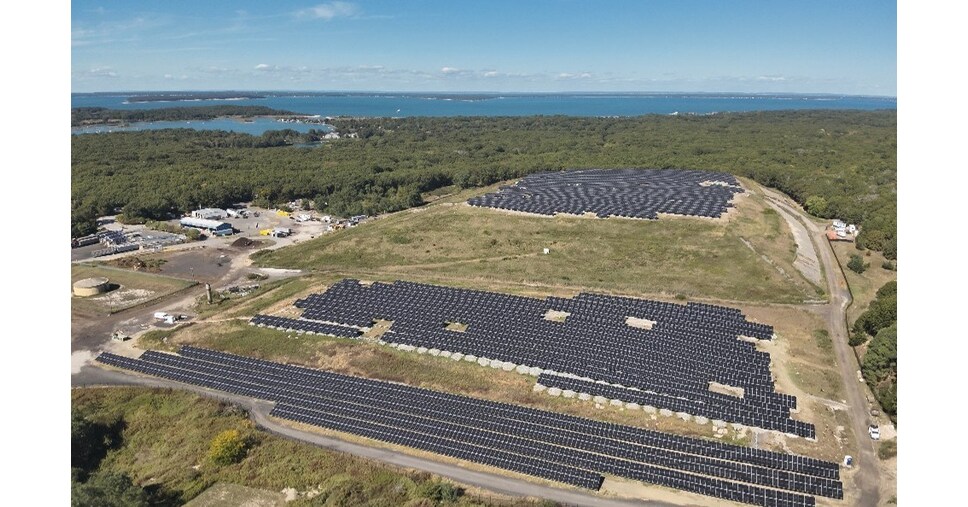
Kearsarge Energy began commercial operations for 88 MW/MWh of renewable projects in 2025 and has 160+ MW/MWh scheduled for installation by end-2026, spanning standalone BESS, solar, and solar+BESS across the Northeast. The company highlighted specific deployments (e.g., 20 MWh BESS in Sterling, MA and 8.5M kWh/year from a capped-landfill solar project in Southampton, NY) aimed at peak shaving and local bill credits. Overall, the update is constructive but primarily an operations/expansion announcement with limited immediate market-wide impact.
The investable signal here is not the headline megawatts; it is that municipal buyers in the Northeast are still willing to sign behind-the-meter solar + storage deals to neutralize peak exposure. That matters because the economic pool is shifting from pure kWh sales toward avoided capacity, transmission, and demand charges — a model that quietly pressures incumbent utility load growth while improving IRRs for developers that can combine land control, interconnection know-how, and financing. The public-market beneficiaries are the enabling layer: storage integrators and distributed-energy developers with repeatable municipal procurement win rates, not the local project owner itself.
Near term, the main catalyst is second-order evidence in other pipelines: if ISO-NE peak prices stay elevated and municipal RFPs keep clearing, storage attach rates should rise over the next 1-3 months. The key risk is that project economics are highly sensitive to interconnection delays and ancillary-service spread compression; if winter peak volatility eases or financing costs stay high, these assets can underperform the rosy IRR math implied by press releases. Over 6-18 months, repeated adoption could nibble at regulated utility growth and support a valuation premium for names exposed to DER orchestration and storage supply.
Contrarian view: this is probably more confirmation than catalyst. The market may be overpricing a broad ESG read-through when the actual spend is still localized and fragmented; the more important question is whether the storage backlog converts into earnings and gross margin, not whether another municipal project was commissioned. Falsifiers are straightforward: weaker FLNC-type bookings, falling ISO-NE capacity/peak spreads, or slower municipal solicitation cadence would argue the trend is smaller than the announcement suggests.
AI-powered research, real-time alerts, and portfolio analytics for institutional investors.
Request DemoOverall Sentiment
mildly positive
Sentiment Score
0.25
Ticker Sentiment
