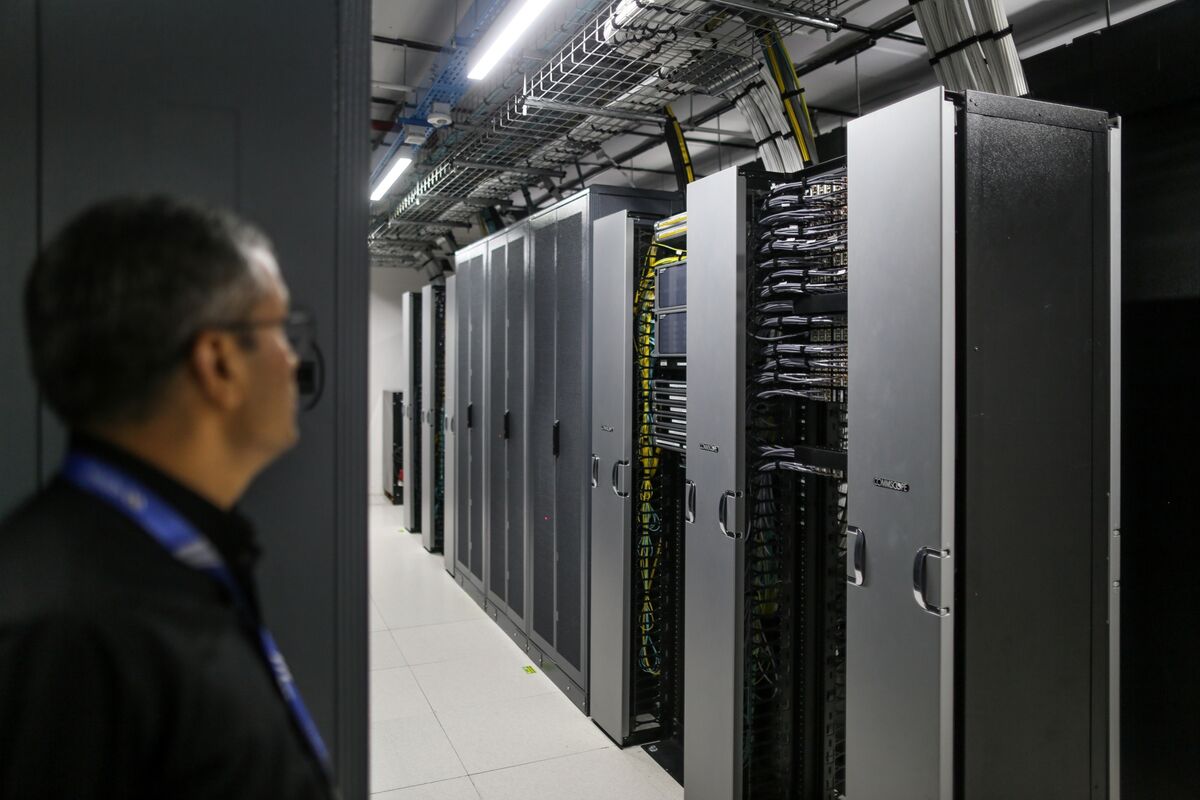
Yotta Data Services is considering a Mumbai IPO that could raise as much as $900 million and has already engaged ICICI Securities and SBI Capital Markets as advisers. The data center operator runs India’s largest cluster of Nvidia AI processors, tying the offering to continued demand for AI infrastructure. The company plans to file its draft prospectus in the next two to three months, with more banks likely to join the syndicate.
A large India data-center IPO would be less a single-company event than a signaling event for the entire local AI infrastructure stack. If the market clears at a strong valuation, it validates that hyperscale-capacity scarcity in India is becoming monetizable, which should tighten pricing for adjacent assets: power, land banks, cooling equipment, network interconnects, and domestic cloud partners. The second-order winner set is likely broader than the issuer itself, because public-market capital can be recycled into faster buildouts and higher pre-lease commitments across the sector.
The real market question is whether equity buyers are underwriting utilization growth or just paying for AI optionality. Data-center economics in emerging markets can look excellent on headline growth but fragile on power availability, customer concentration, and capex intensity; if this listing prices aggressively, it may compress forward returns across the peer group while benefiting incumbents that already own interconnects and grid access. In that setup, smaller private operators and late-stage developers are the losers because the IPO sets a higher standard for scale, balance sheet, and contracted cash flow.
Catalyst risk sits on a months-long horizon: filing and book-building will force disclosure on lease tenor, customer mix, and expansion capex, which can quickly change the narrative if AI-related demand is less contracted than implied. A weaker market tape for India tech IPOs or any delay tied to valuation can reverse enthusiasm fast, because these deals are sentiment-sensitive rather than earnings-driven in the near term. The contrarian read is that the market may be overestimating how much of the AI infrastructure boom is actually captured by the operator versus by chip suppliers, power providers, and networking vendors with more direct scarcity pricing.
AI-powered research, real-time alerts, and portfolio analytics for institutional investors.
Request DemoOverall Sentiment
mildly positive
Sentiment Score
0.20
