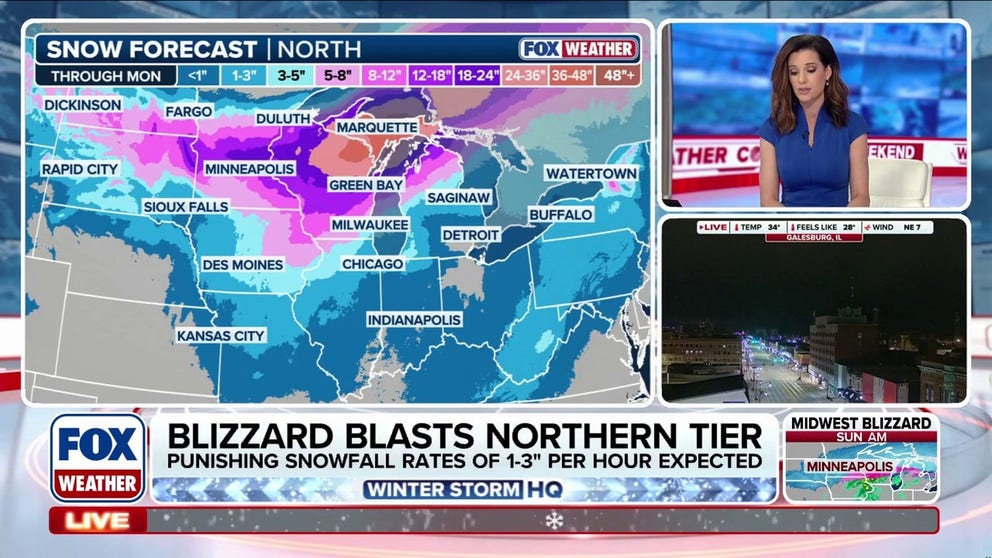
Millions across the Northern Tier are under Winter Weather Alerts, with forecasted wind gusts of 60–70 mph and several feet of snow possible from eastern Minnesota through northern Michigan by Monday. Airlines (notably Delta at MSP) are proactively canceling flights, and the storm threatens widespread travel disruptions, blizzard conditions and power outages for thousands. A post-storm Arctic blast is expected to drive highs 15–25°F below average with wind chills falling into negative single digits, likely raising short-term heating/energy demand and stressing regional utilities and transportation logistics.
This event functions less like a one-off weather hit and more like a concentrated operational choke that amplifies costs across transportation, energy and municipal services over a 1–6 week window. Hubs and single-node dependences (airline hubs, regional rail gateways, municipal fleets) produce outsized second-order losses: idled rolling stock and grounded aircraft create maintenance and re-positioning costs that can persist for multiple crew rotation cycles, turning a weekend disruption into recurring weekly P&L hits.
On the energy side, abrupt cold snaps in populated northern load centers typically push regional basis differentials before materially moving Henry Hub; expect localized TETCO/NGPL-style spreads to widen within 48–96 hours while nearby citygates and electric utility shortfalls force opportunistic spot purchasing. If outages cascade and dual-fuel generators run, incremental industrial oil and residual fuel demand can produce transient spikes in local fuel markets and logistics costs for trucked fuel deliveries.
Insurance and municipal finance effects resolve more slowly (weeks–quarters): P&C insurers face concentrated wind+snow loss accumulation that flows into loss ratios over the next 1–2 quarters, while municipalities immediately accelerate overtime, salt procurement and equipment rental line items — pressuring near-term budgets and deferring non-urgent capex. Conversely, manufacturers of de-icing chemicals, snow removal equipment and emergency services see order acceleration and potentially higher margin aftermarket service revenue over the following 4–12 weeks.
Key reversal catalysts: a track shift or rapid warm-up can erase most short-term trade upside within 72 hours; large pre-positioned fuel/stock inventories or already-layered insurer reinsurance cover can blunt loss pass-through over quarters. Monitor real-time load/gas citygate spreads, airline operational cancellations by hub, and municipal emergency procurement notices as 24–72 hour execution signals.
AI-powered research, real-time alerts, and portfolio analytics for institutional investors.
Request DemoOverall Sentiment
moderately negative
Sentiment Score
-0.55
