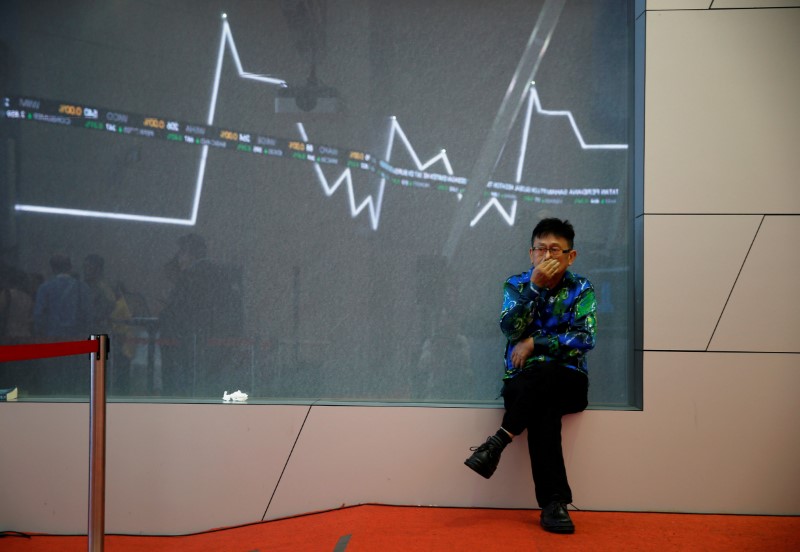
Indonesia's IDX Composite fell 3.41% as risk-off sentiment spread, with 651 decliners versus 93 gainers and broad weakness across Infrastructure, Financials, and Agriculture. Global market stress was reinforced by Nasdaq's more than 2% drop and a South Korea-led tech sell-off, while USD/IDR rose 0.69% to 17,964 and crude, Brent, and gold futures all declined.
This looks less like a single-country equity move and more like a global de-risking impulse hitting the weakest parts of the crowded growth/tech complex first. When higher-beta Asia tech gets repriced, the second-order effect is forced de-grossing across quant and momentum books, which can mechanically pressure unrelated cyclicals and EM beta through VaR constraints for 1-3 sessions even if local fundamentals are unchanged. The FX move confirms the same message: a softer IDR in the face of equity stress implies capital preservation is trumping carry, which often precedes further foreign outflows before it stabilizes.
The key winner from this tape is not any single sector but balance-sheet quality and domestic defensiveness. In Indonesia, exporters with USD-linked revenue and low import intensity should outperform when the currency weakens, while leveraged domestic names with refinancing needs are vulnerable if the selloff extends into credit. Commodities are telling a more mixed story: lower oil and gold suggest neither growth panic nor inflation fear is fully dominating, which usually means the market is still in the early phase of a positioning-led unwind rather than a true macro recession call.
Risk now is mostly time-horizon dependent. Over days, the main tail risk is an air pocket from systematic selling if U.S. tech follows Asia lower; over months, the issue becomes whether this is a valuation reset or the start of a capex slowdown in the AI supply chain. A reversal would likely require either stabilization in Korean tech leaders or a turn lower in USD funding pressure; absent that, reflexive rallies should be treated as short-covering rather than durable demand.
The contrarian miss is that broad EM weakness after a tech-led shock often creates the best entry point into high-quality domestic franchises, because indiscriminate selling temporarily ignores balance-sheet and cash conversion differences. In other words, the move is probably overdone in low-quality beta, but potentially underdone in terms of how far systematic flows can still force prices lower if U.S. futures fail to catch a bid.
AI-powered research, real-time alerts, and portfolio analytics for institutional investors.
Request DemoOverall Sentiment
strongly negative
Sentiment Score
-0.72
