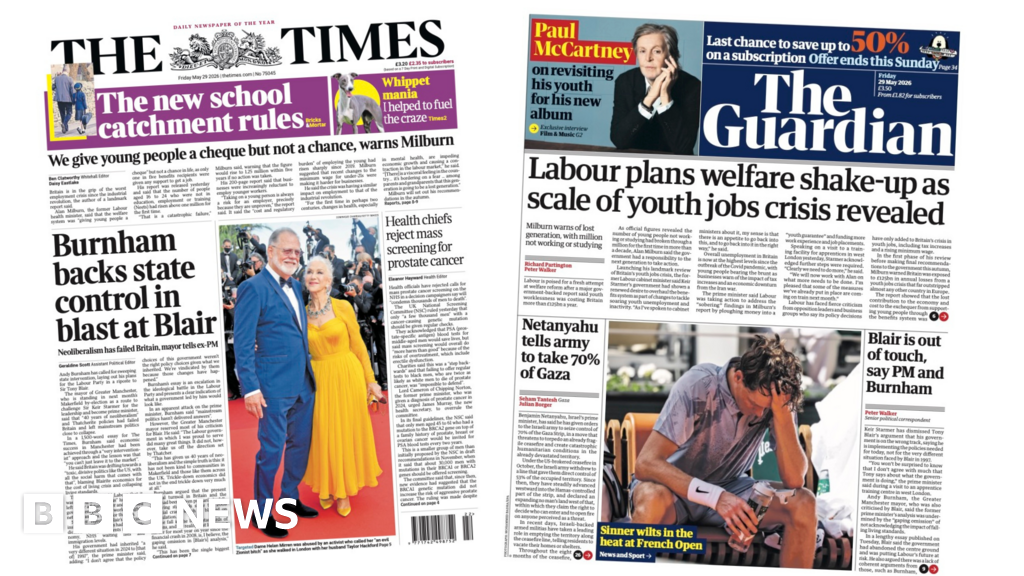
Labour is poised for another attempt at welfare reform after Alan Milburn's interim report on youth inactivity, but the plan faces criticism over potential effects on child poverty and youth employability. Separately, proposals to narrow prostate cancer screening have drawn backlash from David Cameron and cancer patients, though Cancer Research UK says current blood tests are not effective enough for wider screening. The Sun also reports Fifa could face legal action from at least three US states over World Cup ticket pricing and seat allocation.
The near-term market read-through is not a broad macro risk-off, but a sector-specific rotation inside UK domestic equities. A welfare tightening narrative is structurally supportive for payroll-sensitive employers, outsourcing names, and recruitment platforms if it signals a more work-first policy mix; the second-order effect is better labor supply at the margin and lower churn in low-wage sectors. The offset is political: any reform that is perceived to worsen child poverty or health outcomes can rapidly become a drag on Labour’s approval, which raises the probability of dilution, delay, or carve-outs rather than a clean implementation.
The bigger tradeable signal is that the government appears to be testing the boundary between fiscal discipline and social spending restraint. If that test passes, the market should start pricing a slightly lower medium-term welfare burden and a modestly higher participation rate, which is positive for consumer cyclicals and negative for long-duration benefit-linked demand in lower-income baskets. But the transition risk is high: the policy path likely unfolds over months, while headlines and select-committee pushback can move sentiment in days, so positioning should favor optionality over outright direction.
On the health-policy side, tighter screening proposals are a mixed outcome for the diagnostics complex. The obvious losers are providers tied to broad-population testing volumes, while the beneficiaries are companies with stronger evidence-based pathways and downstream treatment monetization if fewer low-yield screens are done. The contrarian point is that this kind of rollback can later reverse if patient advocates and celebrity cases create political pressure; that makes the current move more of a timing issue than a permanent regime change.
AI-powered research, real-time alerts, and portfolio analytics for institutional investors.
Request TrialOverall Sentiment
neutral
Sentiment Score
-0.05
