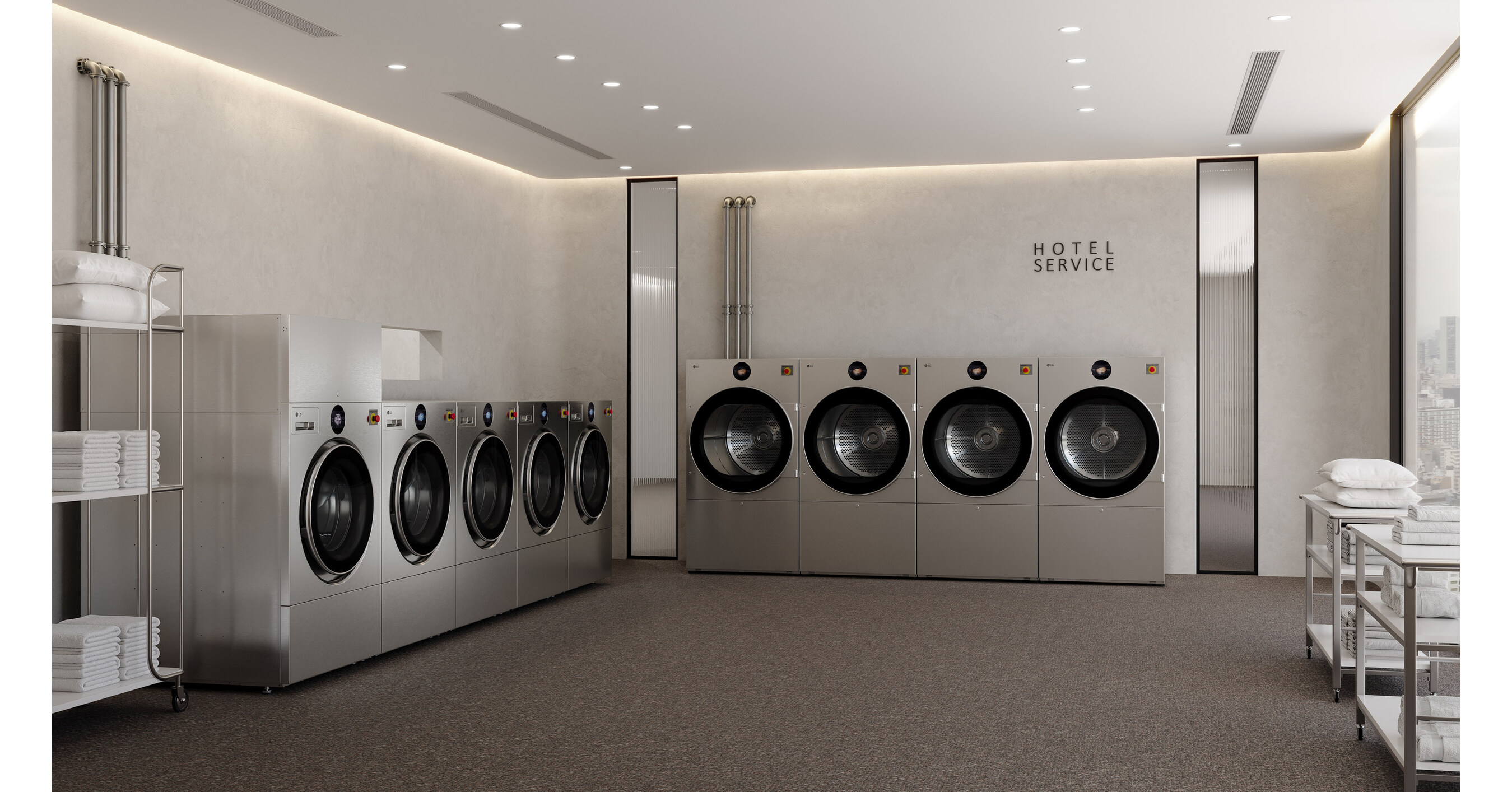
LG Electronics launched its new global LG Professional Laundry lineup for commercial customers, featuring AI Weight Detection and the Dual Inverter HeatPump™ to improve energy and water efficiency. The IEC 7kg washer-dryer can complete a full wash and dry in about one hour, while features like Sensor Dry, MotionCare, and Tub Clean (99.9999% bacteria reduction under test conditions) target reduced wear and maintenance downtime. LG says the lineup broadens its B2B “total solution” offering across retail, industrial laundry, hospitality, and healthcare, with Europe debuting this month and further rollouts planned for Asia and North America.
This is more about mix than headline revenue. Commercial laundry can be a better business than consumer appliances if LG can monetize software, service, and replacement parts around the installed base; that raises lifetime value and should support gross margin even if unit growth is modest. The market should care less about launch optics and more about whether this becomes a recurring-service channel or stays a hardware refresh cycle.
Second-order winners are distributors, installers, and facility-management ecosystems that can bundle financing, maintenance, and remote monitoring. The loser set is the mid-tier appliance vendors that compete on hardware alone: if LG’s connected stack lowers downtime and energy costs, it can pressure pricing in hospitality and healthcare tenders, where buyers are increasingly total-cost-of-ownership driven. That said, this is unlikely to move the consolidated LG thesis in the next quarter unless commercial attach rates are materially higher than consumer appliance launches.
The key risk is execution, not demand: B2B wins require local service coverage, certifications, and integration into customer procurement systems, which tends to stretch over 1-3 quarters in Europe and longer in North America. A softer macro or delayed capex cycle in hotels/laundries could push decision-making out 6-12 months, leaving the launch as a branding event rather than a P&L driver. Falsifier: if management does not quantify incremental B2B revenue or margin uplift by the next earnings cycle, this should be treated as non-actionable.
Contrarian view: the consensus may overestimate how quickly AI/connected features translate into earnings. In appliances, differentiation often gets competed away unless there is a service annuity or consumables pull-through; absent that, the launch mainly defends share rather than expands it. The best read-through is actually on LG’s ability to migrate from a cyclical hardware story toward a higher-quality, more recurring B2B mix over 6-18 months.
AI-powered research, real-time alerts, and portfolio analytics for institutional investors.
Request DemoOverall Sentiment
mildly positive
Sentiment Score
0.15
Ticker Sentiment
