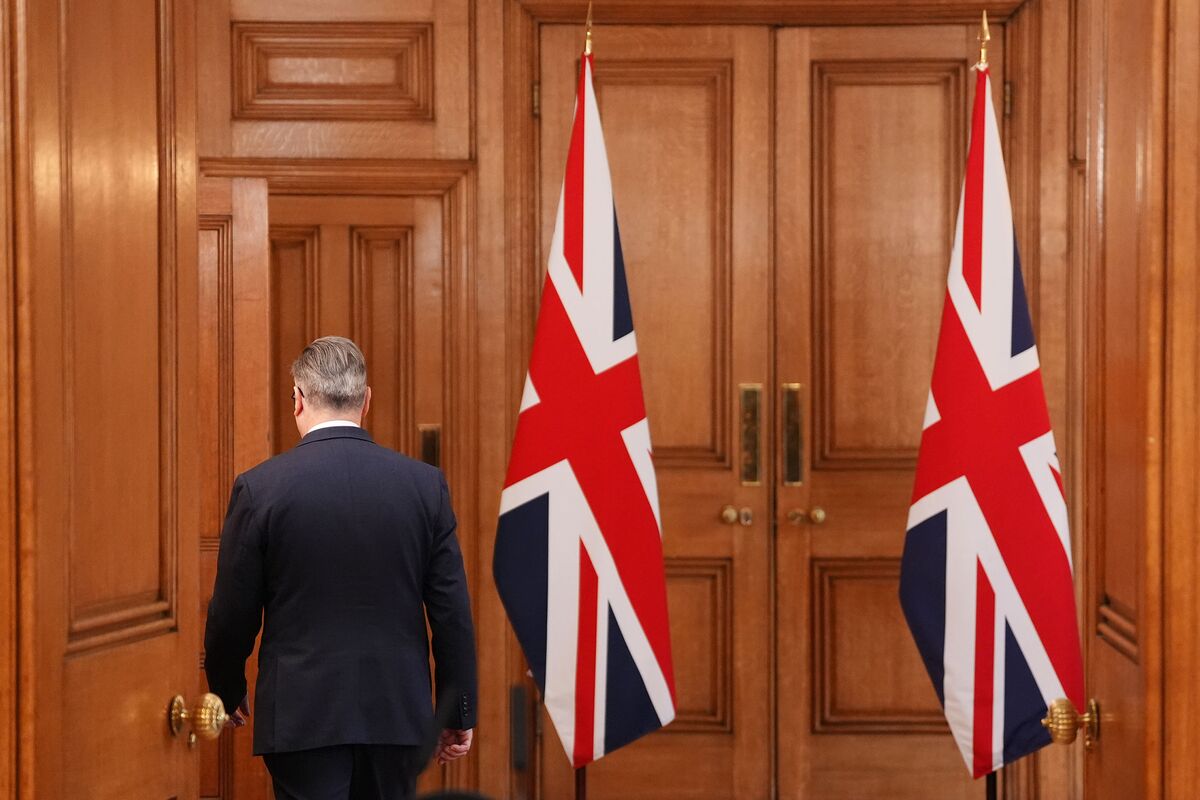
UK policymaking appears to be slowing as Keir Starmer faces open leadership-challenge speculation, raising doubts about the durability of his legislative agenda. The article highlights efforts to blunt inflation, but says Whitehall is questioning whether those policies can survive a change at the top. The near-term impact is mainly on policy continuity and government execution rather than an immediate market shock.
The key market implication is not the leadership drama itself, but the policy drift it creates at the exact moment the UK needs execution credibility to keep inflation expectations anchored. When a government is perceived as transient, departments default to delaying procurement, hiring, and rule changes, which can shave near-term demand from domestic cyclicals and push the burden of adjustment onto the private sector. That tends to hit UK mid-caps with high domestic revenue exposure first, while multinationals listed in London are relatively insulated because their earnings are driven elsewhere.
A slower policy engine also raises the odds that fiscal measures arrive piecemeal and with weaker multiplier effects. If the market starts to price a diminished ability to deliver through regulation or subsidies, the beneficiaries are likely to be firms that can self-fund capex and navigate policy noise without relying on Whitehall timing; the losers are sectors where investment decisions require stable long-dated guidance, especially housing, infrastructure-linked contractors, and regulated domestic utilities. The second-order effect is higher uncertainty premia in sterling assets, which can persist for months even if headline politics quiet down, because investors care more about implementation capacity than leadership labels.
The near-term catalyst path matters: over the next 2-6 weeks, cabinet reshuffles, leaked policy reversals, and budget rhetoric can drive sharp factor rotation. A real reversal would require a clean leadership outcome with a credible unity narrative and a narrower policy agenda; absent that, the odds favor a prolonged stasis trade rather than a single-event bounce. The contrarian point is that markets may already be assuming dysfunction, so a modestly worse headline stream may not move prices much unless it directly threatens fiscal slippage or a weaker growth-print sequence.
AI-powered research, real-time alerts, and portfolio analytics for institutional investors.
Request DemoOverall Sentiment
mildly negative
Sentiment Score
-0.25
