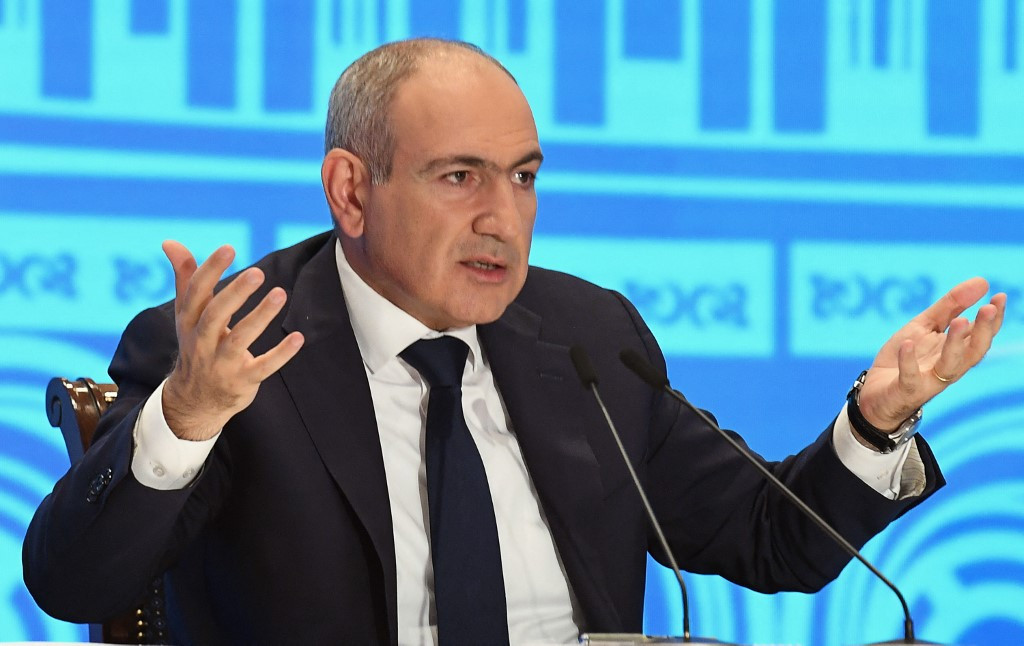
Armenia faces renewed pressure from Russia and three other Eurasian Economic Union members to hold a referendum on whether to align with the EU or the Russia-led bloc, but Prime Minister Pashinyan said no vote is needed yet and that any final decision should ultimately go to citizens. The dispute comes just days before Armenia’s June 7 parliamentary elections and follows reported Russian import restrictions on Armenian goods, ambassador consultations, and broader deterioration in bilateral relations. The article underscores Armenia’s geopolitical pivot away from Moscow and the risk of further regional tension, but it is unlikely to have immediate direct market impact.
The key market implication is not Armenia itself, but the signal this sends about the durability of Russia’s post-2022 sphere of influence. If Yerevan can publicly resist a coordinated bloc demand ahead of elections, Moscow’s coercive toolkit looks less effective than it has in prior near-abroad disputes, which weakens the premium on “Russia can still dictate outcomes” across select frontier markets and sovereign credits. That matters most for assets sensitive to regional alignment risk: local FX, small-cap domestic banks, and any EM basket with outsized Eurasian exposure can see idiosyncratic de-risking reverse if investors conclude the Kremlin is spending coercive capital faster than it can replenish it.
The second-order effect is on sanctions leakage and trade rerouting. If Russia escalates with import restrictions or political retaliation, Armenia’s role as a small but useful transshipment node becomes more fragile, which could modestly reduce grey-market routing into Russia over the next 1-3 months. That is slightly bearish for regional logistics and re-export intermediaries, but bullish for countries and companies positioned as alternative Caucasus/Black Sea corridors, particularly if EU support to Armenia becomes more concrete after the vote.
The biggest catalyst is the election outcome: a clear Pashinyan win would likely extend the de-risking window for 3-6 months, while any surprise opposition strength would invite sharper Moscow pressure and a fast reversal in sentiment. The contrarian angle is that the market may be overpricing immediate breakup risk with the EAEU; Armenia has strong incentives to preserve optionality, so the more realistic path is prolonged ambiguity rather than a binary switch. That reduces the odds of a near-term shock, but increases the probability of recurrent headlines and episodic volatility rather than a clean trend.
AI-powered research, real-time alerts, and portfolio analytics for institutional investors.
Request DemoOverall Sentiment
mildly negative
Sentiment Score
-0.15
