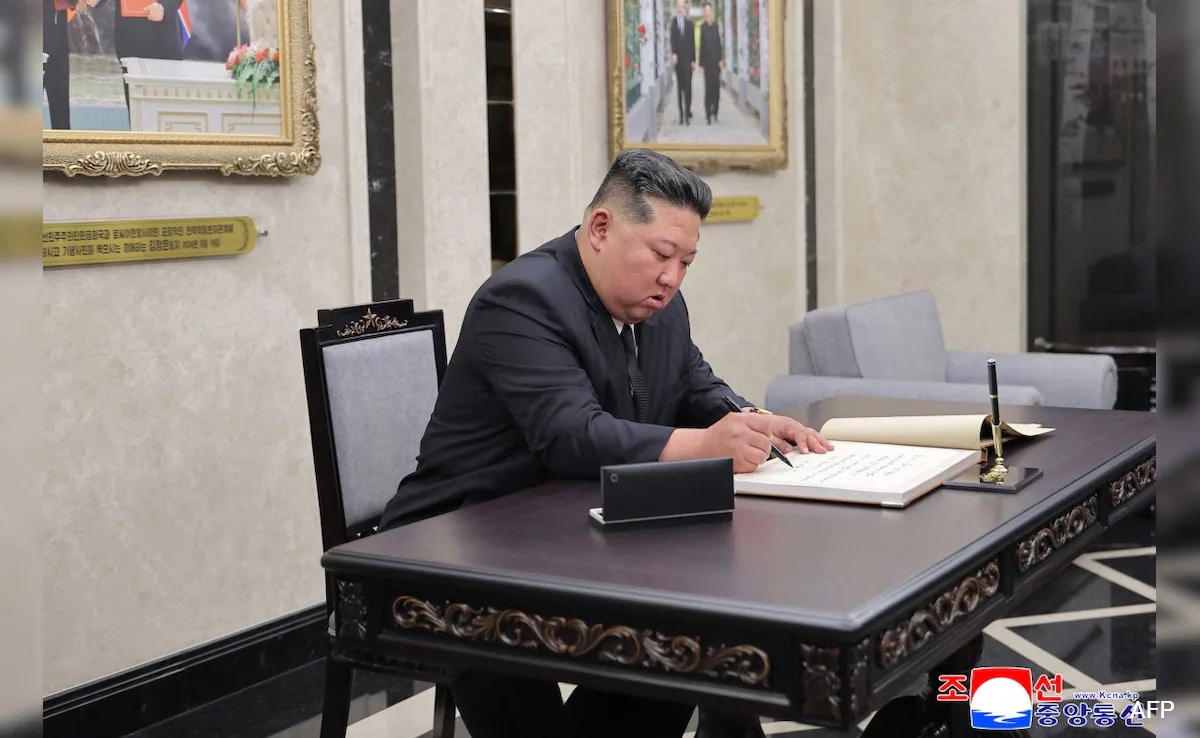
Kim Jong Un publicly confirmed a battlefield self-destruction policy for North Korean troops fighting in Ukraine and praised soldiers who chose 'self-blasting' rather than capture. The disclosure underscores deeper North Korea-Russia military cooperation under a 2024 pact with mutual defense provisions, while South Korean and Western intelligence estimate Pyongyang has sent at least 10,000 soldiers and tens of thousands of containers of weapons. The news heightens geopolitical and defense-risk concerns amid reports of heavy North Korean casualties and ongoing missile tests.
The market implication is not the headline brutality itself, but the signal that Pyongyang is treating the Russia relationship as a live war-production pipeline rather than a transactional arms sale. That increases the probability of a longer-duration munitions and missile supply chain, which matters more for European defense readiness than for the battlefield map: replenishment cycles tighten, inventory buffers thin, and procurement urgency rises into the next 2-4 quarters.
The second-order effect is that Russia gains a lower-cost source of expendable manpower and tactical missiles, which can reduce its need to husband premium systems and extend the war of attrition. That is bearish for any near-term ceasefire odds and supportive of persistent demand for air defense, counter-battery, ISR, and interceptor stockpiling, especially across NATO’s eastern flank and South Korea/Japan. It also increases the probability of allied export-control tightening on components that can still leak through China-based intermediaries.
Contrarian read: the direct economic impact on global markets is small, but the policy reaction function may be underpriced. If intelligence agencies conclude the North is acquiring real combat experience and battlefield lessons, expect faster North Korea missile-test cadence and more aggressive proliferation to Russia and potentially third-party buyers, which is a medium-term escalation channel. The risk is not a single event but a ratchet: each additional round of cooperation hardens sanctions, increases defense budgets, and lifts the duration of the current security premium.
For equities, the cleanest expression is to own defense budgets with backlog visibility rather than headline-sensitive primes. The setup favors a slow-burn rerating in contractors with exposure to munitions, air defense, and electronic warfare, while the downside case only materializes if a ceasefire or sanctions bargain emerges over the next several months. In the near term, the trade is about duration, not drama.
AI-powered research, real-time alerts, and portfolio analytics for institutional investors.
Request DemoOverall Sentiment
strongly negative
Sentiment Score
-0.80
