

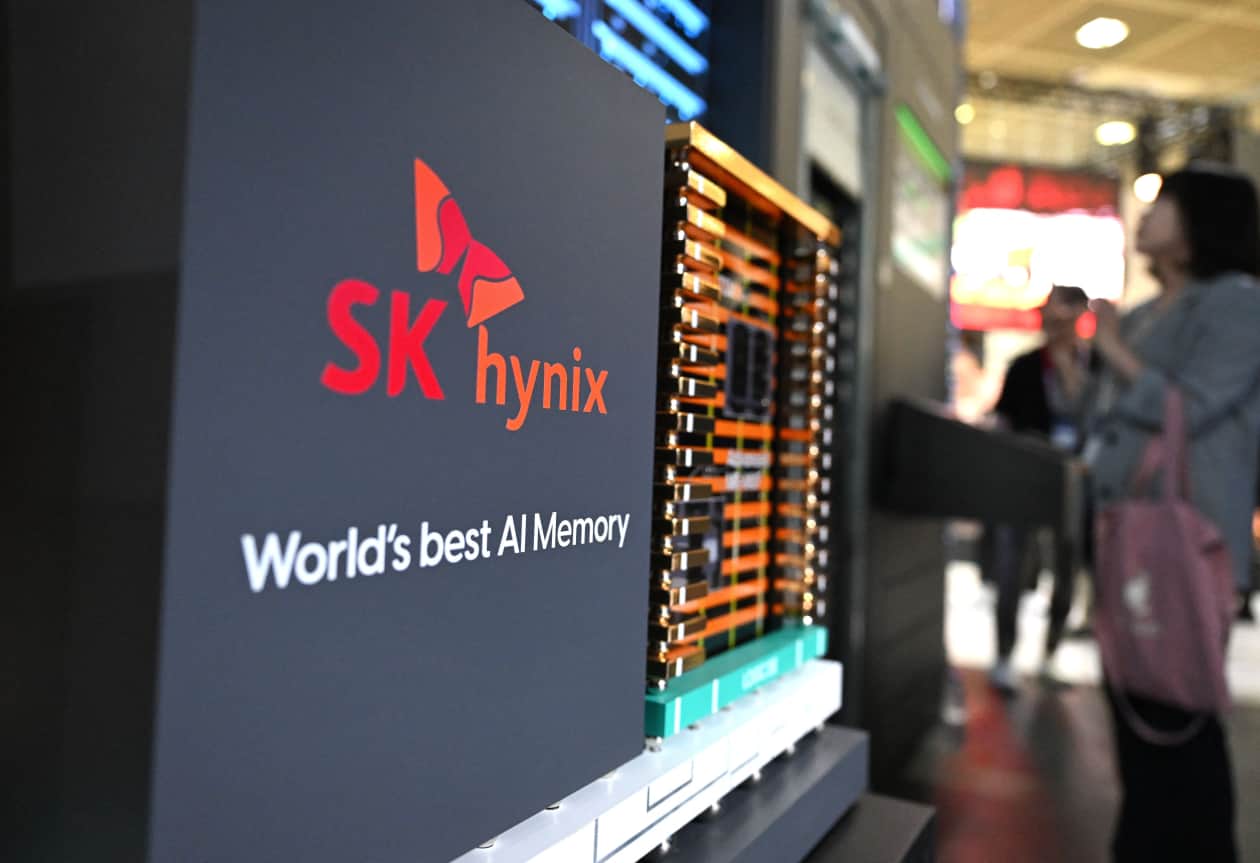
SK Hynix’s shares plunged 15% on the South Korea exchange (worst day in 18 years) after a 12.8% U.S. debut on Friday, triggering broad selling across memory-chip peers. SKHY fell 6.1% in morning trading Monday as worries about rising Middle East tensions added volatility. Micron and other memory-chip stocks sank in sympathy, with the SOX index seeing a unanimous selloff.
This looks more like a factor unwind than a change in semiconductor fundamentals. Micron is the cleanest liquid proxy for memory pricing, so when a peer’s tape breaks, quant and macro accounts tend to de-risk the whole sub-group first and ask questions later. That creates a short-term dislocation where MU can trade on Korean-session sentiment rather than on DRAM/NAND fundamentals, and that usually shows up most violently in the first 1-3 sessions.
The second-order effect is dispersion within semis: memory names, HBM suppliers, and other high-beta cyclical chip equities get hit harder than AI compute or analog, because they carry more earnings leverage and more crowded positioning. If Middle East tensions keep energy prices elevated, the real fundamental risk is not one day of stock volatility but a slower bleed into end-demand and OEM inventory decisions over the next 1-3 months. That would matter most for weaker balance sheets and for names with less pricing power, while the strongest suppliers can largely absorb temporary freight/energy noise.
Contrarian take: the market may be overpricing a geopolitical headline into a subsector where the medium-term setup is still driven by supply discipline and AI-related memory demand. If spot pricing and management commentary stay firm, this should retrace as a technical event rather than a re-rating of earnings power. The thesis breaks if the selloff coincides with actual memory ASP downgrades or if broader risk-off turns into a capex freeze across electronics over the next earnings cycle.
AI-powered research, real-time alerts, and portfolio analytics for institutional investors.
Overall Sentiment
mildly negative
Sentiment Score
-0.35
Ticker Sentiment
