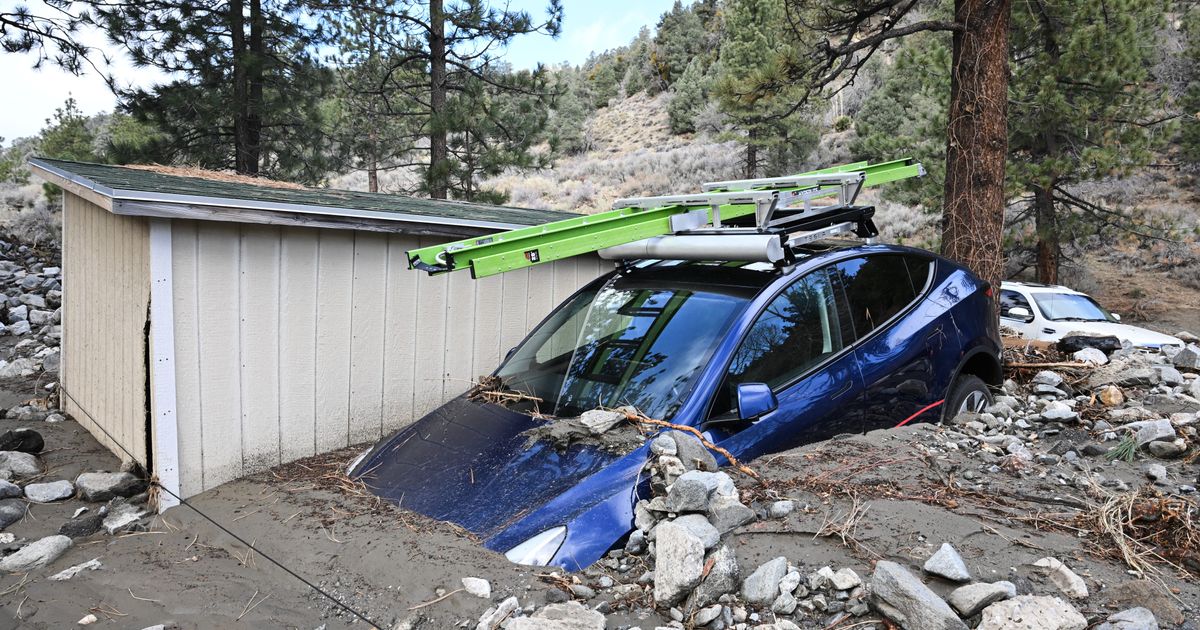
A powerful atmospheric river struck California, producing 4–8 inches of rain in many areas (versus typical 0.5–1 inch), 25-foot waves near the San Francisco Bay Area, heavy Sierra Nevada snow and avalanches, mudslides and localized flooding that prompted evacuation orders around Wrightwood, six-county emergency declarations and at least two weather-related deaths. Short-term impacts include power outages, travel disruptions during a peak travel week, localized damage to housing and infrastructure and potential elevated insurance claims, though effects appear regional and unlikely to move broader markets materially.
Market structure: Near-term winners are building-materials retailers and remediation/equipment rental firms (HD, LOW, URI) as 4–8 inches+ localized rainfall and mudslide damage creates concentrated repair demand over the next 1–3 months; expect 5–15% regional price pressure on labor/materials and 10–20% higher rental utilization in impacted counties. Direct losers are California-exposed P&C insurers and regional utilities (EIX, SRE) facing outage/liability risk and claims accruals; airlines with heavy West Coast exposure (AAL, UAL) see immediate revenue and ops disruption for days to weeks.
Risk assessment: Tail risk is a >$5–10bn insured-loss event or repeat atmospheric rivers within 60 days that force reinsurance exhaustion and trigger broad P&C reserve increases and regulatory scrutiny. Immediate effects (days): travel disruptions and power outages; short-term (weeks–months): claims build and municipal emergency spending; long-term (quarters–years): higher utility capex and potential repricing of CA muni credit if state/local fiscal stress expands. Hidden dependencies include lagged reinsurance recoveries, cat‑bond triggers, and contractor labor capacity leading to claims inflation.
Trade implications: Tactical: buy HD/LOW and URI to capture repair cycle (1–3 month horizon) while using hedges on primary insurers (buy 3‑month OTM puts on TRV/ALL). Implement pair trades: long URI, short AAL to play rental demand vs travel softness. Options: buy 3‑6 month puts on CA‑exposed insurers sized to 0.5–1.5% portfolio V@R; sell short-dated call spreads on airlines to collect premium. Rebalance out of travel/leisure into construction/repair for 1–3 quarters.
Contrarian angles: Market may overprice insurer equity risk because deductibles/reinsurance and cat‑bonds absorb first losses — a >15% selloff in large P&C names could create attractive long opportunities 6–12 months out. Conversely, durable regulatory pressure on utilities could justify higher capex and credit spreads; consider selective 6–12 month defensive buys in regulated Sempra (SRE) if share price drops >10% post-claims disclosures. Unintended consequence: material inflation could slow rebuild pace, extending earnings tail for contractors beyond 6 months.
AI-powered research, real-time alerts, and portfolio analytics for institutional investors.
Request DemoOverall Sentiment
moderately negative
Sentiment Score
-0.45
