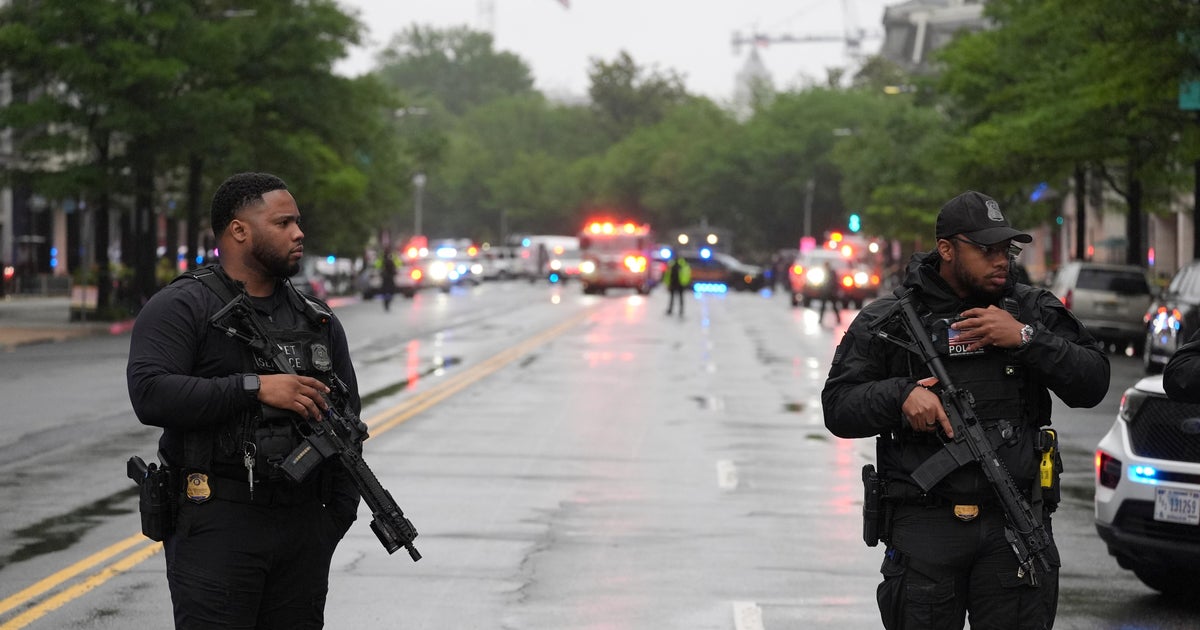
A shooting outside the White House left the suspect dead and one bystander wounded after Secret Service officers returned fire near 17th Street and Pennsylvania Avenue NW. President Trump was at the White House but was not impacted, and the lockdown was later lifted. The event is politically sensitive but appears unlikely to have a direct, lasting market impact beyond a brief risk-off response.
This is a near-term volatility event, not a macro regime change, but the second-order effect is a higher probability of a broader security posture reset around federal assets. In practice, that tends to increase the odds of incremental spending on perimeter hardening, surveillance, and rapid-response infrastructure, which is incrementally positive for defense electronics, physical security integrators, and selected cybersecurity vendors with federal exposure. The market usually underprices these incidents until the follow-on budget language appears; the catalyst window is days for sentiment and months for procurement.
The more important read-through is political: any attack adjacent to a protected federal site raises the tail risk of a visible policy response, even if the underlying event is isolated. That can translate into faster rulemaking, more visible enforcement, and heavier contractor utilization around government facilities, but it also raises litigation and compliance burdens for adjacent commercial landlords and event operators in the DC corridor. If the incident is treated as an attempted political attack, expect a short-lived bid for domestic security names and a modest risk-off impulse in small caps with federal-footprint exposure.
The contrarian point is that the immediate market impact is probably overestimated relative to the actual economic damage. These episodes often create a 1-3 day sentiment shock, then fade unless there is evidence of coordination, a broader threat network, or a policy change that meaningfully shifts budget allocations. That makes this a better event to trade via options than outright equity longs: the upside is convex if procurement chatter emerges, but the base case is a quick normalization once the news cycle moves on.
AI-powered research, real-time alerts, and portfolio analytics for institutional investors.
Request DemoOverall Sentiment
mildly negative
Sentiment Score
-0.20
