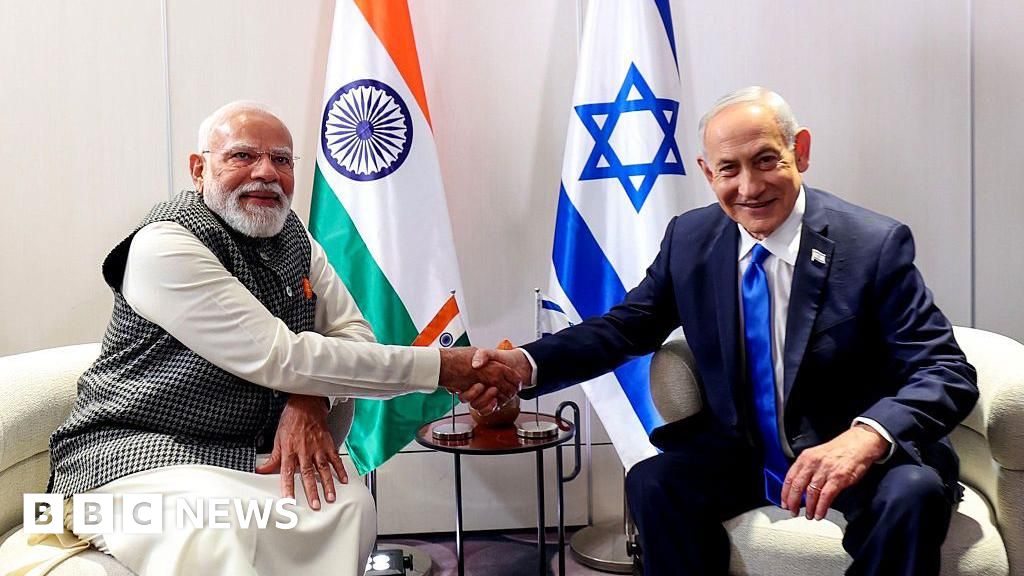
India elevated its relationship with Israel to a 'Special Strategic Partnership' after a two-day visit in which the leaders agreed to deepen cooperation on defence and artificial intelligence, pursue a free trade agreement and concluded more than a dozen bilateral pacts covering cybersecurity, trade, space, education, investment, agriculture and economic cooperation. Key tangible outcomes include Israel agreeing to admit an additional 50,000 Indian workers over five years and India committing to extend its UPI digital payments system to Israel, while both countries signalled stronger security alignment and condemnation of terrorism; the visit drew domestic political criticism but reflects a strategic pivot with potential medium-term implications for trade, fintech links and defence industry ties.
Market Structure: Elevating India–Israel ties creates a clear winners’ list: Israeli defense and cyber vendors (Elbit ESLT, Check Point CHKP), global AI semiconductor suppliers (NVDA, AMD) and payment rails (V, MA) that can capture cross-border UPI flows. A prospective FTA + defense procurement could lift bilateral tech/defence trade by an estimated 5–15% over 3–5 years, increasing demand for sensors, drones, secure comms and AI accelerators and tightening upstream semiconductor supply-demand in 2024–26.
Risk Assessment: Key tail risks are geopolitical escalation (spike oil +$10–30/bbl) and retaliatory cyberattacks impacting contractors; probability low-medium but impact high. Immediate (days) market moves likely muted (single-digit %), short-term (weeks–months) depends on contract/FTA milestones, and long-term (2–5 years) structural reallocation toward defense/cyber and fintech rails.
Trade Implications: Tactical trades favor direct Israeli/defense/cyber exposure and selective semiconductors: consider concentrated longs in ESLT/CHKP and NVDA, plus call spread exposure to hedge cost; underweight regional travel/airlines and Gulf-exposed EM financials. Entry windows: 2–8 weeks around FTA/contract announcements; exit targets 20–40% or event-failure in 6 months.
Contrarian Angles: The market may underprice fintech/cyber upside from UPI integration into Israel (payments volume could rise 10–30% in 12–24 months) while overpricing immediate defense windfalls. Second-order risk: India’s Gulf balancing and domestic politics could delay implementations, creating 3–12 month execution risk and short-term mispricings to exploit.
AI-powered research, real-time alerts, and portfolio analytics for institutional investors.
Request TrialOverall Sentiment
neutral
Sentiment Score
0.15
