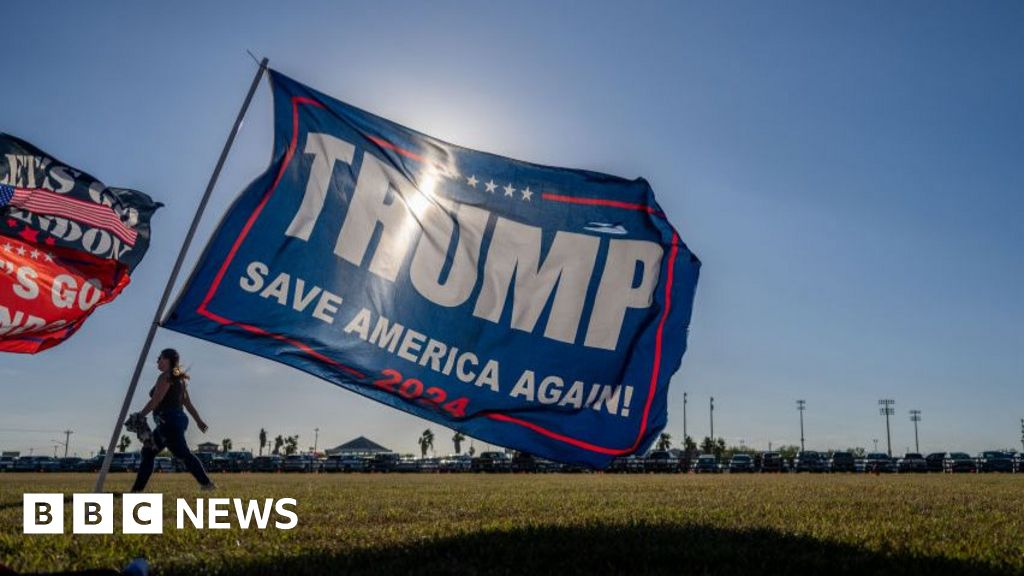
Democrat Taylor Rehmet won a Texas state Senate special election by 14 points in a district President Trump carried 58-41 in 2024, representing a roughly 31-point swing toward Democrats; Republicans spent about $2.5m on the race while Rehmet reported ~ $380,000 raised. Turnout fell from 277,000 to 94,000, and a separate Houston-area Democratic victory narrowed the GOP House margin to 218-214 with three vacancies remaining, signaling potential headwinds for Republicans and raising political uncertainty ahead of the midterms amid voter concern over affordability.
Market structure: The 31-point swing in a Trump-leaning Texas district signals rising electoral volatility that favors defensive, yield-sensitive assets and penalizes small-cap and politically exposed sectors. Expect temporary rotation into long-duration fixed income and defensive sectors (utilities XLU, staples XLP) as investors price higher probability of tighter regulation or spending debates; cyclicals, regional banks (KRE) and small caps (IWM) carry downside risk if the trend persists.
Risk assessment: Tail risks include contested national races, unexpected policy shocks (corporate tax changes, state-level regulation) or a sharper-than-expected economic slowdown; these could drive spikes in term-premia and credit spreads. Immediate (days): localized volatility and option-implied vols up 10–30% around headlines; short-term (weeks–months): positioning shifts into midterms; long-term (quarters+): legislative outcomes drive sector-specific regulation or fiscal trajectories.
Trade implications: Favor modest long-duration ballast and defensive sector exposure while selectively shorting small-cap/regional-bank risk — size trades small (1–3% VAMI per idea) and hedge with options. Use liquid ETFs (TLT, XLU, XLP, IWM, KRE) and implement put spreads to cap premium; increase exposure if aggregated national Democratic polling moves +3–4pts over 30 days.
Contrarian angles: The market may be overstating transferability of a low-turnout special election; historical special-election surges often fade by general elections. Maintain nimble, conviction-sized positions (1–3%) with clear poll-based escalation/de-escalation rules; beware a Republican organizational rebound which would rapidly reverse leadership flows and cyclicals.
AI-powered research, real-time alerts, and portfolio analytics for institutional investors.
Request DemoOverall Sentiment
moderately negative
Sentiment Score
-0.30
