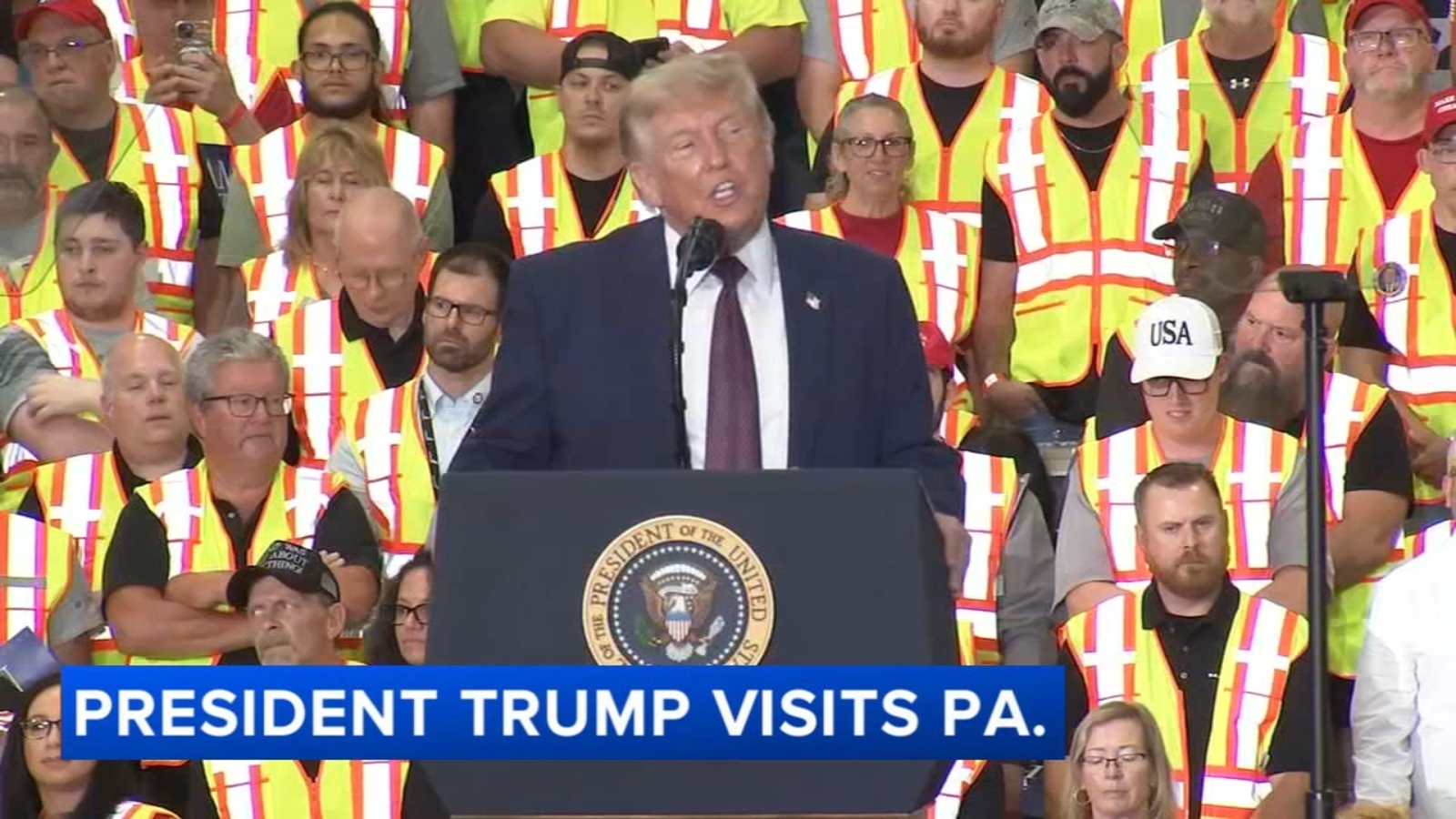
Trump used a visit to Mack Trucks in Pennsylvania to highlight jobs, tariffs, and midterm politics, while also trying to shift focus away from the Iran war and higher gasoline prices. The article notes that the facility was hit by tariff-related uncertainty in 2025, including about 170 layoffs, though roughly 150 workers were later recalled and the plant employs about 2,800 people. The piece is primarily political and economically contextual rather than a direct market-moving development.
The tradeable signal is not the rally itself but the policy mix behind it: tariffs, higher fuel prices, and election-year messaging are all inflationary at the margin while still fragile enough to reverse quickly if growth softens. That combination is typically negative for domestic cyclicals with input-cost exposure and positive for asset-light pricing power, but the bigger second-order effect is margin pressure on transportation and auto-adjacent supply chains if tariff costs are reintroduced or widened over the next 1-3 quarters.
For consumer-facing names, the key issue is household sentiment compression rather than any single headline. If gasoline remains elevated into the fall, discretionary spend gets pulled forward from travel, dining, and general merchandise into essentials, and that usually hits lower-income-heavy traffic first. MCD is only indirectly implicated, but as a high-frequency read on traffic and value-seeking behavior, it becomes a useful barometer for whether consumers are trading down or simply absorbing higher costs.
The more interesting setup is in industrials: politically supported manufacturing is helpful for headlines but not necessarily for earnings if it comes via higher tariffs and supply-chain friction. Domestic truck and heavy-equipment names can see near-term share-price support from reshoring rhetoric, yet input-cost inflation and dealer inventory volatility can offset order optimism with a lag. The market often overprices the first-order beneficiary and underprices the working-capital squeeze that shows up later.
Contrarian view: the market may be overestimating the durability of inflationary pressure from geopolitics. If the ceasefire holds and gasoline retraces even modestly, the political urgency around tariffs and interventionist trade policy could fade faster than consensus expects, which would relieve pressure on transportation and discretionary names within days to weeks. That makes the current setup more suitable for tactical hedges than for long-duration macro bets.
AI-powered research, real-time alerts, and portfolio analytics for institutional investors.
Request DemoOverall Sentiment
neutral
Sentiment Score
-0.05
Ticker Sentiment
