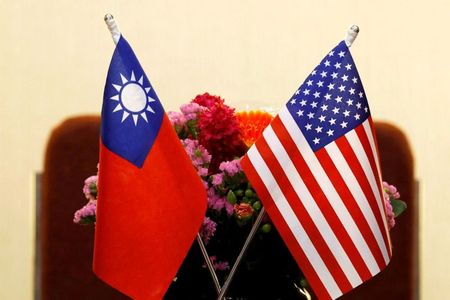
The article says U.S. arms sales to Taiwan, including an approximately $14 billion pending defense package, remain in administrative processing and are separate from Middle East operations. A congressional testimony suggesting a pause due to ammunition needs was challenged by a source, while Taiwan said it has received no official delay notice. President Trump is expected to make a formal determination soon, leaving the package unresolved amid heightened U.S.-China tensions.
This is less about a single Taiwan package and more about whether Washington is willing to let domestic ammunition scarcity be used as a geopolitical bargaining chip. If the clarification sticks, the market implication is that Taiwan-related defense spending remains on the original multi-year path, which is constructive for the large primes and the broader supply chain, but the bigger second-order effect is on supplier backlogs: a preserved Taiwan pipeline keeps order visibility intact for seekers, munitions, and electronics vendors already capacity-constrained.
The real near-term risk is not Taiwan demand destruction; it is policy volatility. A formal pause would likely be interpreted in Beijing as evidence that U.S. stockpile stress can be weaponized, raising the odds of coercive signaling around Taiwan over the next 1-3 months. That tail risk is asymmetric because defense procurement lead times are long, while headlines can re-rate the sector in days; even a temporary administrative delay can widen spreads on suppliers with lower balance-sheet flexibility.
The most interesting second-order winner is not the headline primes but firms tied to throughput, testing, and component bottlenecks, where incremental orders flow through without much political controversy. The contrarian view is that the market may be underpricing how quickly this can reverse: if the administration frames the issue as a stockpile-management exercise rather than a strategic pullback, the rally in defense names could fade, but any hard confirmation of approval should reaccelerate the trade because it removes a perceived rationing overhang.
From a portfolio standpoint, this is a classic event-driven setup with a binary catalyst and poor timing visibility. The best expression is to own quality defense exposure into the decision window while avoiding names most exposed to a temporary procurement pause narrative.
AI-powered research, real-time alerts, and portfolio analytics for institutional investors.
Request DemoOverall Sentiment
neutral
Sentiment Score
-0.05
