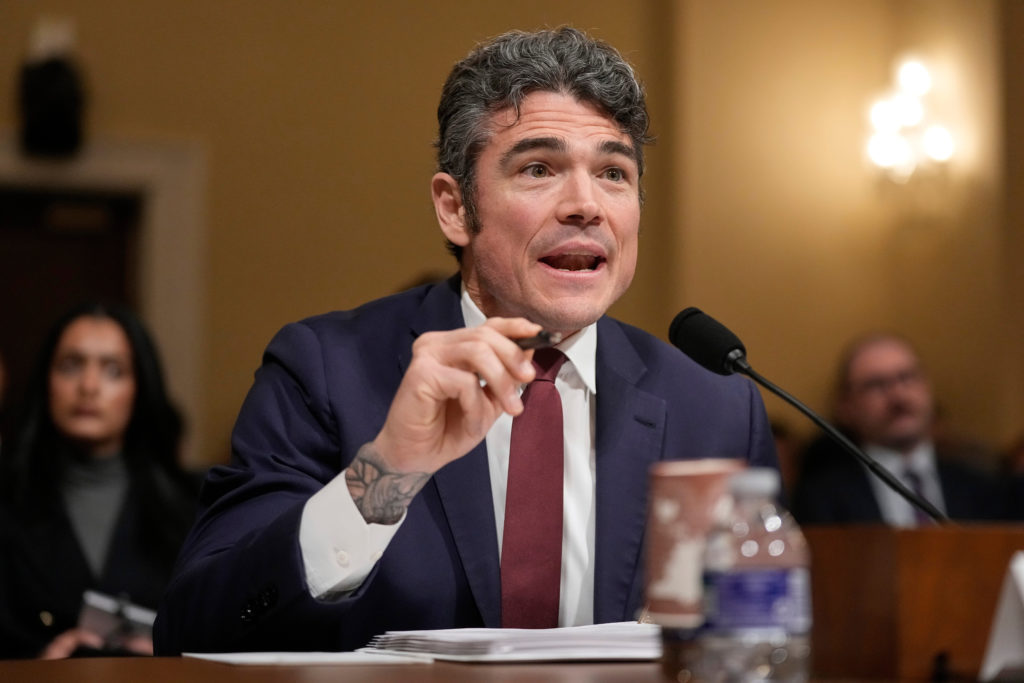
Joe Kent resigned from a counterterrorism role in the Trump administration and publicly blamed Israeli influence for U.S. action on Iran, remarks that were widely characterized as antisemitic. His interview on Tucker Carlson's podcast and subsequent media fallout have intensified fractures within the Republican Party and right-wing media, raising political risk around U.S.-Israel relations and the debate over the Iran war. Short-term market impact is minimal, but the episode increases geopolitical and domestic political uncertainty that could affect defense contractors and foreign-policy-sensitive assets if it alters U.S. posture or policy debate.
Kent's resignation and the Carlson–Fuentes media axis are not just a culture-war story; they accelerate the realignment of political capital and information flows inside the GOP, raising short- to medium-term policy uncertainty. Expect a higher probability of episodic market-moving rhetoric (30–90 day windows) as personalities jockey to define the party's Iran/Israel stance, which in turn will drive headline volatility around defense and national-security supply chains.
Tactically, this fractures the bipartisan consensus that underwrites steady defense procurement funding but paradoxically increases near-term procurement acceleration for air‑defense, missiles and ISR (6–18 months) because administrations facing regional escalation rationally front-load buys to mitigate risk. That flow benefits large primes with long backlogs (they can convert backlog to revenue quickly) and smaller tactical-systems suppliers with shorter lead-times who can scale production inside 3–12 months.
Media and ad markets will reallocate dollars: fractured right‑wing ecosystems mean ad dollars shift from advertiser‑sensitive broadcast/conglomerates to subscription and digital platforms that monetize direct-pay and targeted political ads (3–9 months ahead of campaign spend spikes). This redistribution will compress multiples for legacy ad-dependent broadcasters while expanding revenue visibility for programmatic/digital leaders.
Tail risks: diplomatic rapprochement or a rapid Iranian de‑escalation would unwind the defense bid; conversely, a major escalation or a high‑profile domestic security event would spike defense order flow and volatility within days. The window for capturing asymmetric payoffs is therefore immediate — deploy option‑structured exposure and size for event risk rather than long-term buy-and-hold alone.
AI-powered research, real-time alerts, and portfolio analytics for institutional investors.
Request DemoOverall Sentiment
mildly negative
Sentiment Score
-0.30
