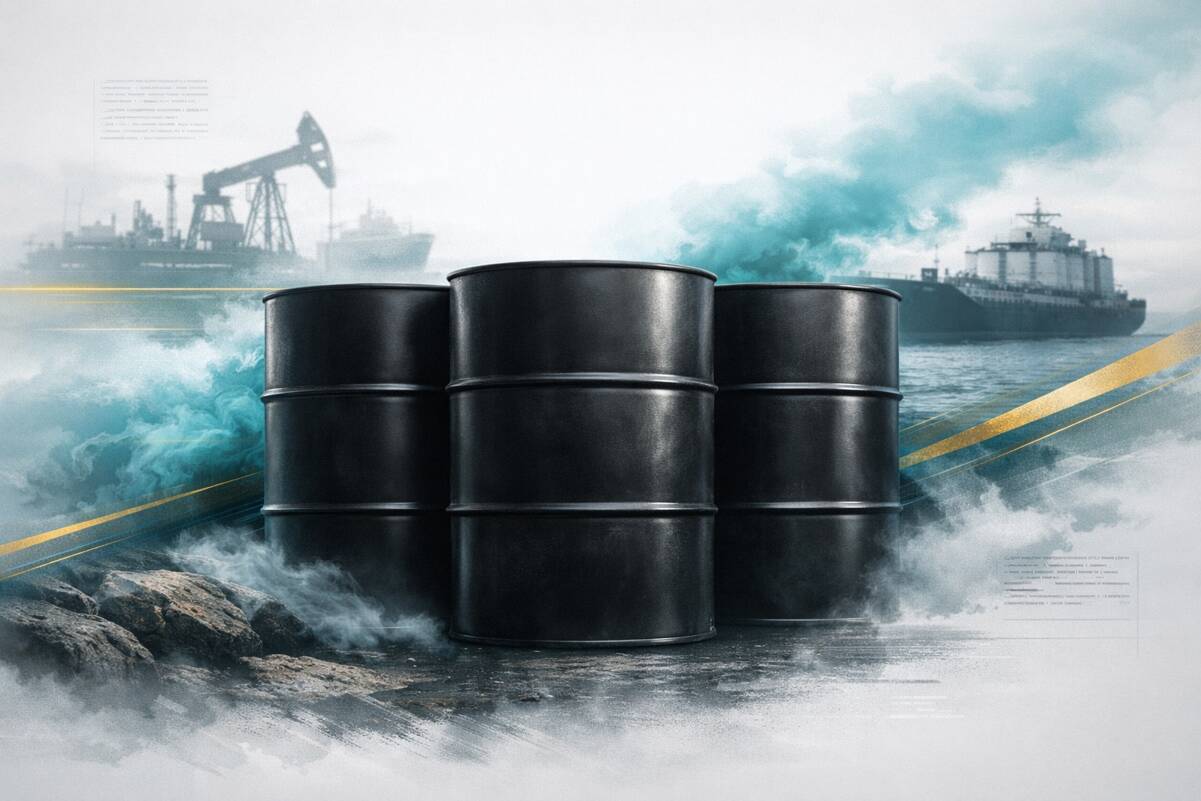
WTI crude is near $70.31 and Brent around $73.56, both rebounding after Friday's 3.74% and 3.84% drops as weekend U.S.-Iran escalation revived the Strait of Hormuz risk premium. Key technical levels are $70.05 on WTI and $73.96 on Brent, with upside targets at $72.48 and $75.80 if short-covering extends. The article frames crude as highly sensitive to Middle East headlines, with tanker traffic and further military escalation likely to drive large price swings.
This is a classic headline-driven convexity setup: the market just proved it was willing to de-risk on improved tanker flow, so the weekend escalation is likely to force systematic re-risking rather than a clean new fundamental bid. That matters because positioning was probably leaning short or underhedged after Friday’s selloff; in that case the first leg higher is more likely to be short-covering than conviction length, which means price can overshoot resistance but may not hold without fresh evidence of shipping disruption.
The real second-order variable is logistics, not geopolitics. If carriers start rerouting again, the market will quickly translate that into tighter prompt availability and a steeper front-end structure, while if ships continue transiting, the rally should fade back into the prior range as the risk premium stays partially decompressed. The asymmetry is strongest in the next 48-72 hours: headlines can move crude several dollars, but only confirmed flow disruption can sustain a repricing beyond the technical trigger levels.
For equities, the near-term winners are not the obvious upstream producers but the volatility beneficiaries: energy traders, tankers, and firms with optionality on dislocations. Higher crude also acts as a tax on transport, chemicals, and discretionary consumers, but the lag is months, not days, so the first-order trade is in rates/FX/commodity vol rather than immediate earnings revisions. The important contrarian point is that the market may be overpricing a permanent escalation path; unless the Strait actually closes or sustained rerouting becomes visible, this can still resolve as a squeeze back into the mid-range.
The biggest tail risk is policy miscalculation: if rhetoric turns into broader military action, oil can gap beyond the range technicians are using and invalidate the whole mean-reversion setup. Conversely, if the weekend strikes are shown to be contained and tanker AIS data normalizes, crude can unwind fast because the last leg down already proved how quickly the war premium can evaporate when flow data improves.
AI-powered research, real-time alerts, and portfolio analytics for institutional investors.
Request DemoOverall Sentiment
moderately positive
Sentiment Score
0.35
Ticker Sentiment
