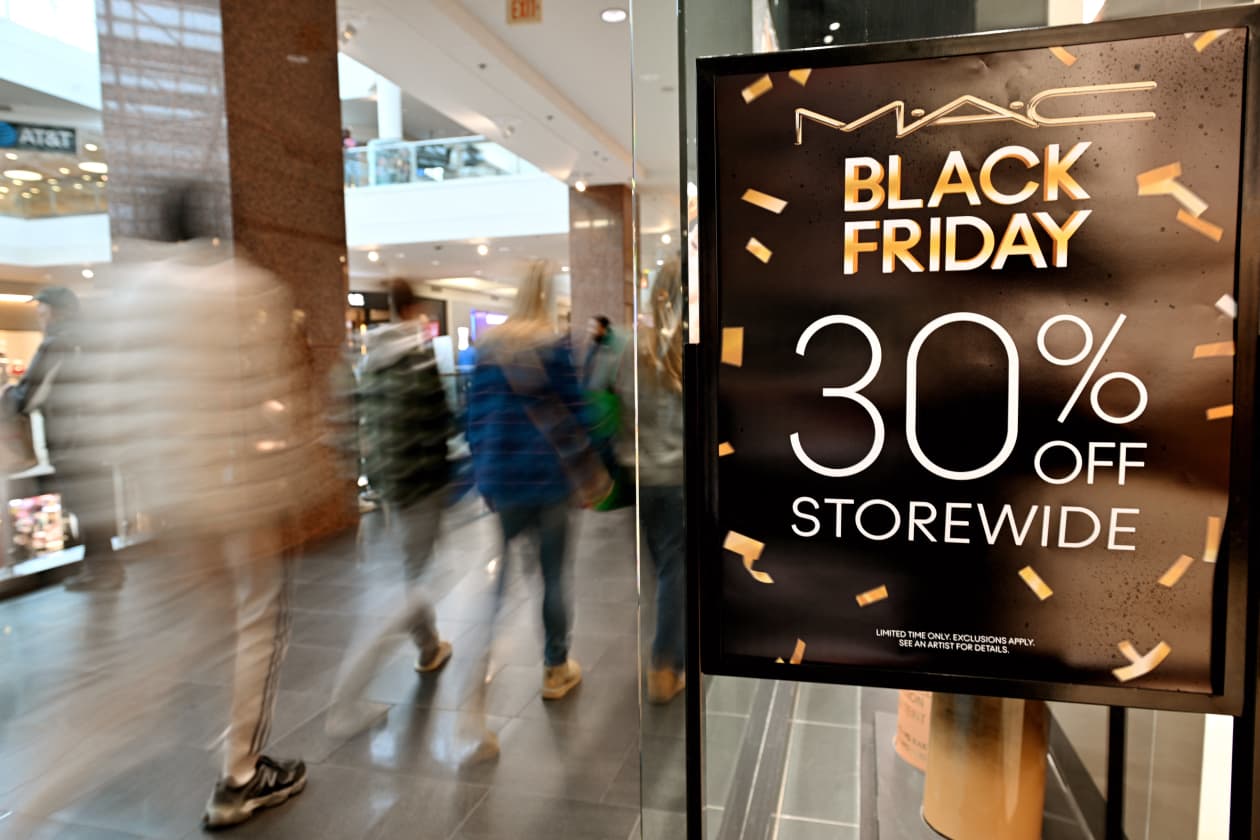
Large retailers including Walmart, Best Buy, TJX and Ross report confidence and raised guidance heading into Black Friday, while industry groups expect holiday sales to exceed $1 trillion. Adobe projects a record $11.7 billion in U.S. online Black Friday spending (+8.3% YoY) and Bain estimates 9% of holiday sales could occur between Black Friday and Cyber Monday. Smaller import-dependent merchants report inventory shortages, higher costs and sharply worse sales (one small doll maker cites a 50% drop), as tariff volatility, delayed shipments and import tax burdens force tighter promotions, borrowing and constrained supply — a dynamic that could compress margins for SMEs even as large chains leverage scale.
Market structure: Large omnichannel and off-price retailers (WMT, TJX, ROST, BBY) are clear beneficiaries — they have buying power, lower per-unit landed costs, and inventory flexibility to capture 1–3 percentage points of share from small import-dependent independents this season. Tariff noise acts like a supply shock for small importers (example: anecdotal ~30% price hits), compressing their margins and forcing inventory rationing; Adobe’s +8.3% Black Friday online growth and NRF’s ~$1T holiday projection mask a bifurcated demand pattern where value and availability trump assortment.
Risk assessment: Tail risks include a sudden tariff hike (policy shock) or a logistics freeze that could create 10–20% upside in landed costs overnight and push small retailers into insolvency; conversely a tariff rollback would rapidly re-rate small-cap importers. Near-term (days–weeks) key risks are Black Friday windows and inventory/earnings updates; medium-term (3–9 months) risks include consumer front-loading and potential Q1 2026 demand hangover. Hidden dependencies: credit lines taken to cover import taxes, inventory financing cliff, and holiday return flows that amplify working-capital stress.
Trade implications: Tactical longs: WMT and TJX (scale, FY guide upside) with 2–3% position sizes and 3–6 month horizons; tactical shorts: small-cap/import-reliant retail via XRT or direct small-cap names (size 1–2%) to hedge margin compression. Pair trade: long TJX vs short URBN 1:1 targeting a 6–10% spread capture over 3 months; options: buy 3-month 10% OTM calls on WMT (~2% notional) into earnings/Black Friday and buy protection (10–12% OTM puts) if holding smaller retail longs.
Contrarian angles: Consensus underestimates the persistence of tariff-induced distributor consolidation — if tariffs remain through H1 2026, expect permanent market-share reallocation and higher long-term profit margins for scale players. Conversely, the market may be underpricing the speed of a policy rollback: a credible rollback announcement could produce 20–40% rerating in beaten small-cap importers; avoid one-sided leverage and size entry to news-dependent catalysts.
AI-powered research, real-time alerts, and portfolio analytics for institutional investors.
Request DemoOverall Sentiment
mildly negative
Sentiment Score
-0.25
Ticker Sentiment
