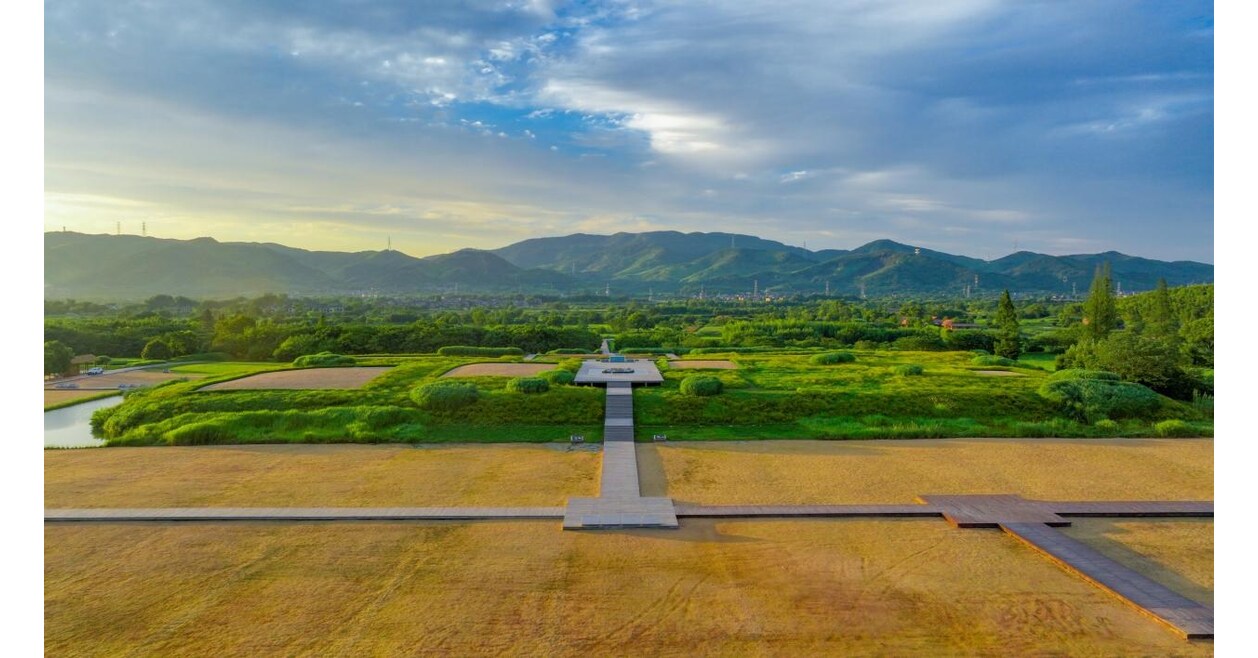
Un dialogue interculturel entre les vestiges de Liangzhu (Hangzhou, Chine) et Samarcande (Ouzbékistan) s’est tenu le 6 juillet avec plus de 100 participants, dans le cadre du programme « Liangzhu and the World ». La discussion a porté sur la revitalisation et la conservation du patrimoine, la coopération sino-ouzbèke en recherche archéologique et l’usage de technologies numériques, notamment des lunettes intelligentes alimentées par l’IA. L’événement marque la première collaboration du programme avec un autre site asiatique du patrimoine mondial de l’UNESCO, sans impact financier direct.
This reads as soft-power signaling, not a monetizable demand event. The investable angle is only second-order: if “heritage + digital engagement + tourism integration” becomes a budgeted template, the beneficiaries would be local tourism operators, museum-tech vendors, and cloud/AI infrastructure providers that can sell low-ticket, recurring services into provincial governments. In China, these initiatives are often procurement-led; the equity impact depends less on PR and more on whether they translate into verified capex, visitor throughput, or software contracts.
The more interesting mechanism is competitive positioning inside China’s domestic tourism stack. Hangzhou is signaling a model that blends culture, digitization, and public-facing AI; that is marginally positive for firms exposed to smart-city, digital museum, and AR/vision applications, but it is not enough to move earnings estimates absent named contracts. For listed proxies, any reaction in KWEB/FXI would likely be noise unless broader stimulus or travel data confirms incremental spend.
Contrarian view: the market may overestimate the economic value of these cross-cultural events because the headline language sounds innovation-adjacent. The reality is that this is a low-capex diplomatic channel with long-dated payoffs; the closest tradable catalyst would be procurement follow-through over 6-18 months, not the event itself. If anything, the absence of hard financial commitments argues against chasing any China-tech or travel rally here.
What would falsify the cautious stance is a visible pipeline of contracts: incremental tourism capex, museum-tech orders, or a measurable uplift in domestic/foreign visitor numbers tied to the Liangzhu/Hangzhou brand. Without that, this is best treated as a watch item for policy direction rather than an alpha event.
AI-powered research, real-time alerts, and portfolio analytics for institutional investors.
Request DemoOverall Sentiment
neutral
Sentiment Score
0.05
