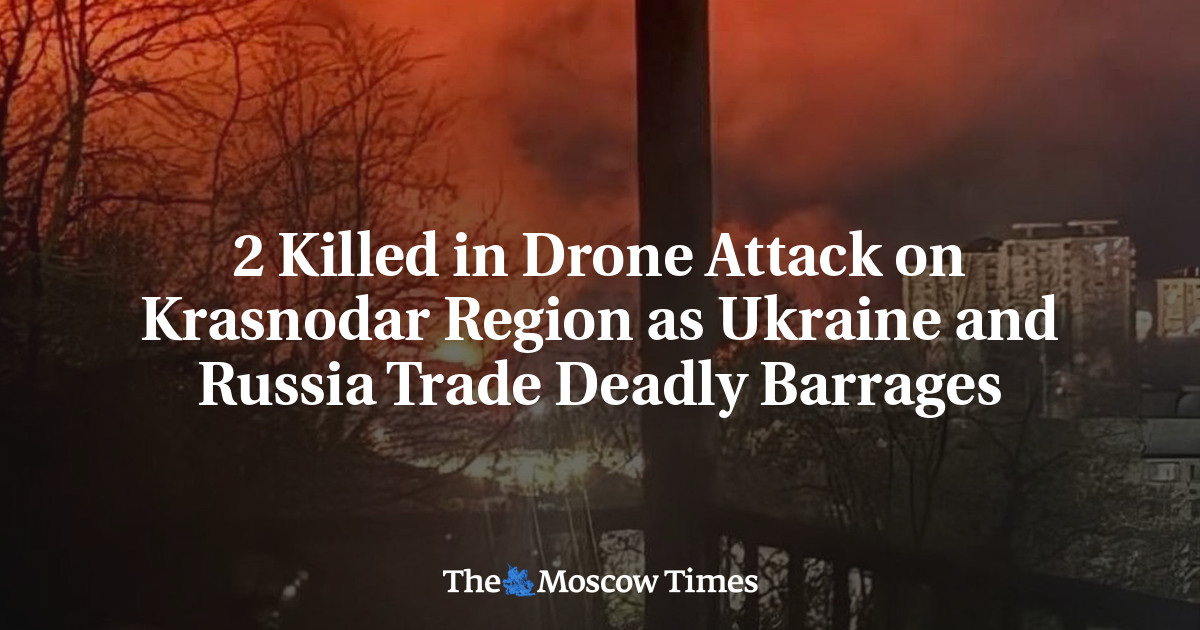
A reported Ukrainian drone strike set fire to the Tuapse Oil Refinery in Russia's Krasnodar region, creating a black smoke plume visible from space and reportedly stretching about 200 kilometers into the Black Sea. The refinery is owned by Rosneft and has annual processing capacity of 12 million metric tons; the attack also reportedly damaged rail power infrastructure, struck a tanker in Russian waters, and killed two civilians in Tuapse. The incident adds to escalation risk around Russian energy assets and Black Sea logistics amid broader overnight drone and missile exchanges.
The immediate market read is not about a single refinery outage; it is about the increasing probability that the Black Sea refining and logistics complex becomes a recurring disruption point rather than a one-off headline. That matters because repeated damage shifts the issue from “lost throughput” to “operational friction premium” across nearby crude differentials, product exports, rail/port scheduling, and marine insurance pricing. The first-order impact is localized, but the second-order effect is a widening discount on Russian export optionality as traders demand more compensation for delivery risk and longer reload times.
The more important signal is the attack surface is broadening from processing assets to the surrounding transport stack: tankers, rail electrification, and port-adjacent infrastructure. That raises the odds of small but persistent bottlenecks in product evacuation, which can tighten regional diesel and fuel oil balances even if headline crude supply remains largely intact. In practice, that supports crack spreads more than outright Brent if the disruption pattern persists, because refining capacity is the constrained node while upstream barrels can still find a home elsewhere.
Near term, the highest-probability reaction is a risk premium in Black Sea shipping and Russian product exports rather than a sustained move in global crude unless attacks become synchronized enough to force unplanned downtime across multiple facilities. The countervailing force is that Russia has demonstrated rapid repair and rerouting capability, so the move is vulnerable to fading if throughput normalizes within days. The real tail risk is that repeated strikes force insurance exclusions or port slowdowns, which would create a months-long drag on flows and could spill into global diesel markets.
Consensus may be underestimating how much this kind of damage compounds via logistics rather than headline barrels. If the market only prices the refinery fire as a temporary outage, it misses the possibility of a durable increase in export friction and military-risk premia for Black Sea energy infrastructure. That makes this a better tactical trade in energy volatility and refining margins than a directional macro bet on crude itself.
AI-powered research, real-time alerts, and portfolio analytics for institutional investors.
Request DemoOverall Sentiment
strongly negative
Sentiment Score
-0.72
