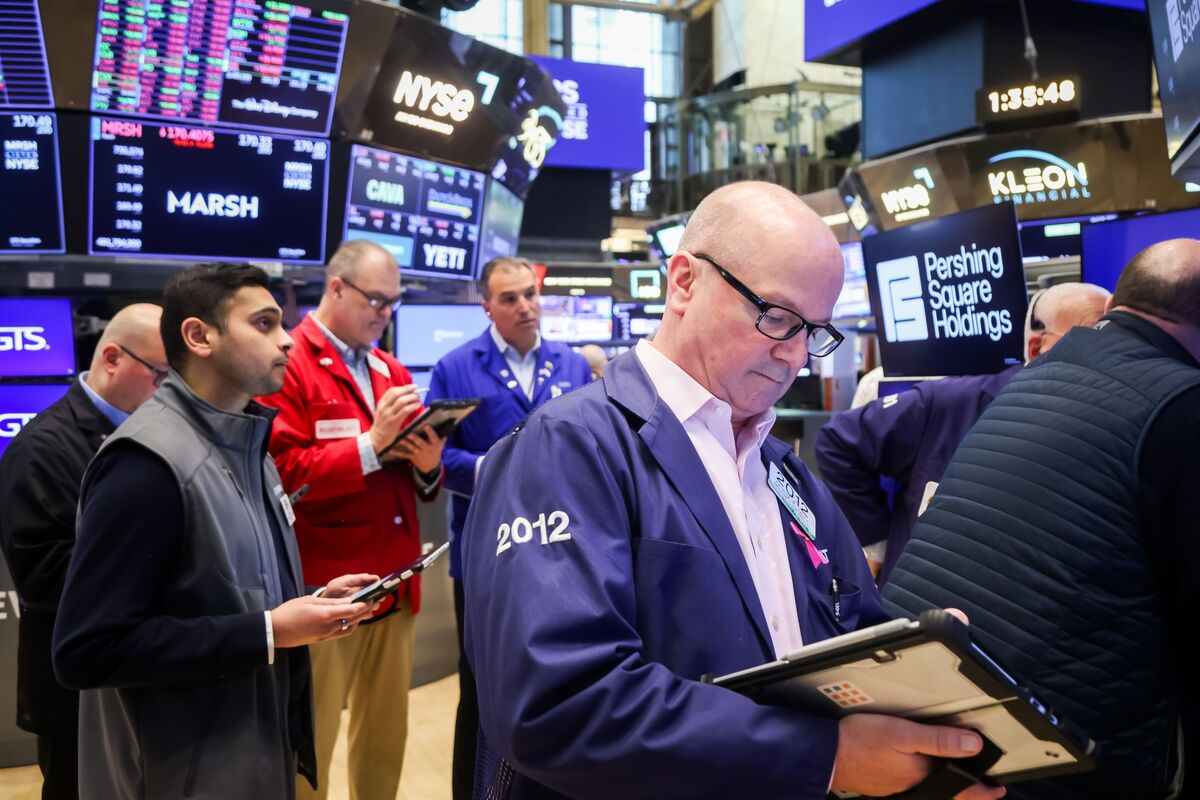
S&P 500 futures rose 0.4% and Nasdaq 100 futures gained 0.6% as the US-Iran ceasefire appeared to hold, easing immediate geopolitical तनाव in the Gulf. WTI crude fell about 2% to roughly $104 per barrel, pulling back from a four-year high after tensions around the Strait of Hormuz and UAE missile attacks. The market is also looking ahead to a heavy day of earnings, including AMD results.
The immediate beneficiary is not just broad beta, but anything levered to lower tail-risk premia: semis, cyclicals, and high-duration growth should continue to outperform if the market interprets the ceasefire as credible for more than a few sessions. The more interesting second-order effect is that lower crude eases the probability of a volatility spike feeding into positioning de-grossing; that tends to support index futures disproportionately because systematic strategies are still long trend and short volatility after the recent energy shock. If oil stabilizes below the latest spike range, the market can re-rate from “geopolitical supply shock” back to “earnings dispersion,” which is a better environment for stock selection than macro hedging.
For AMD specifically, the commodity move matters more through multiples than through direct fundamentals: if rates and energy back off, long-duration software/semis are the first place incremental capital rotates, and AMD’s setup is more about sentiment and index flow than the print itself. That said, semis remain vulnerable to a sharp reversal if the ceasefire fails or if the Strait risk re-prices; the market is treating the current de-escalation as a days-to-weeks relief trade, not a months-long resolution. The asymmetry is that downside from a renewed escalation would hit semis through discount-rate compression and risk-off positioning simultaneously.
The contrarian read is that crude may be underreacting to unresolved infrastructure and transit risk. A ceasefire in rhetoric is not the same as a durable reduction in shipping insurance, tanker routing costs, or proxy activity; those frictions can keep the physical market tighter than headline futures imply. In other words, the market may be fading a real, but temporary, geopolitical premium too quickly while underestimating how easily another incident can reawaken it within 1-3 trading days.
AI-powered research, real-time alerts, and portfolio analytics for institutional investors.
Request DemoOverall Sentiment
mildly positive
Sentiment Score
0.15
Ticker Sentiment
