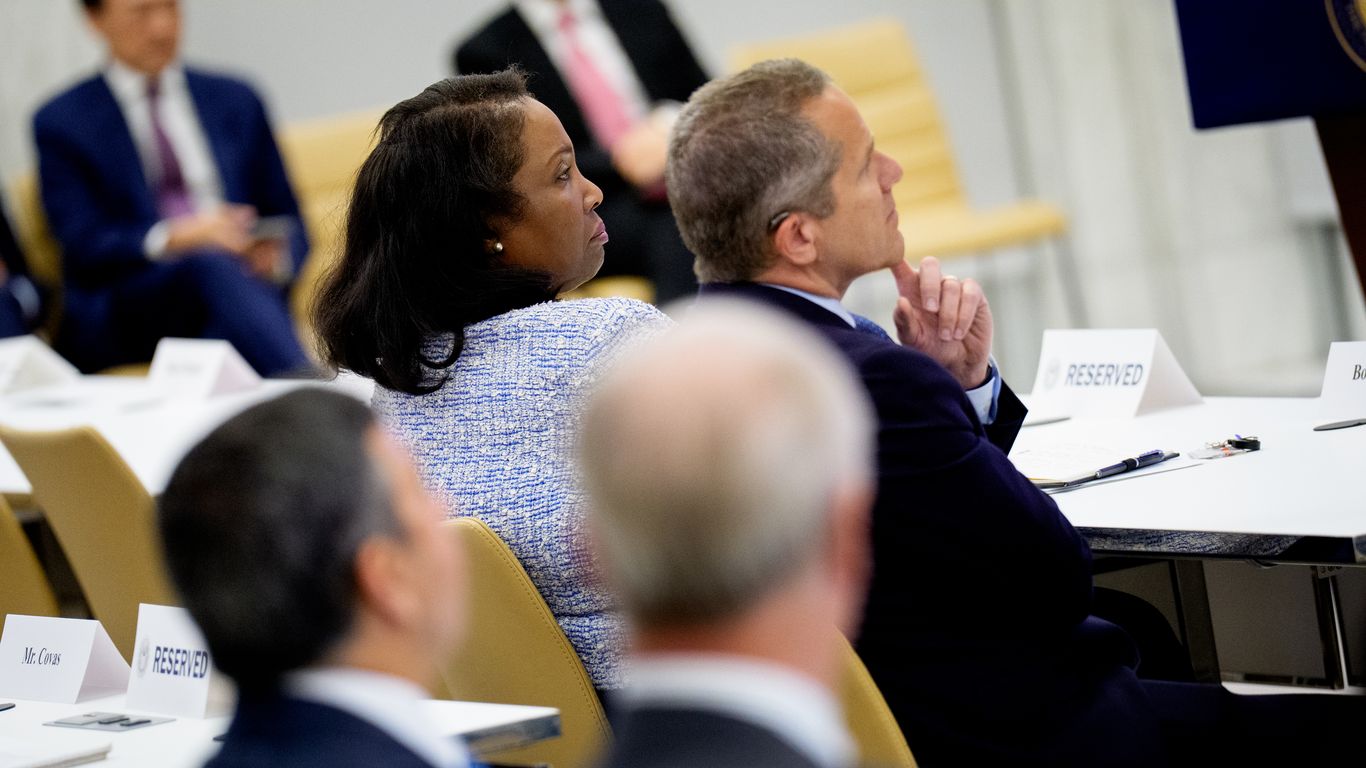
President Trump fired Federal Reserve Governor Lisa Cook, who has stated her intention to sue, setting up an unprecedented legal battle over the limits of presidential authority concerning the central bank. The Federal Reserve affirmed it will "abide by any court decision," while underscoring the importance of long tenures and removal protections for governors as vital safeguards for independent monetary policy. Trump explicitly stated his goal is to gain a majority on the Fed board to influence interest rates, highlighting a significant challenge to the central bank's operational autonomy and its ability to conduct data-driven policy.
An unprecedented conflict between the executive branch and the central bank is unfolding, introducing significant uncertainty into the U.S. monetary policy framework. President Trump's firing of Federal Reserve Governor Lisa Cook, citing unproven allegations of mortgage fraud, and her subsequent intention to sue, creates a legal test of the limits of presidential power over the ostensibly independent institution. The Federal Reserve's carefully worded statement, affirming it will "abide by any court decision" while simultaneously defending the "vital safeguard" of removal protections for governors, underscores the gravity of the situation. This event is not merely a personnel dispute; it is a direct challenge to the Fed's operational autonomy, a fact highlighted by the President's explicit statement that he seeks a board majority to lower interest rates for political ends, specifically to boost the housing market. This politicization threatens to unmoor monetary policy from its stated foundation of "data, economic analysis, and the long-term interests of the American people," potentially eroding market confidence and increasing volatility.
AI-powered research, real-time alerts, and portfolio analytics for institutional investors.
Overall Sentiment
strongly negative
Sentiment Score
-0.70
