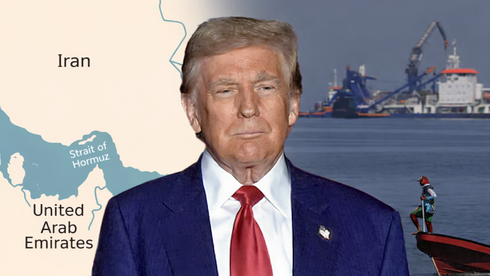
Trump temporarily suspended Operation "Freedom Project" in the Strait of Hormuz after recent Iranian launches, while warning that continued attacks on ships would trigger "overwhelming firepower." Gulf states and European officials are increasingly concerned that the lack of a U.S. response may weaken deterrence and encourage further Iranian escalation. The news is geopolitically significant and could pressure shipping, energy transit routes, and broader risk sentiment.
The key market implication is not the headline de-escalation, but the erosion of deterrence credibility. Once regional actors conclude Washington is prioritizing conflict termination over ally defense, the probability distribution shifts toward repeated, low-grade harassment rather than a single decisive shock — a worse setup for shipping insurance, tanker utilization, and schedule reliability than a one-off spike. That tends to keep risk premia embedded longer in freight, port logistics, and energy transit routes even if outright prices stop rallying.
Second-order beneficiaries are not the obvious defense primes first; they are firms with pricing power over maritime disruption: insurers/reinsurers, emergency logistics, and non-Gulf export routes. The market usually underestimates how quickly even a “temporary” pause can be interpreted as license by the more aggressive side, which means the near-term risk is asymmetric to the upside in volatility rather than in spot commodities. The bigger medium-term loser is Gulf sovereign risk sentiment: if local capital believes U.S. protection is conditional, you should expect higher required returns on regional assets and a modestly weaker bid for Gulf sovereign-linked funding names.
The contrarian view is that this may be a tactical pause, not strategic retreat, and markets can overprice the first sign of restraint. If no follow-on strike on ships occurs within 3–7 trading days, risk assets tied to the strait could mean-revert sharply as positioning unwinds. The decisive catalyst is whether Iran tests the boundary again; if it does and U.S. response remains muted, this becomes a durable deterrence reset, not a headline risk event.
AI-powered research, real-time alerts, and portfolio analytics for institutional investors.
Overall Sentiment
strongly negative
Sentiment Score
-0.55
