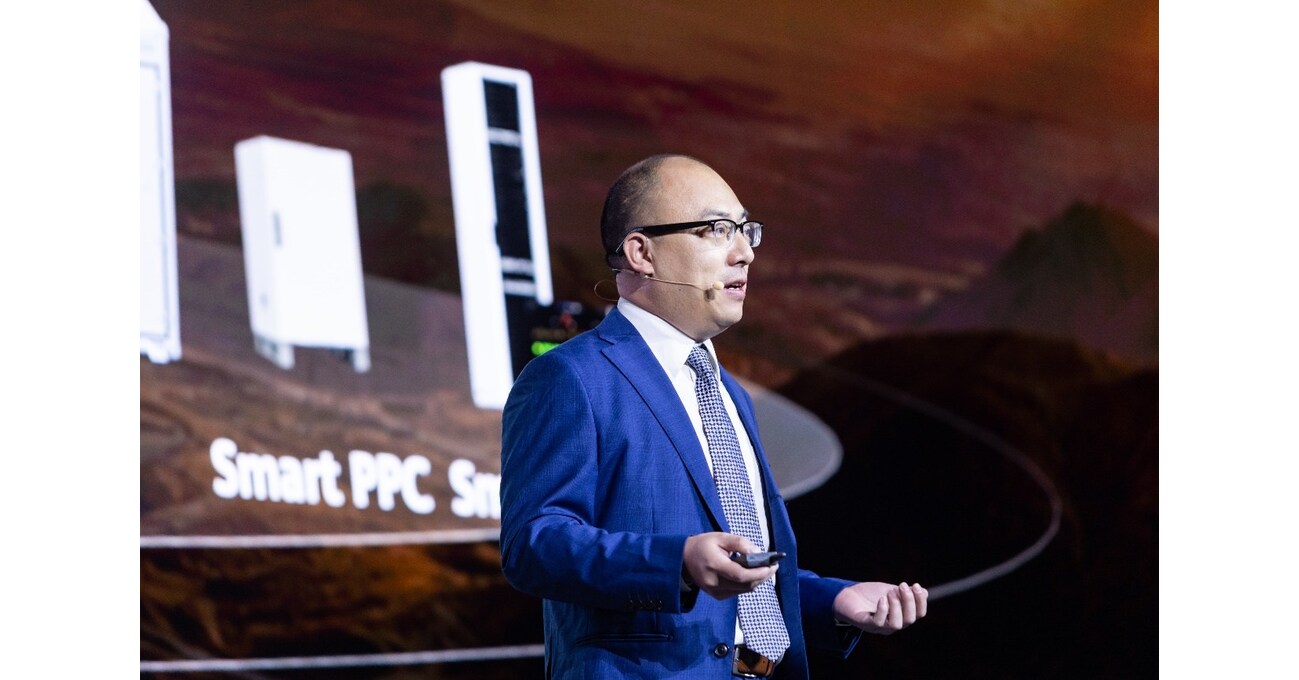
Huawei launched the LUTERRA Intelligent String Storage platform aimed at grid-forming (GFM) battery energy storage systems, targeting bidirectional efficiency (RTE) of 93.1% on the low-voltage PCS side. The company claims SOC control accuracy of 2.5% at both ends and 3% in plateau, with throughput improved by >10% versus conventional solutions, alongside installation/ops savings versus typical 1 GWh plants (delivery lead time -30%, BOP costs -20%, footprint -1 m² per installed MWh). The article also highlights that European grid operators have started long-term inertia services and that GFM-capable inverters can provide key stability functions as renewable penetration rises.
This reads less like a single-product launch and more like a signal that grid-forming storage is moving from niche engineering to procurement table stakes. The investable implication is a margin shift: economics should migrate away from commodity battery containers and toward firms that control software, protection, HV interconnect, and commissioning. That favors grid equipment names such as ETN and GEV over pure-play storage integrators like FLNC, whose differentiation is easier to replicate once performance specs become standardized.
The second-order effect is geographic. US and parts of Europe may continue to restrict Huawei, so the near-term share gain is more likely in the Middle East, LatAm, Africa, and select Asian markets where buyers optimize for delivered cost and performance. Over 1-3 months, the catalyst is not this announcement itself but tender language: any explicit requirement for grid-forming, inertia, or black-start capability should lift the addressable market for advanced power electronics and grid hardware. Over 6-18 months, the bigger risk is that software-defined controls commoditize the container, compressing gross margins across storage integrators even as installed MWh rises.
Consensus is likely underestimating how fast BOP and grid-services revenue can outgrow the battery box. The contrarian risk is that Huawei’s claimed efficiency advantage may not translate into bankable project finance until multiple operating references and independent warranty data exist; if reliability or interoperability issues appear, the adoption curve can stall quickly. I would treat this as a watch item rather than a broad thematic buy unless we see award data or margin guidance revisions from public peers that confirm pricing pressure or share loss.
AI-powered research, real-time alerts, and portfolio analytics for institutional investors.
Request TrialOverall Sentiment
mildly positive
Sentiment Score
0.25
