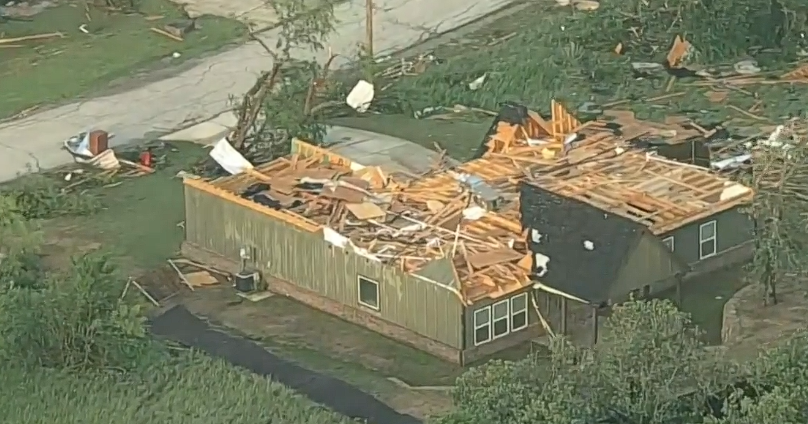
Preliminary National Weather Service data shows seven tornadoes touched down across North Texas, including an EF-2 in Wise County with estimated winds of 135 mph and an EF-1 in Springtown with 105 mph winds. The storms generated more than 100 reports of severe weather, multiple high-water rescues, and two deaths, one tornado-related and one caused by rear-flank downdraft winds. Damage assessments are still ongoing, so all figures remain preliminary.
The immediate equity lens is less about the storm headline itself and more about the cleanup and replacement cycle. Regional insurers, reinsurance-linked names, and specialty contractors should see a small but measurable claims and services tailwind, but the first-order draw is usually negative because severity uncertainty keeps reserve risk elevated for several quarters. The bigger second-order effect is on local supply chains: roofing, building materials, generators, HVAC, and temporary power rental demand can jump quickly, while transport/logistics names serving the Metroplex may face near-term disruption from road closures and lost operating hours.
The key nuance is that tornado activity alone rarely moves broad portfolios, but clustered wind/hail events can change loss ratios in concentrated Texas books and expose underwriting discipline. If the event footprint includes substantial hail, repair costs can exceed headline tornado damage because roof and auto claims cascade over weeks rather than days. That creates a delayed earnings risk for insurers with heavy exposure to North Texas, while creating a localized revenue bump for firms with mobile repair, restoration, or distribution capacity already in-region.
Consensus often overprices the immediate disaster response and underprices the lagging reserve and reinsurance effects. The market typically looks through one event, but repeated severe-weather frequency can force higher premiums, tighter underwriting, and reduced property exposure in exposed ZIP codes, which is a multi-quarter profitability issue for carriers rather than a one-off loss. A second-order bullish angle is for utilities and grid-hardening vendors if this increases capex urgency, though that trade is slower and more policy-dependent than the immediate repair trade.
AI-powered research, real-time alerts, and portfolio analytics for institutional investors.
Request DemoOverall Sentiment
strongly negative
Sentiment Score
-0.75
