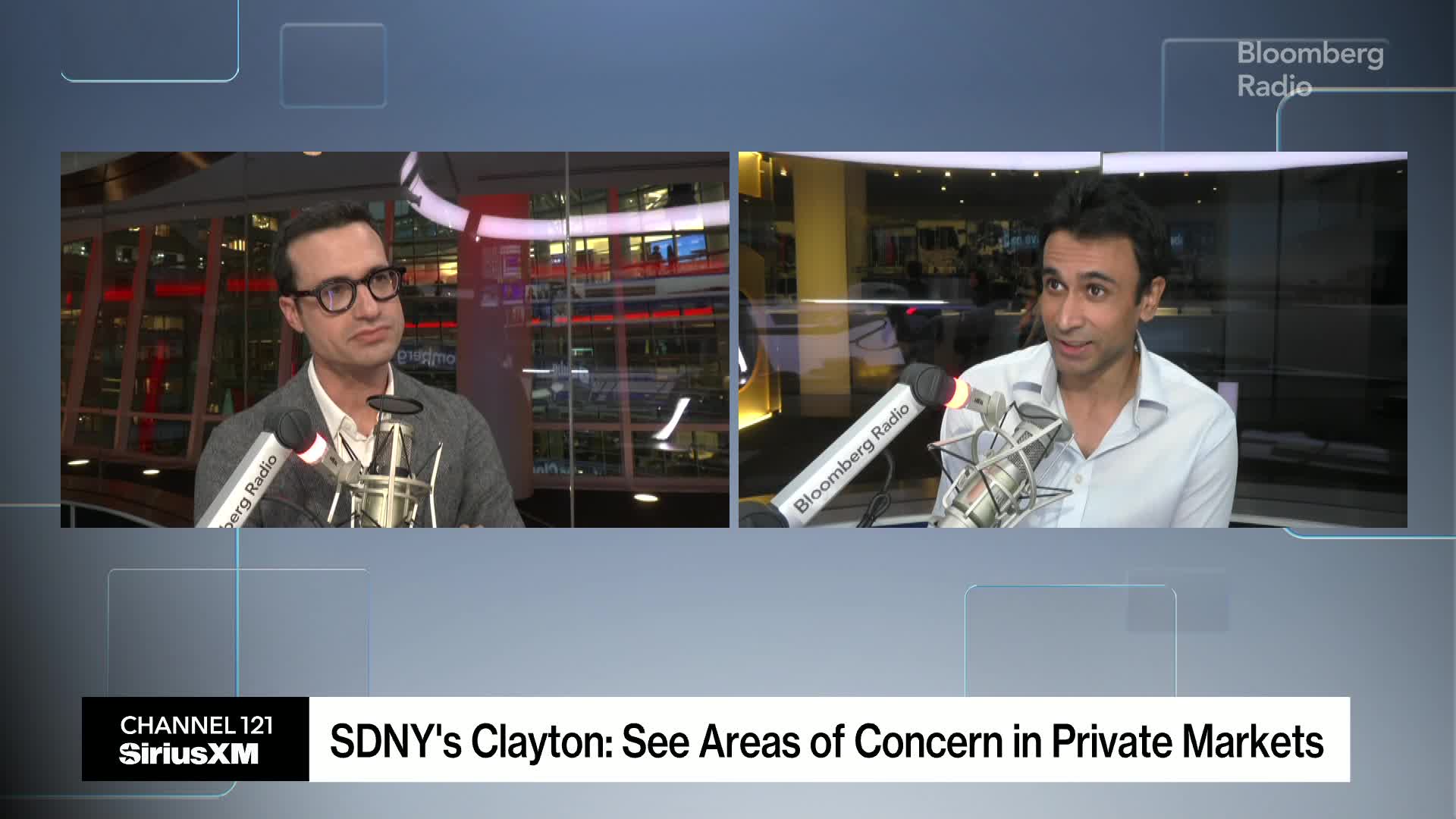
Jay Clayton signaled heightened enforcement attention on private markets, highlighting valuation opacity, the rising use of continuation vehicles and the risk of managers cherry-picking marks to protect fee streams. He emphasized the need for reliable third-party validation or external minority investors to substantiate valuations, warning that shifting assets between vehicles without independent price discovery could harm end investors. Hedge funds should reassess exposure to continuation-vehicle structures, valuation dependencies and fee alignment given increased regulatory and litigation risk.
Market Structure: Heightened DOJ/SEC scrutiny of private-market valuation and continuation-vehicle mechanics disproportionately hurts mid‑market private-equity/private‑credit managers that rely on internal transfers and asset‑based fee waterfalls; top-tier managers with credible third‑party marks and active secondary markets (large-cap PE sponsors) are relative winners. If enforcement forces independent third‑party marks or discounts, expect immediate re‑valuation pressure of 10–30% on illiquid mid‑market NAVs over 3–12 months and a rotation of LP allocations back into liquid public markets.
Risk Assessment: Tail risks include a regulatory-driven liquidity shock (fire‑sale of continuation assets) that widens leveraged credit spreads by 75–150bps and forces covenant breaches at lower-tier borrowers within 3–9 months. Hidden dependencies: banks’ warehouse lines, sponsors’ affiliate lending and fee revenue that support GPs’ economics; a cut in management/transaction fees could reduce sponsor EBITDA by 20–40% for some firms over two quarters. Catalysts: DOJ/SEC enforcement actions, high‑profile auditor adjustments, or a macro credit tightening.
Trade Implications: Direct plays: overweight liquid, execution‑focused brokers (IBKR) that gain flow if private allocations de‑risk; underweight/sell APOS‑like public proxies of private managers that lack transparent third‑party marks. Options: buy 3–6 month puts on APOS (10–15% OTM) as asymmetric protection; consider call spreads on IBKR for 6–12 months to capture rerating. Rotate 3–6% from private‑credit/new commitments into IG corporate bond ETFs or cash equivalents to preserve optionality.
Contrarian Angles: Consensus assumes systemic collapse; that’s overdone — tier‑one sponsors with audited third‑party marks will capture market share and could reprice fees upward. The mispricing lies in smaller public managers priced as if all private markets fail; selective shorting of mid‑cap private manager proxies and simultaneous long of high‑quality public sponsors can capture a 12–24 month dispersion trade. Historical parallel: 2011–2012 post‑GFC NAV resets produced multi‑year alpha for liquid managers with strong compliance.
AI-powered research, real-time alerts, and portfolio analytics for institutional investors.
Request DemoOverall Sentiment
mildly negative
Sentiment Score
-0.25
Ticker Sentiment
