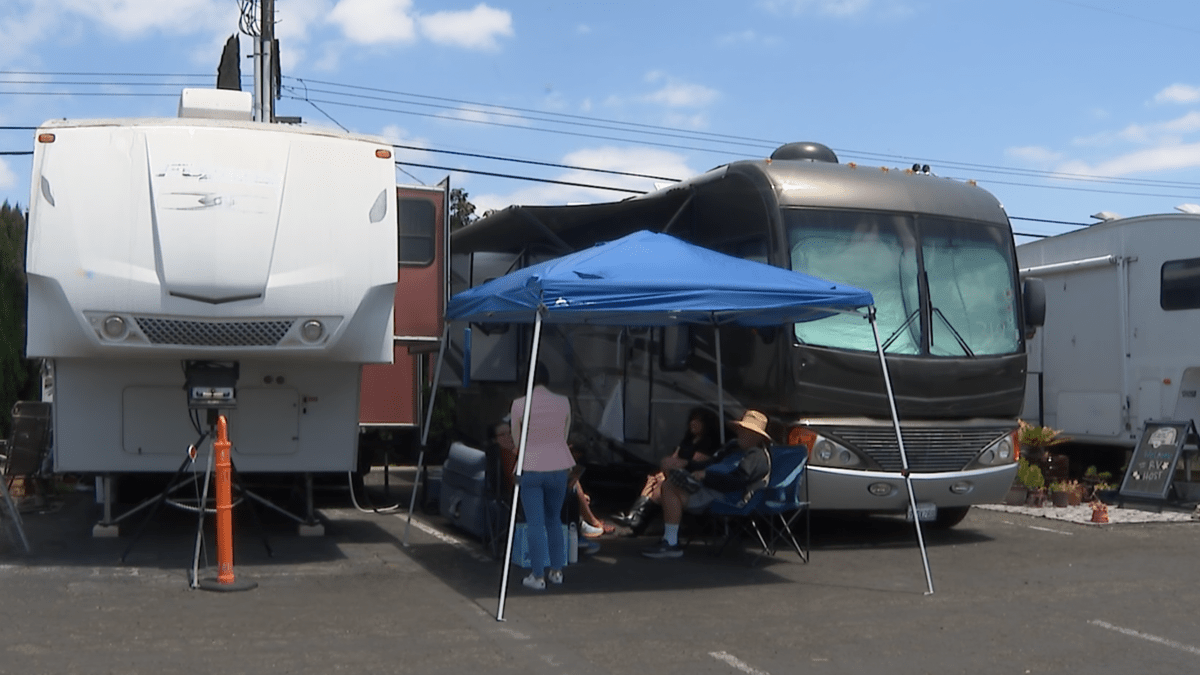
Thousands of Garden Grove residents remain under evacuation orders from an ongoing chemical tank crisis, with families facing a fourth night away from home and uncertainty about when they can return. The Elks Lodge is at capacity with 120 families and is providing shelter, RV space, showers, food, laundry, and medical support, including three doctors on site. Authorities say a catastrophic explosion is no longer considered likely, but evacuees have been told not to return yet.
This is a localized event, but the second-order effects are broader than the headline suggests. The immediate economic damage is not from the chemical incident itself; it is from forced displacement, consumer inconvenience, and a short-duration shock to micro-economies around Garden Grove, Anaheim, and adjacent Orange County retail corridors. The highest-probability near-term beneficiaries are hotels, extended-stay operators, grocery delivery, convenience retail, laundromats, and local service businesses absorbing displaced demand; the losers are nearby discretionary retailers and any landlords facing temporary non-occupancy friction if the outage extends beyond a week.
The more interesting angle is municipal and regulatory stress. Once an evacuation lasts multiple days, the issue shifts from incident response to liability allocation, remediation cost, and inspection backlog, which can create follow-on pressure on industrial/storage operators in California. That tends to be a slow-burn negative for small-cap industrial real estate and private tank/storage assets, while also increasing scrutiny on local permitting and insurance pricing for hazardous materials. For public markets, the direct P&L impact is negligible, but the incident can incrementally support premium pricing for environmental remediation contractors and emergency-response vendors if this becomes a recurring pattern rather than an isolated event.
The catalyst to watch is duration: if residents remain displaced for another 3-7 days, the story moves from “managed safety event” to “quality-of-infrastructure failure,” which increases political and legal attention. A faster-than-expected all-clear would reverse any trade thesis quickly, while a protracted cleanup could trigger class-action chatter and forced spending on inspections, containment, and temporary housing. The contrarian point: the market may overestimate the durability of any local knock-on effects; this is more likely a short-lived regional consumption shift than a persistent macro hit, so the best risk/reward is in small tactical positions, not thematic bets.
AI-powered research, real-time alerts, and portfolio analytics for institutional investors.
Request DemoOverall Sentiment
moderately negative
Sentiment Score
-0.45
