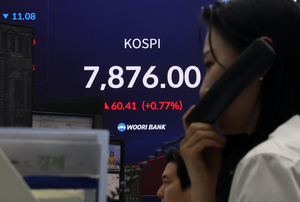
CSOP Asset Management plans Hong Kong's first overseas Kospi 200 ETF in the second half of this year, extending offshore access to Korea's blue-chip market. The move comes amid strong global demand for Korean equity exposure, especially to Samsung Electronics and SK hynix, whose leveraged ETFs have already drawn large assets and trading volumes. U.S. interest is also rising, with the Roundhill Memory ETF topping $10 billion in net assets and a 2x version under development.
This is less a broad “Korea beta” story than a distribution-channel upgrade for an already concentrated factor trade. The offshore listing of a Kospi 200 vehicle should mechanically widen the buyer base, but the real marginal flow is likely to be from institutions that want liquid, regulated exposure without stock-picking risk; that tends to compress index-level discounts and push the market toward a cleaner momentum regime. The second-order effect is that capital becomes easier to allocate into Korea’s largest names, which can further crowd the same handful of semiconductor-heavy winners and make the index more fragile to any earnings disappointment.
The more interesting signal is the move from passive exposure to leveraged exposure. When investors are willing to buy double-beta products on memory semis, the trade is no longer about country allocation; it becomes a synthetic expression of the AI capex cycle and memory pricing elasticity. That usually extends upside in the short run, but it also raises the probability of air pockets because a small change in spot memory pricing or guidance can force rapid de-grossing from fast-money holders.
The contrarian view is that the setup may already be too well understood. Korea is benefiting from a textbook “good news gets financed” loop, but the marginal buyer is now paying up for crowded exposure to a narrow industrial cycle with meaningful policy and FX sensitivity. If the won weakens, global risk sentiment rolls over, or memory ASP expectations stop improving for even one quarter, the most levered vehicles should underperform sharply relative to the underlying market within days to weeks.
From a competitive standpoint, this is also a direct challenge to existing MSCI Korea products and regional EM allocators: the new product structure can siphon flows away from broader EM baskets and into a higher-conviction Korea sleeve. That is bullish for Korea-specific volumes, but potentially bearish for diversified Asian technology exposure as capital gets segmented into single-country, single-factor vehicles instead of spread across the supply chain.
AI-powered research, real-time alerts, and portfolio analytics for institutional investors.
Request DemoOverall Sentiment
mildly positive
Sentiment Score
0.35
