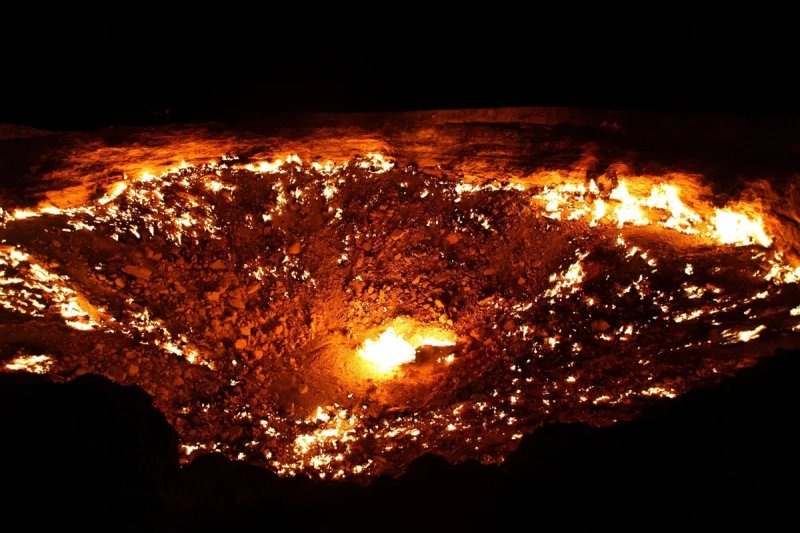
The Darvaza gas crater’s decades-long fire in Turkmenistan has reportedly weakened, but it still emits significant methane. While reduced burning may lower emissions, scientists warn that fully extinguishing the crater could release unburned methane directly into the atmosphere, potentially worsening climate impact. The story is environmentally relevant but likely has limited direct market impact.
The market implication is not the spectacle of a shrinking fire, but the policy signal it sends: Turkmenistan appears to be shifting from passive methane venting toward active capture and monetization of adjacent gas. If that process is real, the first-order effect is mildly bearish for unpriced flaring/emissions narratives, but the second-order effect is potentially bullish for local gas supply and export optionality over the next 6-24 months. The key question is whether reduced crater burn reflects genuine reservoir management or simply depletion of the near-surface gas pocket; those two outcomes have very different implications for future deliverability.
For ESG and climate-linked capital, this is a reminder that "extinguish the flame" can be a false-positive headline if it increases net methane leakage. The more important catalyst is monitoring transparency: independent satellite verification of methane intensity over the next several quarters will matter more than government claims. In emerging markets, any credible reduction in waste gas could improve Turkmenistan's bargaining position with regional gas buyers, but only if infrastructure exists to move incremental molecules to market rather than just suppress emissions on paper.
The contrarian view is that this is neither a clean ESG win nor a meaningful energy bearish event. If the crater is already in terminal decline, the incremental climate benefit from intervention may be limited, while the reputational upside for officials is large enough to incentivize announcement-driven narratives. The real tradeable risk is policy overreaction: a highly publicized closure attempt followed by evidence of elevated methane leakage would reintroduce environmental scrutiny and delay any monetization benefit by months to years.
AI-powered research, real-time alerts, and portfolio analytics for institutional investors.
Request DemoOverall Sentiment
neutral
Sentiment Score
-0.05
