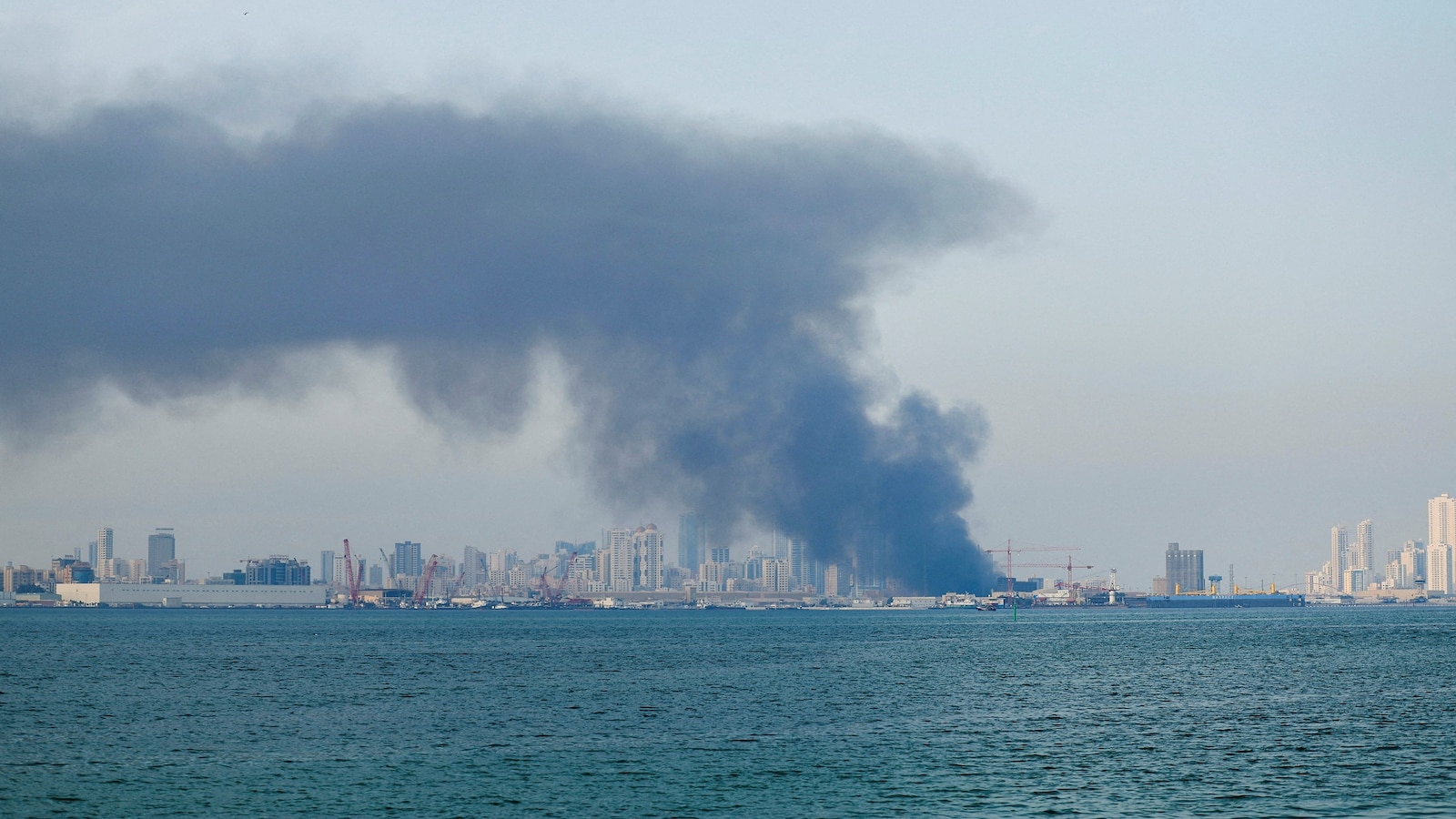
Following a U.S.-Israeli strike that the article reports killed Iran's Supreme Leader, Iran launched Operation Epic Fury, striking at least 11 countries with missiles, drones and ballistic weapons that hit U.S. bases (six U.S. servicemembers killed in Kuwait), Gulf civilian and military infrastructure and a British base in Cyprus. Attacks have targeted key energy assets — including strikes on Ras Tanura and facilities in Ras Laffan that prompted QatarEnergy to halt production (Ras Laffan ~20% of global LNG) — sending Brent briefly above $85/bbl, cutting Strait of Hormuz transits by roughly 70% and increasing demand for costly air-defense interceptors, signaling sustained regional disruption and elevated tail risk for energy, shipping and defense-related markets.
Market structure now clearly favors sellers of energy security and buyers of defense goods: integrated oil majors (XOM, CVX) and LNG midstream (LNG) gain pricing power as Brent moves above $85 and Ras Laffan outages threaten ~20% of LNG flows. Losses concentrate in commercial aviation (JETS, UAL), regional tourism, insurers writing Gulf risk, and EM sovereign credit that uses Strait-transit trade; air defenses' attrition dynamic (interceptors $M vs drones $10k) gives Iran a cost asymmetry that can sustain pressure for weeks.
Tail risks include Strait closure or major refinery damage that could push Brent >$110 within 4–8 weeks (high-impact, low-probability) and escalation between U.S. forces and Iran that draws in broader NATO support (weeks–months). Immediate window (days) sees volatility spikes and flight-to-safety; short-term (0–3 months) supply shocks and inflation risk; long-term (3–18 months) could re-price energy capex and defense budgets globally. Hidden dependencies: LNG destocking, insurance/re-routing costs, and interceptor stock depletion will amplify trade-cost pass-through into inflation.
Trade implications: expect commodity and defense equities to outperform; use option-backed exposure to limit drawdowns while shorting airlines, regional banks with Gulf exposure and EMB-like EM bond ETFs. Volatility arbitrage (buying 30–90d call skew on XOM/CVX; buying puts on JETS) and long-duration gold (GLD) provide asymmetric hedges. Rebalance if Brent breaches $95 or Ras Laffan/LNG outage persists >14 days.
Contrarian angle: consensus assumes prolonged risk-off; that overstates duration risk to oil majors which can pass higher prices to cash flows—short-term pullbacks are buying opportunities in XOM/CVX and tanker names (STNG, DHT). Conversely, the market underprices rapid de-escalation tail (ceasefire within 3–6 weeks) which would crush short-duration oil vol and benefit reopened travel—size shorts in JETS with tight stop-losses keyed to a de-escalation signal (formal ceasefire/strait re-open). Historical parallel: 2019 tanker attacks produced a 6–10 week price spike then mean reversion, suggesting defined-option structures over outright levered directional bets.
AI-powered research, real-time alerts, and portfolio analytics for institutional investors.
Request TrialOverall Sentiment
strongly negative
Sentiment Score
-0.70
