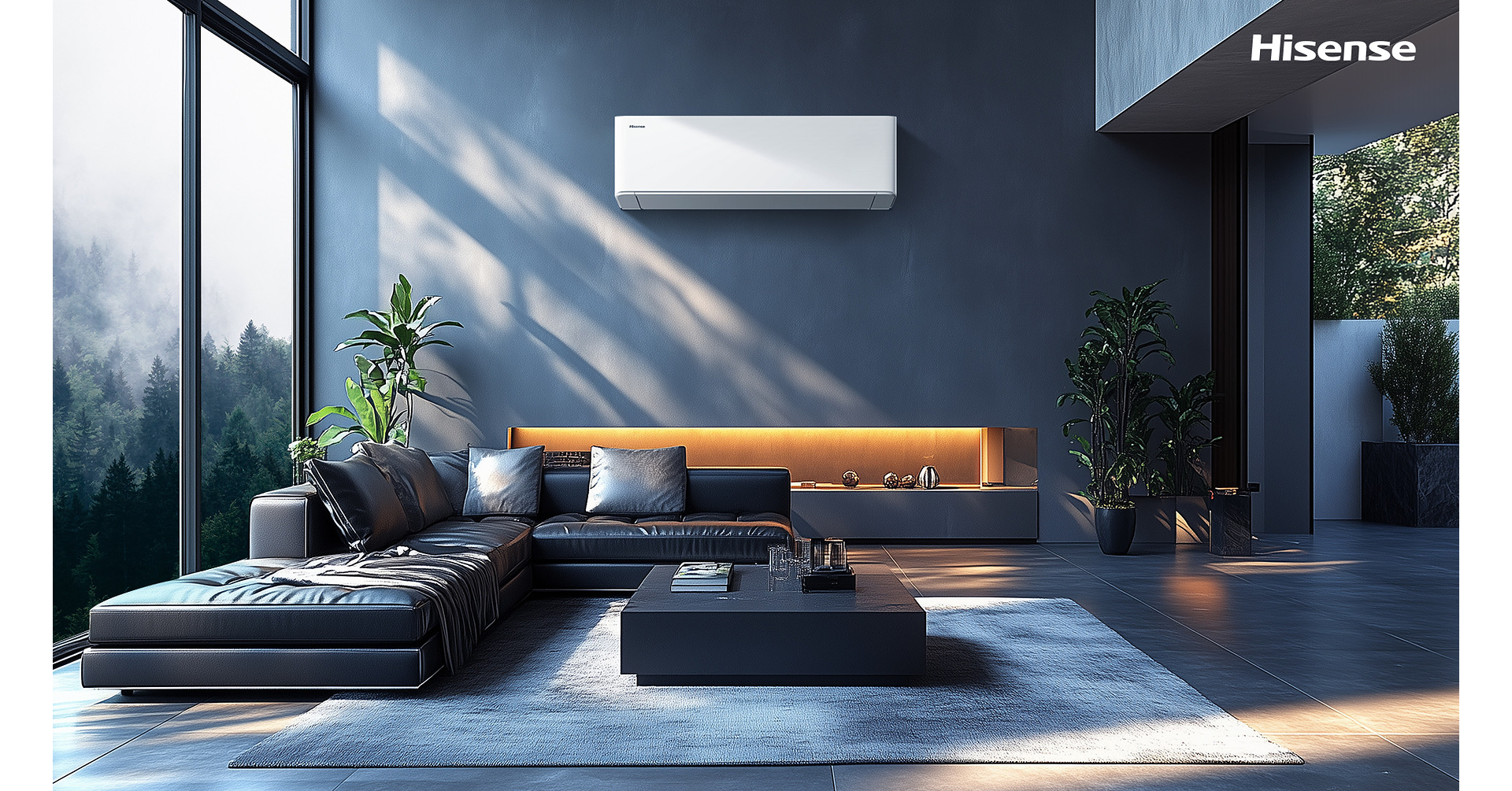
Hisense says European western air-conditioning revenue rose nearly 20% in H1 2026 vs. a year earlier, with France up more than 100%, citing demand for easier installation and smarter, more energy-efficient units. The company highlights its Uni series with modular “Easy Installation Pro” (reducing filter maintenance time up to 60%) and A+++ efficiency, plus its Air Master model with Smart Eye Pro occupancy detection, A+++ efficiency in both cooling/heating, and 18 dB operation. Overall, the news is product/market-share supportive but unlikely to move broader markets meaningfully.
This reads less like a single-brand victory lap and more like evidence that European AC is shifting from a weather-driven discretionary purchase to a structural comfort/efficiency category. The important mechanism is install friction: products that reduce labor dependence and simplify maintenance expand the addressable market in apartments, rentals, and older housing stock. That favors manufacturers with strong distribution, service networks, and inverter/controls capability, while eroding the moat of legacy brands that rely on premium branding or installer lock-in.
The second-order loser is the local installer ecosystem and any incumbent whose economics depend on high-touch installation and aftermarket service. If Chinese OEMs keep using ease-of-install plus efficiency as the wedge, the near-term effect is unit growth but also ASP pressure, which can squeeze margins even if reported revenue accelerates. Component suppliers tied to compressors, power electronics, and controls are the quiet beneficiaries; the best exposure is not the headline brand but the picks-and-shovels across HVAC and electrification.
Time horizon matters: the next 1-3 months are mostly weather and channel-inventory driven, so the stock response can be noisy. The 6-18 month setup is more interesting if penetration keeps rising through shoulder seasons; that would imply a durable mix shift rather than a heatwave trade. Falsifiers are straightforward: a cool summer, import/tariff friction on Chinese HVAC, or evidence that growth is just front-loaded pre-buying rather than repeatable demand.
Contrarian take: consensus may be underestimating how sticky this category becomes once households solve the install problem; the market may also be overestimating how much pricing power incumbents can retain if efficiency becomes the primary selling point.
AI-powered research, real-time alerts, and portfolio analytics for institutional investors.
Request DemoOverall Sentiment
mildly positive
Sentiment Score
0.25
